
Comprehensive Tips on Achieving Carbon Neutral Goals

Practical strategies to cut your carbon footprint — ISO 14001 for UK businesses
Cutting a business’s carbon footprint starts with measuring emissions across operations, energy use and the supply chain, then prioritising actions that reduce tonnes of CO₂e and move you toward net zero. This guide lays out practical steps UK organisations can take — from building an emissions inventory and improving energy efficiency to buying green energy and engaging suppliers — and explains how ISO 14001 helps formalise an Environmental Management System (EMS) so improvements stick. Many teams find it hard to rank options, capture scope 1/2/3 impacts or turn targets into verifiable results; this article resolves those gaps with clear, actionable advice, a five‑step net‑zero roadmap, SME-friendly checklists, comparative assessment guidance and pragmatic tips on green energy. The focus throughout is measurable reduction, straightforward implementation and using ISO 14001 certification to demonstrate credible, lasting performance.
Strategies for Carbon Neutral Certification with ISO 14001
An Environmental Management System (EMS) is a practical framework that sets policy, plans actions, controls operations, tracks performance and drives continual improvement to reduce environmental harm — including greenhouse gas emissions. By creating an emissions inventory and setting measurable objectives, an EMS turns broad carbon commitments into owned actions that influence purchasing, operations and reporting. The core mechanism is a plan‑do‑check‑act cycle that targets the biggest CO₂e sources first and tightens controls over time. That systems approach delivers predictable reductions, spreads accountability across teams and produces the data needed for verification and stakeholder reporting — all essential for a credible net‑zero plan.
How does ISO 14001 certification support an EMS?
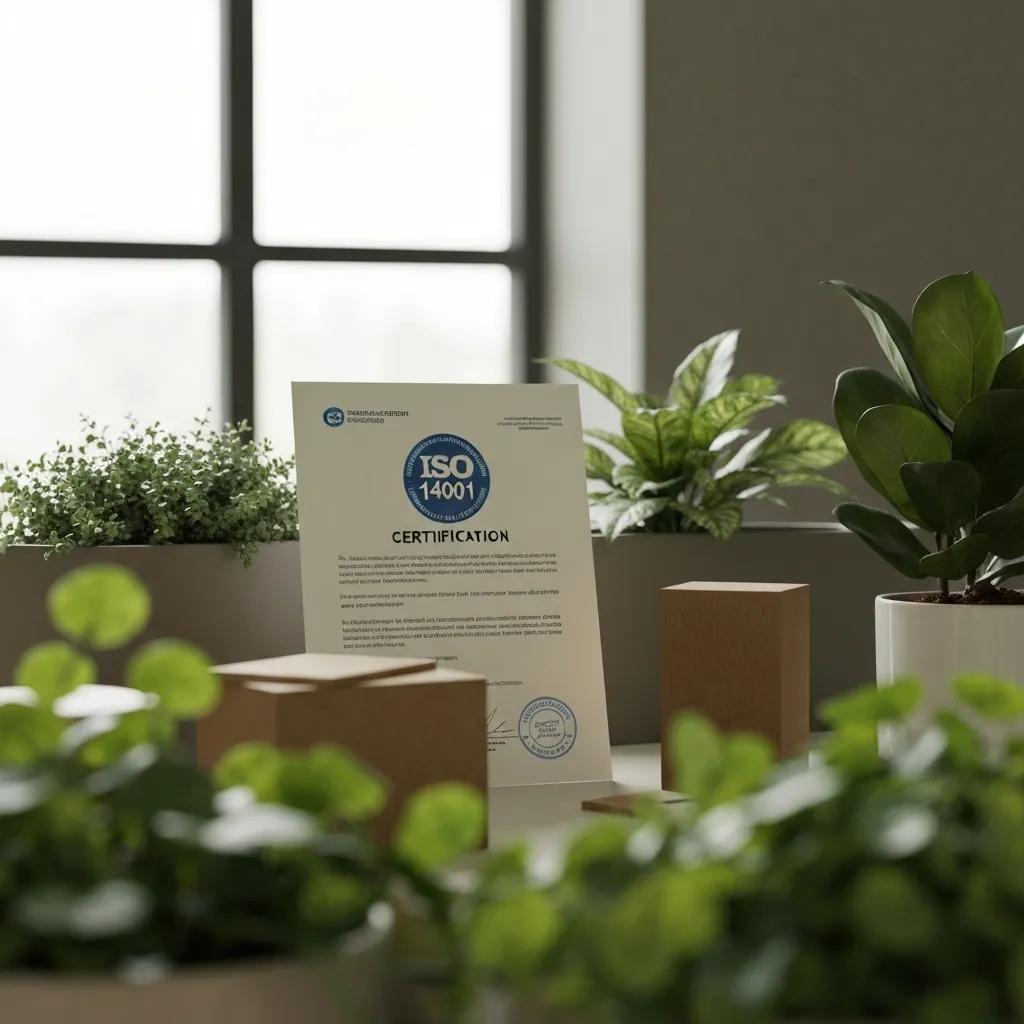
ISO 14001 is the recognised specification for an EMS. It requires organisations to demonstrate planning, operational control, performance evaluation and continual improvement against their environmental aspects. Typical steps to certification include a gap analysis, system design, implementing controls, internal audits, management review and an external certification audit — each stage strengthens measurement and accountability for emissions. The standard promotes risk‑based planning and legal compliance and asks firms to set objectives and monitor metrics such as tCO₂e and intensity ratios. In short, ISO 14001 provides external validation that your EMS is structured, measurable and committed to ongoing decarbonisation — helping embed the processes needed to meet net‑zero targets.
What business benefits does an EMS deliver for carbon reduction?
An EMS turns carbon management into a business process, delivering tangible benefits: lower energy bills, better regulatory preparedness and stronger credibility with customers and investors. Operationally, it highlights energy and waste hotspots so you can target investments with predictable paybacks that cut scope 1 and 2 emissions and improve margins. From a commercial standpoint, documented EMS performance supports tenders and procurement checks by proving environmental due diligence and continuous improvement. Together, these benefits create a clear route to net zero that links technical measures with governance, reporting and market advantage.
Many UK firms also pursue wider operational improvement. Implementing standards such as ISO 9001 certification for quality management can streamline processes, reduce waste and boost efficiency — all of which complement sustainability goals.
If you want third‑party assurance after setting up an EMS, ISO 14001 certification in the UK provides that verification. Accredited certification bodies can offer scaled EMS audits and advisory support to help organisations move from basic measures to a certified system that records compliance and performance gains.
How can UK businesses build a practical net‑zero strategy?

A usable net‑zero strategy starts with measurement and follows a clear hierarchy: avoid, reduce, substitute and, where necessary, neutralise remaining emissions. Begin by producing a baseline inventory covering scope 1, 2 and priority scope 3 categories and run a materiality screen to focus effort where it matters most. Then set science‑aligned targets with timelines, rank mitigation measures by cost‑effectiveness and feasibility, and embed governance for monitoring and corrective action. Regular measurement, reporting and verification lock in progress and allow iterative improvement toward carbon neutrality.
- Measure baseline emissions across scope 1, 2 and priority scope 3 sources and complete a materiality assessment to focus effort.
- Set timebound, science‑based targets and adopt an abatement hierarchy (avoid, reduce, substitute, offset) with clear milestones.
- Prioritise technical measures (energy efficiency, process change), procurement shifts and renewable procurement by cost per tCO₂e abated.
- Embed governance: assign owners, align actions with budget cycles and create KPI dashboards for performance tracking.
- Verify outcomes via audits and third‑party assurance to ensure credibility and guide future cycles.
These five steps form a repeatable roadmap suitable for organisations of different sizes. They provide clear checkpoints and outcomes to build a net‑zero pathway quickly and transparently, and they feed directly into selecting the right assessment services to quantify opportunities.
What tasks are involved in creating a net‑zero plan?
Building a net‑zero plan breaks down into sequential tasks with named owners and measurable deliverables: inventory, target‑setting, action planning, financing and verification. Start with a GHG‑Protocol‑aligned emissions inventory, then run an options appraisal to produce a marginal abatement cost curve that ranks interventions by cost and CO₂e impact. Assign responsibility for each action, set timelines (quick wins versus capital projects) and agree monitoring metrics such as tCO₂e reductions and intensity ratios. Identify funding routes — capital budgets, energy service agreements or supplier cost‑sharing — during planning so execution isn’t delayed by finance gaps.
Which sustainable practices most reliably reduce carbon?
High‑impact, repeatable practices include energy efficiency upgrades, process optimisation, sustainable procurement and low‑carbon travel policies. Operational changes such as HVAC tuning, LED retrofits and continuous commissioning often deliver fast paybacks and measurable energy savings. Procurement rules that favour lower‑carbon suppliers reduce high‑impact scope 3 emissions, while behavioural measures — travel reduction, hybrid working and improved waste segregation — support longer‑term gains. Combining these approaches creates a balanced decarbonisation portfolio that weighs cost, disruption and CO₂e savings, which is vital for credible net‑zero delivery.
Which carbon‑footprint assessment services suit UK companies?
Common assessment options include desk‑based calculators for quick screening, on‑site audits for operational detail, lifecycle assessment (LCA) for product footprints, and software platforms for continuous accounting and reporting. Desk tools are cost‑effective for SMEs seeking a directional baseline; enterprise audits and LCAs suit larger organisations or regulated products needing granular accuracy. Choose the right service based on scale, decision needs and budget — a sensible route is a desk inventory, an on‑site audit for hotspots, then software for ongoing tracking and reporting.
Different assessment types serve distinct use cases and budgets. The table below compares common approaches to help you choose the right level of analysis and investment.
Intro: This table contrasts assessment approaches by scope, cost and recommended use‑case so businesses can pick the appropriate level of analysis.
| Assessment Type | Scope / Cost | Best for |
|---|---|---|
| Desk‑based inventory | Low cost; covers scopes 1 & 2 and a basic scope 3 screen | SMEs and early‑stage assessments |
| On‑site audit | Medium cost; detailed operational data collection and verification | Manufacturing sites and complex facilities |
| Software & platform accounting | Subscription; continuous monitoring, dashboarding and reporting | Enterprises needing regulatory reporting and live KPIs |
| Lifecycle assessment (LCA) | Higher cost; cradle‑to‑grave product analysis | Product manufacturers and procurement decisions |
Summary: Start with a desk tool for a baseline, use on‑site audits to validate hotspots and adopt software for continuous accounting. This progression aligns spend with decision needs and avoids unnecessary granularity.
How do assessments reveal reduction opportunities?
Assessments collect activity data, map emissions hotspots and model marginal abatement costs so you can prioritise interventions. Typical inputs are fuel and energy invoices, transport logs, supplier spend and material usage; these feed calculation models that allocate emissions across scopes. Reports usually show hotspot charts, expected CO₂e savings per measure and financial metrics such as payback, enabling decision makers to rank projects by impact per cost. A prioritisation framework that combines impact, feasibility and cost directs resources to projects that deliver the biggest immediate CO₂e reductions and best returns.
Which tools and metrics are used in carbon evaluations?
Common references include the GHG Protocol for inventories, online carbon calculators for rapid estimates, LCA software for product footprints and accounting platforms for continuous tracking. Key metrics are total tCO₂e, intensity measures (for example tCO₂e per revenue or per unit) and percentage reductions versus baseline; these support internal KPIs and external reporting. For scope 3, spend‑based or supplier‑data methods are used depending on data availability — accuracy improves when suppliers provide primary activity data. Pick metrics that map to your business KPIs so carbon accounting informs operational and strategic decisions.
Accurately assessing Scope 3 emissions — especially for products that don’t consume energy in use — remains a major challenge for many organisations.
Improving upstream Scope 3 inventories: hybrid LCA challenges and solutions
Carbon accounting frameworks split emissions into three scopes. For many products, the largest share of emissions lies upstream in Scope 3. Upstream Scope 3 inventories commonly use economic input‑output (EIO) or hybrid LCA methods. Hybrid approaches can suffer from cut‑off uncertainty where process and input‑output inventories overlap without a clear truncation rule, which increases uncertainty. The referenced study explores methodologies to reduce cut‑off errors and improve confidence in hybrid LCA for upstream Scope 3 analysis.
How can SMEs implement decarbonisation while meeting compliance?
SMEs can make real carbon cuts with a sequence of low‑cost, high‑impact measures that also support regulatory duties. Start with a simple diagnostic — an energy profile, quick‑win list and a basic scope 3 screen for key suppliers. Actions such as LED retrofits, improved heating controls, better waste segregation and updated procurement standards deliver measurable CO₂e reductions, short paybacks and minimal disruption. Assign an internal owner and set up basic monitoring so changes stick and you create the record needed for compliance and possible certification.
SME practical checklist:
- Carry out a basic energy audit and build a simple energy‑use profile.
- Install LED lighting, programmable thermostats and basic insulation where relevant.
- Introduce waste separation, recycling and lean inventory controls to reduce material loss.
- Update procurement rules to favour suppliers with lower carbon intensity.
Following this checklist delivers immediate operational savings and creates the foundation for longer‑term measures. The next step is considering a formal EMS and certification once monitoring and controls are in place.
In parallel, many organisations also prioritise information security. Consider ISO 27001 certification to build an information security management system that protects data and supports business continuity alongside sustainability work.
What practical waste‑reduction and energy efficiency steps work for SMEs?
SMEs typically see quick gains from lighting upgrades, improved controls, scheduled maintenance and behavioural changes that reduce running hours. Replacing fluorescent lamps with LEDs, adding programmable thermostats, doing regular HVAC servicing and switching off non‑essential kit outside hours are low‑cost measures with paybacks often under two years. Waste measures — source separation, supplier take‑back schemes and better stock management — lower disposal costs and embodied emissions. Track savings with simple KPIs such as kWh saved per month or percentage of waste diverted to keep momentum and support compliance claims.
Note: Certification and audit services can be scaled for SME needs. Accredited bodies offer tailored EMS audits and advisory support to help small organisations progress from basic measures to a certified system that records compliance and performance gains.
How does supply‑chain sustainability reduce overall emissions?
Supply‑chain action tackles scope 3 emissions, which often represent most of a company’s footprint, by engaging suppliers to cut upstream impacts. Practical steps include mapping tier‑one suppliers, prioritising those with the highest spend or emissions intensity, requesting activity data or supplier‑verified emissions and adding low‑carbon criteria to procurement. Collaborative initiatives — joint logistics optimisation, packaging redesign and supplier efficiency programmes — can reduce emissions across tiers. These measures amplify in‑house efforts and are essential to any credible net‑zero strategy because they address the largest, often hidden, sources of CO₂e.
Why is ISO 14001 certification important for corporate environmental responsibility?
ISO 14001 matters because it shows you have a formal environmental management framework, helps meet regulatory expectations and signals to customers and investors that carbon management is systematic, not ad hoc. The standard requires you to measure, set objectives and show continual improvement, which accelerates carbon reductions and tightens governance of environmental risks. Certification also supports tendering and procurement where buyers expect EMS evidence, and it helps integrate carbon accounting into business processes. For organisations pursuing carbon‑neutral branding or net‑zero commitments, ISO 14001 provides the operational backbone that validates the processes behind claimed outcomes.
How does ISO 14001 improve reputation and compliance?
ISO 14001 certification gives independent assurance that your EMS meets international norms, which builds trust with customers, investors and regulators. A certified system embeds legal review and compliance checks into management processes, reducing enforcement risk. In procurement, many tenders list EMS credentials as pre‑qualification criteria, so certification can open market opportunities. Demonstrating verified EMS performance therefore lowers reputational and regulatory risk while supporting commercial advantages tied to sustainability credentials.
What role do AI tools and expert auditors play in certification?
AI tools speed up data processing, spot anomalies and support risk‑based sampling so auditors can focus on high‑risk areas. Automated analysis can rapidly validate energy and emissions datasets, highlight gaps and produce dashboards that make audits less disruptive and more insightful. Expert auditors add the contextual judgement, stakeholder engagement and corrective‑action advice that AI alone cannot provide. A hybrid model — automated analysis plus experienced auditors — can reduce time to certification while preserving rigour and delivering deeper operational insight. As AI use grows, related standards such as ISO 42001 are emerging to govern responsible AI deployment.
Accredited certification bodies can provide scaled EMS audits and advisory routes to help organisations move from simple measures to a certified system that documents compliance and measurable improvements.
Which green energy solutions help cut a business’s carbon footprint?
Businesses can combine on‑site renewables, power purchase agreements (PPAs), green tariffs and renewable energy certificates (RECs) to decarbonise electricity, supplemented by storage and demand‑side measures. Choice depends on site suitability, load profile and capital availability: rooftop solar suits distributed sites, PPAs and green tariffs suit larger or off‑site loads, and batteries boost self‑consumption and peak shaving. Integration starts with an energy baseline, grid connection assessment and phased delivery to match investment to readiness. Balancing capital cost against CO₂e abatement helps you sequence interventions to maximise near‑term carbon reductions.
Intro: The table below compares common green energy options by integration complexity, cost and CO₂ reduction potential to aid decision making.
| Green Energy Option | Integration complexity / Cost | CO₂ reduction potential |
|---|---|---|
| On‑site solar (PV) | Low–medium complexity; moderate capital cost | Medium; immediate scope 2 reductions |
| Power Purchase Agreement (PPA) | Medium complexity; low upfront capital | High; large‑scale renewable supply procurement |
| Green tariffs / RECs | Low complexity; ongoing premium possible | Variable; supports renewable generation on the grid |
| Battery storage | Medium–high complexity; capital investment required | Improves renewable utilisation and reduces peak demand |
Summary: On‑site renewables and PPAs deliver direct emissions reductions; green tariffs and RECs offer flexible market options; storage increases value capture and enables deeper decarbonisation when paired with demand management.
How do renewables fit into existing operations?
Integration begins with a site survey and energy profile to assess generation potential, roof or land availability, grid constraints and load patterns. For on‑site systems, consider orientation, shading and structural suitability; for PPAs and tariffs, align contract volumes with consumption and set up metering. Implement in phases — pilot, scale‑up, then full roll‑out — to limit disruption and learn as you go. Clear operational plans and maintenance routines ensure generation performs reliably and contributes to measurable carbon reductions.
What are the cost and environmental benefits of switching to green energy?
Switching to green energy typically cuts scope 2 emissions immediately and can stabilise or reduce long‑term energy costs through fixed PPAs or less exposure to volatile grid prices. Environmental benefits include annual CO₂e reductions and improved lifecycle emissions where on‑site renewables replace grid electricity. Cost drivers include capital for on‑site systems, PPA terms and any premium for green tariffs, but grants and tax reliefs can improve payback. Over time, renewables plus storage often give a favourable total cost of ownership while delivering measurable tCO₂e reductions that support corporate targets and reporting.
- Financial benefit: More predictable energy costs and potential long‑term savings.
- Environmental benefit: Direct reduction in scope 2 emissions and lifecycle CO₂e.
- Strategic benefit: Stronger net‑zero credentials and reduced exposure to price volatility.
These advantages make green energy a central element of corporate carbon reduction strategies and a practical complement to efficiency and procurement measures.
Frequently asked questions
What are the first steps for a business that wants to reduce its carbon footprint?
Start with a comprehensive emissions inventory covering scope 1, 2 and the most material scope 3 categories. Use that baseline to set timebound, science‑aligned targets and create a prioritised action plan focused on cost‑effective measures. Engage staff and stakeholders early to build ownership and make sure responsibilities and reporting lines are clear.
How can businesses make sure their carbon plans actually deliver?
Put monitoring and reporting in place and track progress against agreed KPIs. Regular internal audits and periodic third‑party assurance will validate outcomes and reveal improvement opportunities. Adopt a continuous improvement mindset so strategies evolve with new data and technologies.
What role does employee engagement play?
Employees make or break sustainability plans. Clear communication, targeted training and simple incentives help embed new behaviours. When staff understand the why and see measurable results, they’re more likely to support and sustain changes.
What challenges should businesses expect when implementing carbon strategies?
Common obstacles include limited budgets, gaps in expertise and the complexity of measuring scope 3 emissions. Overcoming these requires senior leadership backing, practical training and, where needed, external support to fill technical or execution gaps.
How can technology support carbon reduction?
Software and IoT devices automate data collection, provide real‑time visibility and highlight efficiency opportunities. AI and analytics help forecast emissions and prioritise interventions. Technology saves time on reporting and helps teams act on evidence rather than estimates.
What are the long‑term benefits of ISO 14001 certification?
ISO 14001 certification demonstrates a structured approach to environmental management, builds stakeholder confidence and can unlock commercial opportunities. Certified organisations typically see better regulatory readiness, reduced waste and lower energy costs, all while establishing a culture of continuous environmental improvement.
Conclusion
Adopting practical carbon‑reduction strategies and formalising them through ISO 14001 helps UK businesses cut emissions while improving efficiency and credibility. A structured EMS turns ambition into measurable action, supports compliance and strengthens commercial positioning. Prioritise measurement, practical interventions and independent verification to build a dependable route to net zero. Explore our resources and expert guidance to get started.