
Unlock Solutions: Essential Steps in Root Cause Analysis

Performing Root Cause Analysis for ISO Certification — a Practical Guide for UK Organisations
Root cause analysis (RCA) is a structured way to find the underlying causes of nonconformities so corrective actions remove the problem at source instead of masking symptoms. By tracing failures from effect back to cause, RCA moves teams from reactive firefighting to evidence‑led prevention and supports ongoing improvement across management systems. For UK organisations working towards ISO certification, RCA produces the documented, verifiable actions auditors expect, strengthens operational resilience and cuts repeat incidents that cost money and damage reputation. This guide explains what RCA is, why it matters for ISO management systems, how to apply common techniques (5 Whys, Fishbone and Fault Tree) and how those tools map to ISO 9001, ISO 27001 and ISO 42001. You’ll also find practical checklists, two comparison tables linking tools to standards, worked examples for quality, security and AI, and clear next steps if you need facilitation or training. Read on for step‑by‑step processes, auditor verification tips and the business case UK organisations can use to prioritise RCA in their corrective action workflows.
What is Root Cause Analysis — and why is it critical for ISO compliance?
Root cause analysis is a methodical approach to identify the true origins of nonconformities so corrective actions address the underlying cause rather than the symptom. The approach is straightforward: define the problem, gather evidence, map causal links and test hypotheses until you reach the most probable root cause and create an action plan to stop recurrence. For ISO compliance, the key benefit is tangible evidence that nonconformities were properly investigated, causes were addressed and effectiveness was checked — the exact things auditors look for under corrective action requirements. Seeing this connection helps organisations move from ad‑hoc fixes to documented continual improvement that feeds management review and risk registers.
RCA also tightens governance by linking corrective actions to management objectives and risk appetite; investigation outputs become inputs to the PDCA cycle and ISMS risk treatment. That means RCA not only resolves incidents but also drives better processes, stronger supplier controls and higher customer confidence. The section that follows highlights the top reasons organisations prioritise RCA within ISO frameworks and shows how Stratlane supports practical implementation.
At Stratlane we combine AI tooling with experienced auditors to deliver practical, auditor‑ready evidence packages. That mix helps organisations design RCA processes that stand up to certification and surveillance.
The three main reasons organisations treat RCA as essential are:
- Prevention of recurrence: Proper RCA isolates systemic causes so corrective actions remove the drivers of failure.
- Audit readiness: Well‑documented RCA creates traceable evidence auditors expect for corrective action clauses.
- Cost reduction: Stopping recurring failures lowers rework, downtime and financial penalties.
These benefits lead naturally into how RCA supports continual improvement in practice and the specific standards that mandate or expect RCA activity.
How does Root Cause Analysis support continual improvement in ISO management systems?
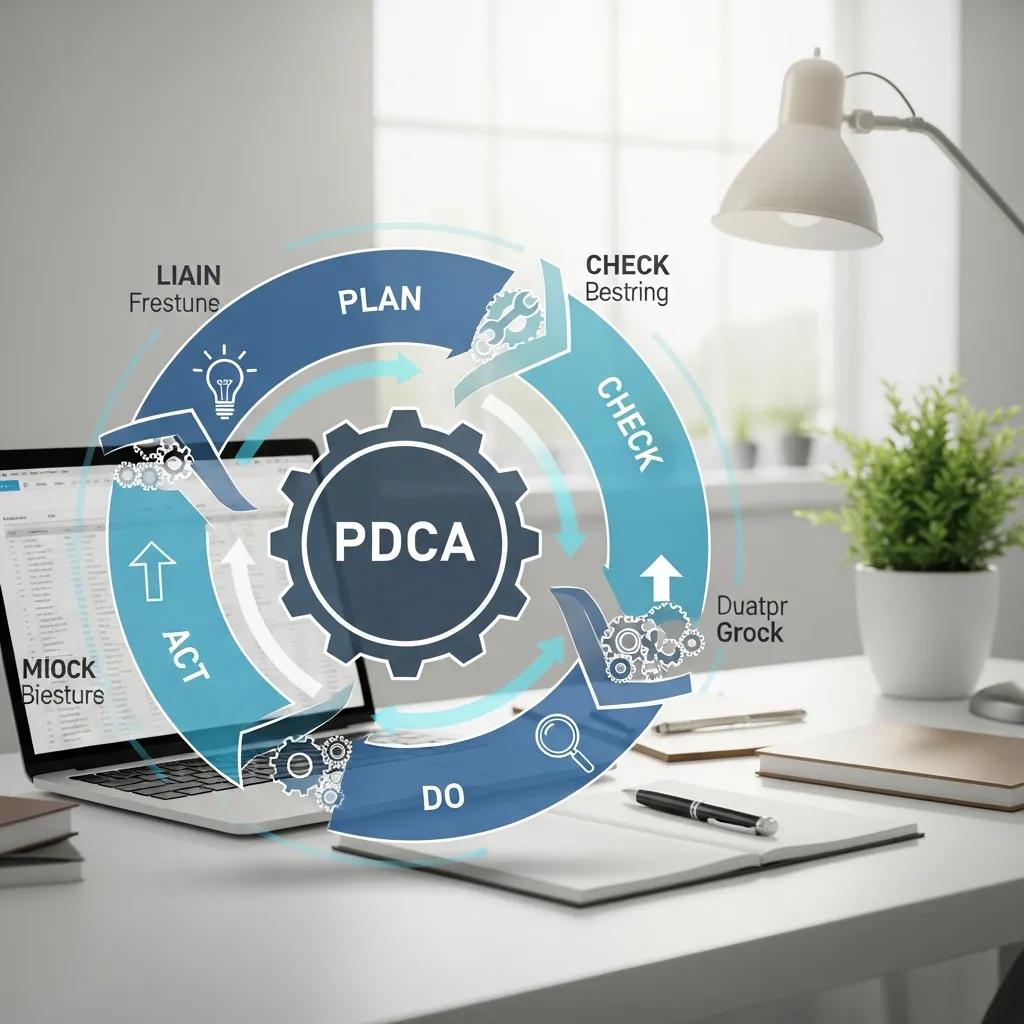
RCA fuels continual improvement by producing evidence‑based corrective actions that close the PDCA loop and inform management review. The workflow starts with a clear problem statement, moves through targeted data collection and causal analysis, and finishes with corrective actions plus verification — together these steps deliver measurable improvement. Organisations can show a clear chain from incident to action to verification, turning one‑off fixes into system changes such as process redesign, training updates or tighter supplier controls. For example, resolving a recurring product defect using RCA might result in revised inspection criteria, a supplier quality clause and updated process documentation, which reduces recurrence and improves customer satisfaction. Understanding how RCA outputs feed policy and metrics helps teams focus resources on the most impactful improvements.
This approach also clarifies accountability: investigation results become agenda items for management review and entries in the risk register, ensuring governance and resources follow discovery. That governance link is the bridge to recognising which standards explicitly require or expect RCA activity.
Which ISO standards require Root Cause Analysis for nonconformity resolution?

Several ISO standards require or strongly encourage RCA as part of corrective action and incident handling, most notably ISO 9001, ISO 27001 and ISO 42001. ISO 27001 embeds RCA within incident management and corrective actions for information security, expecting evidence‑based responses that show risk reduction and control improvements. ISO 42001, the AI management standard published in 2023, expects organisations to investigate AI failures across data, model and governance dimensions to reduce algorithmic harm. Mapping RCA outputs to these standards helps teams prepare compliant evidence packages and meet auditors’ expectations.
Translating standards into everyday practice clarifies the records required — investigation reports, action plans with owners and verification records — which auditors typically request during certification and surveillance visits. With that foundation, we can now cover step‑by‑step implementation and tool selection for effective RCA.
How to implement effective Root Cause Analysis techniques for ISO compliance
RCA for ISO compliance follows a repeatable sequence: define the problem, collect evidence, analyse causes, plan corrective actions, implement and verify effectiveness. Each step creates verifiable artefacts — problem statements, data logs, causal diagrams, action plans and validation records — that map directly to audit evidence requirements. Following this sequence turns nonconformity handling into a documented, measurable improvement process.
Use this concise checklist as an executable procedure for any nonconformity:
- Define the problem clearly: Create an observable, measurable statement of the nonconformity.
- Collect data and evidence: Secure logs, inspection records, witness notes and samples.
- Analyse causes: Apply structured methods (5 Whys, Fishbone, Fault Tree) to surface root causes.
- Plan corrective actions: Assign owners, deadlines and success criteria tied to prevention.
- Implement and verify: Carry out actions, measure outcomes and record verification for auditors.
This numbered list suits operational teams and aligns with featured snippet formats for “how to” searches. To pick the right tool for each issue, the table below maps common RCA methods to use cases and ISO contexts.
Different RCA tools match different problem types; use the table to choose the best approach for quality, security or AI incidents.
This table highlights practical choices: use 5 Whys for rapid incidents, Fishbone when multiple contributors exist, and Fault Tree for systemic or safety/security analyses. The sections that follow explain each method in more detail and present worked examples for ISO contexts.
Key methodologies: 5 Whys, Fishbone diagram and Fault Tree Analysis
The 5 Whys technique uses repeated “why” questions until you reach a root cause; its simplicity makes it ideal for fast investigations with a single causal chain. It forces direct cause‑and‑effect links and commonly surfaces organisational or process weaknesses that can be fixed with specific actions. A typical 5 Whys session takes 15–60 minutes and finishes with one or two corrective actions, owners and dates for verification. Because it can oversimplify complex problems, teams should record assumptions and validate cause statements.
Fishbone (Ishikawa) diagrams map multiple potential cause categories — people, process, equipment, materials, environment and measurement — making the method suitable for chronic or multifactor quality issues. Fishbone encourages cross‑functional collaboration and yields a visual cause map teams can prioritise using data and tests, turning brainstorms into verifiable hypotheses. Fault Tree Analysis models combinations of failures that lead to a top‑level event; it’s especially valuable where safety, security or AI model interactions create emergent risks. Each method has strengths and limits, so choose according to incident complexity and the assurance auditors require.
How to apply RCA tools to resolve nonconformities in ISO 9001, ISO 27001 and ISO 42001
Applying RCA tools means matching problem type to method, setting clear evidential standards and closing the verification loop for auditors. For ISO 9001 quality defects, use Fishbone to surface contributing factors and follow with controlled tests or sample inspections to validate corrective actions. For ISO 27001 security incidents, run a focused 5 Whys to identify control failures, then update ISMS controls and record the mitigation in incident logs. For ISO 42001 AI failures such as model bias or drift, apply Fault Tree Analysis to map interactions among data, feature engineering and governance, then implement data lineage fixes, retraining or algorithmic safeguards and validate results with fairness and performance metrics.
In every case the evidence trail is the same: problem statement → causal analysis artefact → action plan with owners → verification records. Document these artefacts and link them to risk registers and management review to show auditors that corrective action processes meet standard requirements and deliver lasting improvement.
Root Cause Analysis requirements in ISO 9001 and ISO 27001 corrective action processes
Both ISO 9001 and ISO 27001 expect systematic investigation of nonconformities, corrective actions to remove causes and verification of effectiveness; auditors seek documented evidence of each step. ISO 9001:2015 Clause 10.2 requires organisations to respond to nonconformities, determine causes and implement corrective actions proportionate to the effects. ISO 27001 requires comparable rigour within the ISMS, tying incident handling to corrective actions that reduce risks and strengthen controls. Practically, records should show the investigation method used, decisions made, actions taken and verification results.
Auditors typically expect clear responsibility, timelines and measurable verification criteria; vague statements without supporting evidence do not satisfy compliance. The table below summarises key attributes and practical implications for both standards.
The comparison below clarifies auditor expectations and helps compliance teams prepare aligned documentation.
This comparison shows that, despite different wording, both standards require evidence that causes were analysed and actions were effective. The sections that follow unpack how Clause 10.2 is commonly interpreted and how RCA fits into information security incident response.
How ISO 9001:2015 Clause 10.2 frames RCA for quality management
Clause 10.2 treats corrective action as a requirement to respond to nonconformities, investigate causes and implement actions to prevent recurrence — a direct match with RCA activity. The clause expects organisations to check for similar issues elsewhere and update processes, documentation or controls where needed. Auditors commonly ask for investigation records, RCA artefacts (for example Fishbone or 5 Whys diagrams), action plans with owners and verification evidence demonstrating the issue no longer occurs. Practical documents include an incident report, a causal analysis diagram, a corrective action register and a follow‑up monitoring report showing reduced defect rates.
Preparing these artefacts before audits lets teams answer auditor questions quickly and demonstrates a mature continuous improvement process. Linking RCA outputs to process updates and management review satisfies Clause 10.2 and reduces the risk of repeat nonconformities.
How RCA integrates into ISO 27001 incident management and corrective actions
In ISO 27001, RCA is part of the incident lifecycle: detection, containment, investigation, root cause analysis, remediation and verification. The ISMS should record how incidents were investigated, the root causes identified and the control improvements made to reduce future incidents. Common security root causes include configuration errors, weak access controls, third‑party failures and insufficient monitoring. Corrective measures may include patching, revised access policies, supplier controls or enhanced monitoring — and each must be verified by tests or audits.
Documenting this integration means keeping incident records that reference the RCA artefact used, risk treatment decisions and verification evidence such as penetration test results or audit follow‑ups. This ensures corrective actions feed into ISMS continual improvement and the risk register for strategic mitigation.
How Root Cause Analysis strengthens AI risk management under ISO 42001
RCA adapted for AI uncovers data, model and governance failures that drive algorithmic risks and informs corrective steps to reduce harm. This specialised approach looks at feature provenance, training data bias, model explainability and deployment pipelines as potential root causes. By analysing these areas, teams can design corrective actions like rebalancing datasets, changing feature engineering, adding explainability checks and tightening deployment controls to prevent drift or discriminatory outcomes. The outcome is better trustworthiness, auditability and alignment with ethical AI expectations.
Best practice is to run cross‑functional investigations involving data scientists, product owners and compliance stakeholders so technical findings translate into governance changes and monitoring. The next sections explain how RCA addresses algorithmic bias and set out an adapted workflow for AI incident investigations.
How RCA helps mitigate algorithmic bias and data privacy risks
RCA reveals bias causes such as unrepresentative training data, feature leakage or poor labelling and maps corrective measures like dataset augmentation, re‑labelling or removing problematic features. For data privacy issues, RCA isolates causes such as weak anonymisation, poor access controls or insecure pipelines and recommends fixes like stronger pseudonymisation, access reviews and encryption. The method involves tracing data lineage and decision paths to locate where bias or leakage occurred, then validating corrective actions using fairness metrics and privacy risk scans. Validation should include statistical tests, explainability reports and ongoing monitoring to show bias or privacy risks have been reduced.
Framing these steps as verifiable activities is essential for audits and for building stakeholder confidence in AI systems. That approach naturally leads to an adapted RCA workflow for AI incidents.
How to conduct RCA for AI system failures and ensure ethical deployment
An AI‑adapted RCA workflow begins with cross‑disciplinary scoping, followed by technical diagnostics (data drift, feature importance shifts, model performance decline) and governance reviews (data provenance, consent, access controls). Evidence collection should include dataset snapshots, model versions, feature distributions and decision explanations; analysing those artefacts identifies root causes and shapes remediation such as retraining, feature engineering changes or policy updates. Verification requires running fairness and performance benchmarks and setting up monitoring to detect recurrence. Finally, an ethical sign‑off from product, legal and compliance teams formalises acceptance and ensures ongoing oversight.
Recording each stage — diagnostics, root cause statements, remediation actions and verification metrics — creates the evidence trail auditors and stakeholders need to trust AI systems. With those technical and governance steps in place, organisations can quantify RCA’s business benefits and its effect on costs and audit readiness.
Benefits and business impact of performing Root Cause Analysis for ISO nonconformity resolution
RCA delivers measurable business benefits by reducing repeat failures, shortening resolution times and improving audit outcomes — which together lower operating costs and protect reputation. Savings come from less rework, reduced downtime and lower incident remediation bills; these improvements also strengthen supplier and customer confidence and reduce contractual penalties. Strategically, demonstrable continual improvement supports tender responses and regulatory compliance. For UK organisations, framing these impacts in financial and operational terms helps secure leadership buy‑in and justify investment in RCA facilitation and training.
Key business impacts include:
- Operational resilience: Fewer repeat incidents and faster recovery.
- Cost savings: Lower rework, reduced downtime and smaller remediation bills.
- Audit and market advantage: Strong evidence packages improve certification outcomes and customer confidence.
These outcomes often convince decision‑makers to fund RCA capability, training and facilitation. The next section describes how effective RCA cuts recurrence and offers a short case study template to capture results.
How effective RCA reduces recurring issues and saves costs for UK organisations
Effective RCA prevents recurrence by fixing systemic causes — poor process design, weak supplier controls or governance gaps — instead of treating symptoms. Typical mechanisms include process redesign, supplier controls and targeted training, each linked to measurable KPIs such as lower defect rates or fewer security incidents. Organisations that run sustained RCA programmes commonly report measurable drops in recurrence and related costs, though figures vary by sector and issue. Capturing pre‑ and post‑metrics like incident frequency, mean time to repair and cost per incident builds the business case for ongoing RCA investment.
Using these metrics in management review helps sustain funding for RCA resources and ensures corrective actions are prioritised by business impact. To demonstrate outcomes internally or externally, use a concise, metric‑driven case study template as described below.
Case study format showing successful RCA in ISO‑certified SMBs
Effective case studies follow a simple structure: outline the issue, summarise the RCA method used, list corrective actions implemented and report outcomes such as recurrence reduction and cost savings. Common examples include a manufacturing defect fixed with Fishbone plus process controls, a security incident resolved with 5 Whys and strengthened access management, and an AI bias problem addressed by Fault Tree analysis and data remediation. Including KPIs — recurrence rate, downtime hours saved and audit nonconformities reduced — makes case studies persuasive. Anonymise sensitive details and present results in a concise, metric‑focused format to encourage adoption across teams.
After reviewing benefits, many organisations look for external support to build RCA capability; the section below explains how Stratlane helps with training, facilitation and certification support.
How Stratlane can support your Root Cause Analysis and ISO certification journey
Stratlane Certification Ltd. provides targeted support to help organisations implement RCA within ISO certification projects, combining AI‑enabled audit tools with experienced industry auditors. Typical support includes facilitated incident investigations, tailored workshops on 5 Whys, Fishbone and Fault Tree methods, and audit preparation to ensure corrective action records meet auditor expectations. Our approach emphasises practical outcomes — pairing smart tooling with lead auditor experience — so clients can prepare evidence packages for ISO 9001, ISO 27001 and ISO 42001 certification and surveillance.
Clients benefit from facilitated investigations that produce auditor‑ready artefacts, training that builds internal capability, and audit support that aligns RCA outputs to clause requirements and management review needs.
What RCA training and consultancy services does Stratlane offer to UK organisations?
Stratlane runs workshop‑style RCA training, remote and onsite consultancy, and audit preparation services focused on practical outputs for certification. Workshops cover method selection (5 Whys, Fishbone, Fault Tree), evidence collection standards and verification practices so teams can document investigations in auditor‑friendly formats. Consultancy services include gap analysis, facilitated RCA sessions and help drafting corrective action plans with owners and verification criteria. Audit preparation reviews evidence packages, aligns RCA artefacts to clause requirements and coaches managers for management review presentations. These services transfer capability to internal teams while ensuring corrective action processes meet certification evidence expectations.
Our services are designed to embed RCA into continual improvement workflows and demonstrate compliance at audit time.
How to request a quote or book an audit with RCA expertise
When requesting a quote or booking an audit with Stratlane, provide a concise scope: the standards you need (for example ISO 9001, ISO 27001, ISO 42001), locations or business units in scope and a brief note on current management system maturity. Include estimated staff numbers and any recent nonconformity history to help us propose the right audit effort and support. Expect an initial consultation to align objectives, discuss RCA facilitation needs and identify training options; we then supply a tailored proposal outlining services and next steps. This approach delivers accurate quotes and a clear pathway from RCA capability building to certification readiness.
Providing clear scope and context accelerates the quotation process and helps Stratlane match resources to your RCA and certification needs.
- Prepare scope details: Standards, locations and organisational context.
- List current nonconformities or concerns: Helps tailor RCA facilitation.
- Request training or audit support: Tell us whether you need workshops, consultancy or audit preparation.
Supplying these details up front enables a focused proposal and a practical route to certification with robust RCA processes in place.
This is the end of the guide — use the methods, tables and checklists above to embed RCA into your ISO corrective action processes and create demonstrable evidence for auditors and stakeholders.
Frequently Asked Questions
What common challenges do organisations face when implementing Root Cause Analysis?
Common challenges include limited training on RCA methods, resistance to change, and difficulty collecting reliable data. Organisations also struggle to embed RCA findings into existing processes or to ensure corrective actions are implemented and monitored. Overcoming these hurdles usually requires focused training, clear communication of RCA’s benefits and visible leadership support to build a culture of continuous improvement.
How can RCA be integrated into daily operations for ongoing compliance?
Embed RCA into routine activities by scheduling regular RCA reviews in team meetings, updating standard operating procedures to include RCA steps, and training staff on chosen methodologies. Ensure findings are documented and linked to performance metrics so improvements are tracked. Making RCA a standard part of operations promotes proactive problem‑solving and helps maintain compliance.
What role does leadership play in the success of RCA initiatives?
Leadership is essential: leaders set the tone for accountability and continuous improvement. They should provide resources, sponsor training and encourage open discussion of failures and lessons learned. When leaders are involved in investigations or review RCA outputs, it signals that RCA matters and motivates teams to own corrective actions.
How can organisations measure the effectiveness of their RCA efforts?
Measure RCA effectiveness with metrics such as recurrence rate, time to resolve issues and overall operational impact. Track the number of corrective actions implemented and verified, and review outcomes in audits and management reviews. These measures show whether RCA processes are followed and whether they contribute to continual improvement in line with ISO requirements.
What are best practices for documenting RCA findings?
Document RCA findings in clear, concise reports that state the problem, the method used, identified root causes and corrective actions taken. Include supporting evidence like data logs, causal diagrams and verification results. Assign owners for each action and set timelines for follow‑up. Keep a central repository for RCA records so they’re easy to retrieve for audits and to share lessons across the organisation.
How does RCA contribute to risk management in ISO‑certified organisations?
RCA strengthens risk management by identifying and addressing underlying causes of nonconformities, which helps prevent future incidents. Systematic analysis uncovers hidden risks and leads to corrective actions that improve controls and processes. Integrating RCA findings into risk registers and management review ensures risk strategies are informed by real incidents, aligning with ISO expectations for continual improvement.
Conclusion
Root cause analysis is a practical necessity for UK organisations seeking ISO certification — it prevents recurrence, improves resilience and strengthens audit readiness. By addressing underlying issues and documenting verification, RCA delivers measurable cost savings and enhances market credibility. Make RCA a core part of your management system to drive sustained improvement. If you need support, Stratlane can help you build capability, facilitate investigations and prepare auditor‑ready evidence for certification.