
Ensure GDPR Compliance: Key Steps for Data Protection

UK GDPR Compliance: a Practical Guide for Businesses
UK GDPR, together with the Data Protection Act 2018, sets out how organisations in the UK must lawfully collect, process and protect personal data — and the risks of non‑compliance are both legal and reputational. This guide breaks down the core legal principles, practical security measures and governance frameworks that businesses should adopt to meet UK GDPR while keeping operations efficient. You’ll find clear explanations of the foundational data protection principles, how an ISMS like ISO/IEC 27001 maps to key GDPR articles (notably Article 32 on security), the common pressures faced by SMEs, and how emerging AI standards such as ISO/IEC 42001 intersect with privacy. The guide also outlines a straight‑forward GDPR audit journey and explains the value of accredited certification. Practical checklists, mapping tables and stepwise lists translate legal obligations into concrete tasks for controllers and processors handling personal data.
Core Principles of UK GDPR and Data Protection Act 2018
UK GDPR sets out a small set of clear principles that steer how personal data should be processed. They explain when processing is lawful, how it must be limited, and what safeguards are required. At a practical level the principles require that processing is lawful, fair and transparent; limited to specific purposes; proportionate through minimisation and accuracy; retained only as long as necessary; and protected via integrity, confidentiality and accountability. The Data Protection Act 2018 complements UK GDPR by providing UK‑specific rules, exemptions and enforcement powers, and it clarifies criminal offences and national application where relevant. Grasping these principles is the starting point for controls, risk assessments and documentation — privacy notices and records of processing activities — that demonstrate compliance to the Information Commissioner’s Office (ICO).
Further reading on how the DPA 2018 and GDPR apply in sensitive sectors, such as healthcare, highlights the wide practical impact of these principles.
DPA 2018 & GDPR principles in practice
The Data Protection Act was overhauled in 2018 to reflect GDPR requirements and to set out how those rules operate in the UK. Coverage since the change has included regulatory action against well‑known organisations. This source explains the legislative updates, the core principles behind the DPA and GDPR, patients’ rights in healthcare settings, and the role of nursing staff in protecting patients’ personal data as part of everyday care delivery.
Applying the Data Protection Act 2018 and the General Data Protection Regulation in healthcare settings, 2018
Which data protection principles must UK businesses follow?
The seven data protection principles give a practical framework for everyday processing decisions and policy design. Businesses must identify a lawful basis for processing (for example consent or legitimate interests) and be transparent through clear privacy notices that state purpose and retention. Minimisation means collecting only what’s necessary and deleting redundant records; accuracy requires processes for correction and verification; storage limitation demands retention schedules and secure disposal; integrity and confidentiality call for technical and organisational measures such as access controls, encryption and incident response; accountability requires documenting decisions, DPIAs and records of processing. A simple checklist that maps systems, legal bases, retention periods and security controls helps teams operationalise each principle and show compliance during audits.
How does the Data Protection Act 2018 complement UK GDPR?
The Data Protection Act 2018 sits alongside UK GDPR to clarify where UK law diverges from or expands on the EU text, and it sets out enforcement and criminal provisions relevant to UK organisations. In practice the Act permits specific lawful bases and exemptions in defined contexts, sets conditions for processing special category data and defines the ICO’s enforcement powers. For businesses this means policies should reference both UK GDPR articles and the relevant DPA provisions when handling sensitive data, engaging in law‑enforcement processing or relying on statutory derogations. Cross‑referenced procedures reduce legal uncertainty and support robust regulator responses.
How can ISO/IEC 27001 certification support GDPR compliance?
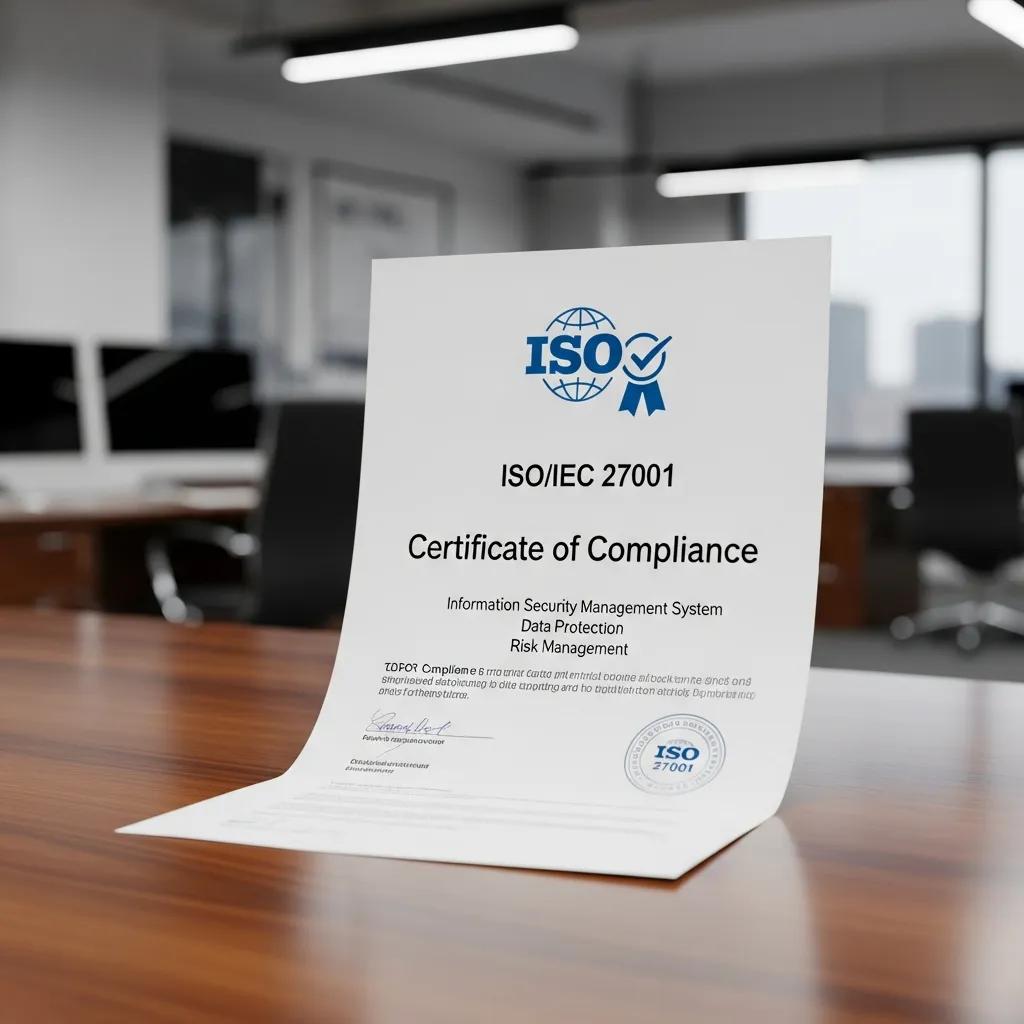
ISO/IEC 27001 is an internationally recognised information security standard that helps organisations build an ISMS to identify and treat information risks. It supports GDPR by formalising technical and organisational controls that align with data protection obligations. Practically, ISO/IEC 27001 requires a risk‑based approach, documented policies, control implementation and continual improvement — all of which dovetail with GDPR’s accountability and security‑by‑design expectations. Adopting ISO/IEC 27001 reduces breach likelihood, speeds incident response and provides demonstrable evidence of security governance to customers and regulators. The table below maps representative ISO controls to specific GDPR obligations to create a clear compliance pathway for security measures.
Different ISO/IEC 27001 controls contribute to GDPR compliance as part of an integrated ISMS.
This mapping shows how an ISMS delivers tangible controls that satisfy GDPR articles; organisations can use it to prioritise controls when scoping security improvements and preparing for audits.
For organisations pursuing certification, Stratlane Certification Ltd. offers accredited ISO/IEC 27001 audits and tailored schemes for different business sizes, including SME‑focused programmes. We position our service as a practical bridge between ISO controls and GDPR obligations, providing local and international audit teams, bespoke audit plans and dedicated account managers to smooth the certification pathway. If you want to align your ISMS with GDPR, request a quote or book an audit with Stratlane Certification Ltd. to start a structured certification journey.
Beyond information security, Stratlane Certification Ltd. also provides accredited ISO 9001 certification, the global standard for quality management systems, which helps businesses demonstrate consistent quality and customer focus across operations.
What are the key ISO/IEC 27001 controls mapped to GDPR requirements?
Focusing on a short list of priority ISO/IEC 27001 controls helps organisations get the most GDPR benefit for their effort. Key controls to prioritise include access management, encryption, logging and monitoring, incident response and business continuity — each ties to GDPR articles on confidentiality, integrity and availability. Implementing these controls reduces exposure to common threats like unauthorised access, data leakage and downtime, and provides documented evidence for compliance reviews. Align control choices with DPIA outcomes and your risk register to ensure proportionality and to justify selections to auditors and the ICO.
- Access Management: Enforce least‑privilege and role‑based access to personal data.
- Encryption: Protect data in transit and at rest to limit breach consequences.
- Logging & Monitoring: Enable detection, forensics and evidence for notifications.
- Incident Response: Ensure rapid containment and regulatory reporting where required.
- Backup & Recovery: Maintain availability and support processing resilience.
This prioritised list helps teams build an actionable roadmap tied to GDPR articles and shows stakeholders that security investments target legally relevant obligations.
How does ISO/IEC 27001 help meet GDPR Article 32 data security?
Article 32 requires controllers and processors to implement appropriate technical and organisational measures, proportionate to risk — including pseudonymisation, encryption, resilience and regular testing. ISO/IEC 27001 operationalises Article 32 through required risk assessments, selection of controls matched to threats, and ongoing monitoring and testing via internal audits and management review. Practical ISO measures that satisfy Article 32 include encrypting datasets, enforcing privileged access controls, network segmentation, routine vulnerability scans, incident response planning and regular disaster recovery testing. Together these steps reduce breach likelihood, shorten detection time and provide clear evidence of due diligence to the ICO and customers.
What GDPR compliance challenges do small businesses in the UK face?

SMEs often face limited budgets, scarce specialist expertise and the need to balance compliance with commercial priorities, creating governance and security gaps. Common issues include unclear ownership of data protection responsibilities, over‑reliance on third‑party processors without strong oversight, and difficulty carrying out DPIAs or applying proportionate technical controls. Practical steps include scoping the ISMS to critical processing, adopting phased implementations, using standard templates for records of processing and DPIAs, and taking advantage of SME‑focused certification schemes. These pragmatic approaches let smaller organisations manage risk without disproportionate cost while building a credible compliance posture for customers and partners.
Which UK GDPR requirements are most relevant for SMEs?
SMEs should prioritise requirements that carry the greatest operational and reputational risk: securing personal data (Article 32), establishing lawful bases and transparency (Articles 6 and 12), handling data subject requests, and documenting processing activities to show accountability. Quick‑start actions include mapping key processing flows, appointing a data protection lead, creating a simple retention schedule, implementing basic access controls and patching routines, and preparing templates for subject access requests and breach notifications. Prioritising these areas delivers rapid risk reduction and lays the groundwork for a full ISMS or certification as the business grows.
How can SMEs benefit from tailored ISO/IEC 27001 certification schemes?
SME‑tailored ISO/IEC 27001 schemes reduce the certification burden by focusing scope on critical processing and offering simplified audit approaches that fit limited resources, lowering cost and time to certification. Typical SME programmes provide reduced‑scope assessments, flexible audit scheduling and practical templates to speed implementation, allowing small IT teams to achieve certification without unnecessary complexity. Stratlane Certification Ltd. runs SME‑friendly options, including a programme for UK businesses with fewer than 15 employees, combining local audit teams, tailored audit plans and dedicated account managers. SMEs can request a tailored quote to check eligibility and expected timelines under our SME scheme.
How does ISO/IEC 42001 certification address AI data privacy under GDPR?
ISO/IEC 42001 sets out requirements for AI management systems (AIMS) that embed governance, risk management and ethical controls across the AI lifecycle — requirements that intersect directly with GDPR when AI processes personal data. ISO/IEC 42001 emphasises accountability, transparency, risk assessment and monitoring — all of which reinforce GDPR principles such as fairness, transparency and data protection by design and default. Implementing the standard helps identify AI‑specific privacy risks like unintended profiling, biased outcomes and opaque decision logic, and prescribes governance practices to mitigate those risks. The table below links AIMS elements to AI privacy risks and practical mitigation actions to reduce regulatory exposure.
ISO/IEC 42001 maps to AI privacy risks and suggests concrete mitigation steps.
This comparison shows how ISO/IEC 42001 operationalises GDPR‑relevant safeguards for AI and gives organisations a framework to show ethical, privacy‑aware AI practices to customers and regulators. If you deploy AI that touches personal data, integrate AIMS controls into DPIAs and procurement to ensure end‑to‑end governance.
Stratlane Certification Ltd. includes ISO/IEC 42001 among our accredited services and can provide focused audits for AI governance and privacy risk mitigation. Organisations can request an audit or quote from Stratlane to assess alignment between AI projects and GDPR obligations, leveraging tailored audit plans and experienced specialists.
What is ISO/IEC 42001’s role in ethical AI and data governance?
ISO/IEC 42001 defines a management‑system approach to AI that puts governance, accountability and ethical principles at the heart of lifecycle management, directly supporting GDPR requirements for transparent, fair and lawful processing. The standard requires documented policies, clear role definitions and oversight mechanisms so AI projects operate inside defined ethical and legal boundaries. In practice this becomes review boards, model risk assessments and clear documentation that you can present in regulatory inquiries or procurement checks. Combined with technical controls, ISO/IEC 42001 helps organisations demonstrate responsible AI use that respects data subject rights and transparency obligations.
How does ISO/IEC 42001 reduce AI‑related GDPR privacy risks?
The standard prescribes risk‑based controls such as DPIAs for AI systems, bias and fairness testing, logging for explainability and data minimisation techniques that lower privacy risks and strengthen GDPR compliance. Practical steps include scoping AI processing within DPIAs, using explainability tools, anonymising training data where possible and setting up continuous monitoring to detect model drift or bias. These measures reduce legal exposure and improve model quality and stakeholder trust by making outcomes more interpretable and accountable. Embedding these controls into procurement and development cycles ensures privacy‑by‑design for AI initiatives.
What does the GDPR audit process involve and why choose accredited certification?
A GDPR‑focused audit typically follows a clear sequence: scoping, readiness review, risk assessment, control testing, remediation and either certification or an audit report. Accredited certification offers independent assurance that controls meet recognised standards. Accredited audits use impartial criteria, evidence‑based testing and documented certification decisions that reassure customers and regulators about your compliance posture. Preparing for an audit means compiling records of processing activities, DPIAs, security policies and technical evidence such as logs and access control settings. Understanding the audit timeline and expected deliverables helps teams allocate time and resources efficiently. The table below summarises core audit stages, typical outputs and client benefits.
The table shows how each audit phase produces tangible outputs and how accreditation increases the credibility of those outputs, helping organisations win tenders and reassure customers.
What are the steps in a GDPR compliance audit by Stratlane?
Stratlane Certification Ltd. uses a staged, transparent audit approach starting with scoping and a readiness review, moving through documentation and control testing, and finishing with corrective action verification and a certification decision. Clients receive a tailored audit plan and a dedicated account manager to coordinate logistics. Our auditors can be local or international depending on your footprint, bringing sector‑relevant experience. The process includes a pre‑audit gap analysis, Stage 1 document checks, Stage 2 on‑site or remote control testing, an audit report listing any non‑conformities, and follow‑up verification of corrective actions before certification. The approach is practical for organisations of all sizes, with SME schemes available to reduce scope complexity where appropriate.
Why is accredited GDPR certification important for UK businesses?
Accredited certification gives independent validation that your security and data protection controls meet recognised standards, building trust with customers, partners and procurement teams while aligning expectations with regulator best practice. Commercially, accreditation improves tender readiness, differentiates suppliers in competitive markets and reduces due‑diligence friction in partnerships. From a regulatory standpoint, accredited certification demonstrates a commitment to accountability and continuous improvement, which can be persuasive in regulator discussions and can mitigate reputational harm after incidents. Choosing an accredited certification route with an experienced provider helps turn compliance effort into tangible market advantage.
- Independent Assurance: Accreditation provides impartial third‑party validation of controls.
- Market Differentiation: Certification supports tender success and supplier requirements.
- Regulatory Confidence: Demonstrates documented and tested processes to regulators.
Frequently Asked Questions
What are the penalties for non‑compliance with UK GDPR?
Breaching UK GDPR can lead to significant penalties, including fines up to £17.5 million or 4% of global annual turnover, whichever is higher. Beyond fines, organisations risk reputational damage, loss of customer trust and potential legal claims from affected individuals. The ICO can also issue enforcement notices requiring specific remedial steps. Prioritising compliance reduces these serious risks.
How often should businesses conduct GDPR audits?
At minimum, run GDPR audits annually to confirm ongoing compliance and to spot gaps. You should also audit more often if you change processing activities, adopt new technologies or experience a breach. Regular reviews help assess how well controls map to GDPR principles and allow timely policy and process adjustments.
What role does employee training play in GDPR compliance?
Employee training is fundamental. Regular, role‑based training ensures staff recognise personal data, understand security responsibilities and know how to respond to breaches or subject access requests. A strong training programme reduces human error — a common cause of data incidents — and reinforces a culture of data protection.
Can businesses rely on third‑party processors for GDPR compliance?
You can rely on processors, but you remain accountable for compliance. Conduct due diligence on a processor’s practices and put a robust Data Processing Agreement (DPA) in place that sets out responsibilities, security measures and data subject rights. Ongoing oversight of processors is also essential.
What is the significance of Data Protection Impact Assessments (DPIAs)?
DPIAs are key tools for identifying and reducing privacy risks from data processing activities. They help you judge necessity and proportionality, document decisions and implement mitigations before processing begins. DPIAs are especially important for new technologies or processing of sensitive data and are strong evidence of accountability.
How can businesses ensure data subject rights are respected under GDPR?
To respect data subject rights, implement clear procedures for access, rectification, erasure and portability requests. Designate a contact point, train staff, keep accurate processing records and provide transparent information on data use and rights. Regularly review these processes to ensure timely, compliant responses and to maintain customer trust.
Conclusion
Meeting UK GDPR is essential to protect personal data and reduce legal and reputational risk. Frameworks such as ISO/IEC 27001 help organisations strengthen security while demonstrating accountability to customers and regulators. SMEs can benefit from tailored certification paths that simplify the journey. If you’re ready to strengthen your data protection posture, explore our certification options and get a tailored quote from Stratlane Certification Ltd.