
Streamline Your Internal Auditing: A Comprehensive Guide

Internal Audits: A Guide to ISO Compliance and Business Success
Internal audits are planned, evidence-based reviews of an organisation’s management system that check conformity with requirements, test the effectiveness of controls and uncover opportunities to improve. They compare written procedures and actual practice against defined criteria — ISO standards, regulatory rules and internal policies — and produce findings that trigger corrective action and continual improvement. For UK businesses aiming for ISO compliance, a clear grasp of the internal audit process reduces risk, speeds certification readiness and demonstrates sound governance to customers and regulators. This guide walks through what internal audits do, how to plan and run them, the differences across ISO 9001, ISO 27001 and ISO 42001, and how accredited providers and AI-enabled tools can make audits faster and more consistent. You’ll also find step-by-step checklists, role-to-deliverable mappings and practical advice on sourcing accredited internal audit services, including how Stratlane Certification Ltd. supports audits with AI tools and accredited certification services. Use these processes, tables and lists to help audit teams, compliance managers and leaders build a reliable internal audit programme.
What is an Internal Audit and Why is it Essential for UK Businesses?
An internal audit is an independent, objective assessment of processes, controls and records carried out by qualified auditors to confirm whether a management system is achieving its intended results. Auditors sample records, interview staff and test controls to spot nonconformities, observations and improvement opportunities that feed into management review and corrective actions. For UK businesses, internal audits expose risk gaps, strengthen controls and help organisations prepare for external ISO certification. They also support continuous improvement and provide the evidence boards, customers and regulators expect that systems are working as documented.
Internal and external audits have different purposes and degrees of independence: internal audits focus on improvement and organisational learning, while external certification audits verify conformity for third-party assurance. Because of that, internal audits can be scheduled more often and adapted to strategic risks — a key advantage when preparing for certification and maintaining compliance.
How Does an Internal Audit Support ISO Certification and Compliance?
Internal audits prepare you for certification by mapping processes to relevant clauses, collecting objective records and finding gaps before a certification body inspects your system. Documenting nonconformities and tracking corrective actions creates the evidence trail external auditors expect, improving readiness and reducing the risk of major findings. Typical internal audit outputs — reports, nonconformity records and corrective action plans — feed directly into management review and the Plan-Do-Check-Act (PDCA) cycle required by ISO. Regular internal auditing also helps you stay compliant after certification by catching regressions early and verifying that corrective actions are effective.
What are the Key Benefits of Internal Auditing for Risk Management and Business Growth?
Internal audits reveal process weaknesses and control gaps before they become operational failures, regulatory breaches or customer complaints. By identifying inefficiencies and nonconformities, audits enable targeted improvements that reduce waste, cut costs and improve performance — all of which support measurable growth. Audits also build stakeholder confidence by providing verifiable evidence of due diligence, which helps with tenders, customer assurance and supply-chain relationships. Turning audit findings into strategic actions links audit work directly to risk reduction and continuous improvement, helping organisations scale while keeping controls fit for purpose.
- Early risk detection, improved process efficiency and stronger stakeholder confidence.
- Audit-driven improvements that reduce costs and raise market credibility.
- Regular internal auditing that aligns operational performance with strategic and ISO objectives.
With those benefits in mind, the next section sets out a practical, step-by-step internal audit process teams can apply across management systems.
How to Conduct an Internal Audit: Step-by-Step Process for Effective Management System Audits

A reliable internal audit follows a simple lifecycle: planning, execution, reporting and follow-up — each stage delivering clear outputs so nothing is left open. Planning defines scope, criteria and schedule; execution gathers objective evidence through interviews, sampling and testing; reporting records findings with defined classifications; and follow-up verifies corrective actions and closes the loop. A risk-based approach focuses scarce resources on high-risk areas and meets the continual improvement expectation in ISO standards. This lifecycle also reflects ISO 19011 guidance on auditor competence, sampling and evidence-based assurance.
Use the checklist below as a practical field guide to running an audit.
- Plan: Set scope, objectives, audit criteria and appoint competent, impartial auditors.
- Prepare: Create checklists, request documents and arrange interviews with process owners.
- Execute: Collect evidence, interview staff, sample records and test controls against the criteria.
- Report: Record findings, classify nonconformities, note observations and suggest corrective actions.
- Follow-up: Confirm root causes, implement corrective actions and verify effectiveness with rechecks.
The planning phase needs particular clarity on who does what; the table below maps typical audit tasks to responsible roles and expected outputs to help teams allocate effort effectively.
Clear role mapping produces predictable deliverables that feed management review and external certification readiness. The next section breaks down planning and preparation for ISO internal audits.
What are the Planning and Preparation Steps for an ISO Internal Audit?
Start planning by defining a scope and objectives tied to specific ISO clauses so the audit targets the right legal, regulatory and contractual requirements. Choose auditors for competence and impartiality — they need the technical knowledge to test controls and the independence to report honestly. Preparing checklists and evidence requests ahead of fieldwork saves time: common preparatory items are process maps, recent performance data, previous findings and corrective-action records. Clear communication with process owners about timing, expected documents and interview topics reduces disruption and improves the quality of evidence gathered.
- Define scope linked to ISO clauses and organisational risks.
- Assign competent, impartial auditors with relevant domain knowledge.
- Prepare checklists and document requests before fieldwork begins.
These steps reduce friction during execution and help produce reliable, evidence-backed findings.
How to Execute, Report, and Follow Up on Internal Audit Findings?
Execution is about systematic evidence-gathering: observation, document review, sampling and structured interviews to confirm processes operate as intended. Use open but focused interview techniques to surface undocumented practices and justify sampling by risk to support conclusions. Reporting should clearly state whether a finding is a nonconformity or an observation, cite objective evidence and reference the relevant clause or control, then offer practical recommendations and root-cause insights. Follow-up means agreeing corrective actions with owners, setting realistic deadlines and verifying effectiveness through rechecks or evidence, ensuring nonconformities are closed and improvements embedded in the system.
- Write clear finding statements that tie evidence to the failed requirement.
- Track corrective actions with owners, deadlines and verification steps.
- Verify effectiveness by reviewing implemented controls and updated performance data.
When execution and follow-up are disciplined, audits finish with durable improvements and stronger controls. The next section explains how requirements vary between ISO standards.
What are the Specific Requirements and Best Practices for ISO Internal Audits?
All ISO internal audits use a risk-based, process-focused approach, but the control emphasis changes by standard: ISO 9001 centres on quality and process performance, ISO 27001 focuses on information security controls, and ISO 42001 addresses AI governance and documentation. Best practices include prioritising audits by risk, matching auditor competence to specialised domains, and applying consistent criteria and evidence standards so you can analyse trends. Cross-standard habits — maintaining impartiality, documenting audit trails and linking findings into management review — help organisations handle multiple ISO requirements efficiently. The table below summarises audit focus, key evidence and common nonconformities for each standard.
This snapshot helps audit teams tailor evidence requests and test procedures to the standard under review. Next we cover QMS-focused auditing for ISO 9001 and specialist considerations for ISO 27001 and ISO 42001.
How to Perform an ISO 9001 Internal Audit for Quality Management Systems?
An ISO 9001 audit checks process performance, conformity to quality objectives and evidence of continual improvement. Auditors look at how outputs meet customer requirements and whether nonconformities lead to effective corrective action. Typical evidence includes KPIs, customer satisfaction metrics, calibration and maintenance records, and change-control documentation. Frequent findings are undocumented procedures, missing performance monitoring and incomplete corrective-action verification. Link observations to objective metrics so corrective actions can be prioritised and management review is informed by solid data.
What are the Key Considerations for ISO 27001 and ISO 42001 Internal Audits?
ISO 27001 audits focus on testing controls, confirming risk treatments are in place and checking monitoring like access logs and incident detection. Auditors should sample access rights, review vulnerability treatment records and test incident response to ensure controls work. ISO 42001 audits probe AI model governance, data provenance, training-data documentation and bias-mitigation measures; these often require technical expertise to evaluate algorithmic decisions and explainability. In both standards, record quality and chain-of-custody matter — escalate technical findings to subject-matter experts when needed to assess risk accurately.
For AI systems specifically, new resources are emerging to help organisations build robust internal auditing programmes aligned to ISO/IEC 42001.
ISO/IEC 42001: Auditing AI Compliance Frameworks
A practical handbook for creating an internal auditing programme that strengthens an organisation’s AI compliance framework.
AI Management System Certification According to the ISO/IEC 42001 Standard: How to Audit, Certify, and Build Responsible AI Systems, 2024
Given these standard-specific needs, auditor competence and accurate evidence collection are vital. The next section shows how AI-driven tools and experienced experts can support audit programmes.
How Does Stratlane’s AI-Driven Internal Audit Service Enhance Audit Efficiency and Accuracy?
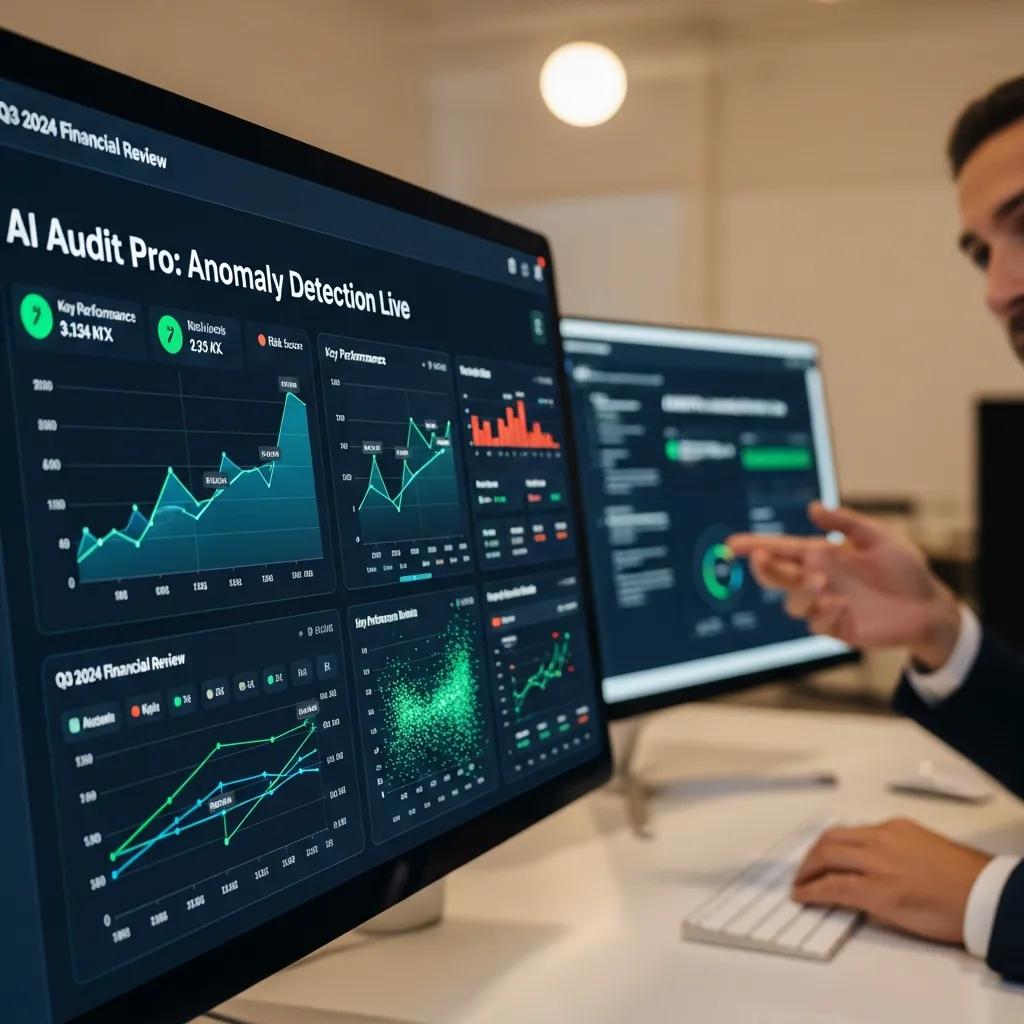
Stratlane Certification Ltd. pairs accredited certification services with AI-enabled audit tools and industry specialists to improve audit speed, consistency and accuracy. AI accelerates routine evidence capture, automates document checks and highlights patterns across datasets, cutting manual review time and making finding classification more consistent. Experienced auditors then apply judgement to interpret AI-flagged issues, validate context and conduct interviews that need sector knowledge. This human-plus-AI approach increases both the pace and depth of audits.
The integration of AI is widely recognised for its potential to strengthen audit governance and operational performance.
AI Transformation in Internal Audit for Enhanced Governance
Internal audit remains essential and must be both efficient and effective. By combining proactive assurance with advanced analytics and automation, AI is reshaping how internal audit delivers governance insights and operational improvements.
Efficiency Redefined: How AI is Driving a Revolution in Internal Audit Effectiveness, K Vaidya, 2025
- AI tools automate routine checks, reducing time on fieldwork and report drafting.
- Experienced auditors add sector context, root-cause analysis and practical recommendations.
- Accredited certification and international reach provide assurance for multi-jurisdictional organisations.
The sections that follow explain how auditors and AI work together and how automation supports continuous improvement.
What Role Do Experienced Industry Experts Play in Stratlane’s Internal Audit Process?
Experienced auditors bring judgement and sector expertise that AI alone cannot replicate: they contextualise unusual findings, judge risk significance and prioritise corrective actions by business impact. They design sampling strategies, lead interviews and decide whether an issue is systemic or isolated. At Stratlane, auditors use AI-generated insights to validate patterns, focus fieldwork on high-risk areas and translate technical points into management-level recommendations. This oversight keeps audit conclusions accurate, defensible and aligned with business objectives.
How Does AI Technology Improve Compliance and Continuous Improvement?
AI speeds audits by automating repetitive tasks — document comparison, presence checks and trend analysis — freeing auditors to focus on judgement-heavy work. Pattern detection highlights systemic weaknesses across sites or processes, enabling earlier, risk-prioritised corrective action. AI can also standardise report templates and pre-classify findings so reports are faster and more consistent. Together, these capabilities shorten the feedback loop and strengthen continual improvement through faster, data-driven decisions.
Research further highlights AI’s growing role in boosting internal audit efficiency and effectiveness worldwide.
AI’s Impact on Internal Audit Efficiency & Effectiveness
A study examining how artificial intelligence enhances global internal audit functions — improving data analysis, risk detection, compliance monitoring and decision support as organisations adopt AI technologies.
The Role of Artificial Intelligence in Enhancing Global Internal Audit Efficiency: An Analysis, I Ghafar, 2024
Combining human expertise and AI helps organisations sustain robust audit programmes that also meet UK regulations and new international standards, which we cover next.
How Do Internal Audits Ensure Compliance with UK Regulations and Emerging Standards?
Internal audits test the controls that support regulatory obligations such as data protection and corporate governance, producing evidence that policies, procedures and technical controls operate effectively. By mapping legal requirements to audit criteria, auditors can verify areas like GDPR data handling and board reporting under the UK Corporate Governance Code. Audits also prepare organisations for emerging frameworks — for example the 2025 Global Internal Audit Standards — by strengthening documentation, governance and auditor capability to meet higher expectations.
Audit programmes that incorporate regulatory checkpoints and forward-looking standard alignment reduce the risk of enforcement action, reputational harm and operational disruption. Updating audit charters, documentation and auditor skills to reflect new standards is a practical next step for many organisations; the following sections explain specific regulatory impacts and steps SMEs should take.
What is the Impact of GDPR and UK Corporate Governance Code on Internal Auditing?
GDPR requires auditors to test data maps, access controls, retention policies and Data Protection Impact Assessments (DPIAs) where processing is high risk, using evidence such as access logs, consent records and third-party agreements. The UK Corporate Governance Code raises expectations for board oversight and accountability, so auditors should verify board reporting channels, escalation processes and how audit findings feed into strategic decisions. Audits that cover these checkpoints produce the evidence boards need to show robust governance and accountability.
How Will the 2025 Global Internal Audit Standards Affect UK Businesses?
The 2025 Global Internal Audit Standards (GIAS 2025) are likely to raise the bar for documentation, governance and auditor competence — requiring clearer audit charters, stronger workpaper documentation and demonstrable professional development. UK organisations should review their audit charters, upskill internal auditors or engage competent external auditors, and update procedures so audit evidence and reporting meet these expectations. Getting ahead of GIAS 2025 enhances credibility and positions organisations to demonstrate stronger governance to regulators and customers.
Where Can UK Businesses Access Accredited Internal Audit Services and Support?
UK businesses can obtain accredited internal audit services from certification bodies and authorised providers that offer audit facilitation, AI-aided assessments and full certification audits. Choose a provider that combines accreditation, technical competence and practical support to reduce certification risk. When comparing providers, check whether they manage the audit lifecycle from quote to report, whether they use AI tools to speed evidence handling, and whether they can issue certificates across jurisdictions if you operate internationally. Stratlane Certification Ltd. is one provider offering accredited ISO certification audits for ISO 9001, ISO 27001 and ISO 42001, using AI-enabled tools alongside experienced auditors and supporting the audit process from scoping to report delivery across multiple countries.
Before engaging a provider, gather essential information and review available preparatory resources; the table below compares common services and their typical benefits to help SMEs decide.
In short: facilitation speeds internal cycles, certification provides formal assurance and AI improves efficiency. The final sections explain how to request a quote with Stratlane and what preparatory resources are typically available.
How to Request a Quote and Book an Internal Audit with Stratlane Certification Ltd.?
To request a quote from an accredited provider like Stratlane, prepare a short scoping brief that lists the standards you want (for example ISO 9001, ISO 27001 or ISO 42001), the scope (sites, processes or systems), organisation size and any known risks or prior findings. Booking usually follows a scoping call, a proposal/quote, scheduling of audit activities and delivery of the audit report; many accredited providers manage this end-to-end to streamline appointments and reporting. When engaging a body, confirm whether they use AI tools for evidence handling and whether they can issue certificates across the countries where you operate.
Submitting a clear brief speeds scheduling and helps the audit team prepare focused checklists and evidence requests.
What Resources and Tools Does Stratlane Provide for Internal Audit Preparation?
Accredited providers typically supply preparatory resources such as internal audit checklists, sample audit plans and guidance on evidence preparation to help organisations get ready for fieldwork. These resources usually include checklist templates mapped to ISO clauses, suggested evidence requests and sample schedules that cut preparation time and improve evidence quality. If you’re using AI-enabled services, guidance may also cover document naming conventions, central evidence repositories and data export formats to speed automated reviews.
- Prepare a concise scoping brief listing standards, scope and known risks.
- Gather key documents such as process maps, KPI reports and corrective-action records.
- Use provided checklists and sample plans to structure evidence collection and interviews.
Frequently Asked Questions
What qualifications should internal auditors have?
Internal auditors should hold relevant certifications and demonstrable experience for the systems they audit. Common qualifications include Certified Internal Auditor (CIA) and ISO Lead Auditor courses (ISO 9001, ISO 27001). Auditors also need skills in risk assessment, evidence collection and report writing, plus ongoing professional development to stay current with evolving standards.
How often should internal audits be conducted?
Audit frequency depends on organisation size, process complexity and risk level. At minimum, carry out internal audits annually, but high-risk areas often need more frequent review while low-risk processes can be audited less often. A risk-based schedule ensures audit effort is focused where it matters.
What are common challenges faced during internal audits?
Typical challenges include staff resistance, poor documentation and limited time. People may be nervous about being assessed, which can hinder openness. Weak process documentation makes evidence gathering harder, and tight schedules can rush the audit. To reduce these issues, plan clearly, communicate expectations and foster a culture of continuous improvement.
How can technology enhance the internal audit process?
Technology streamlines audits by automating routine checks, improving data analysis and enabling real-time monitoring. AI tools can speed evidence collection, spot patterns and flag issues for human review, freeing auditors to focus on judgement-based tasks. Digital platforms also centralise documents and improve collaboration, increasing audit efficiency and reliability.
What role does management play in the internal audit process?
Management must support the audit function by providing resources, access and a mandate for auditors to act independently. Leaders should ensure audit findings are reviewed, corrective actions are resourced and outcomes feed into strategic decisions. Management involvement is crucial to turn audit insights into meaningful improvements.
How can organisations ensure the effectiveness of their internal audit programme?
To keep an audit programme effective, set clear objectives, maintain auditor competence and follow a risk-based approach. Provide regular training, invite feedback from audit participants and integrate findings into management review and strategic planning. Continuous improvement of the audit process itself strengthens organisational governance over time.
Conclusion
Internal audits are a practical tool for UK businesses to secure ISO compliance and drive operational improvement. By identifying risks and turning findings into action, audits support certification readiness, protect reputation and build stakeholder confidence. Working with an accredited provider like Stratlane Certification Ltd. can simplify the audit journey and bring the benefits of AI-assisted efficiency alongside experienced auditors. Start strengthening your compliance and business performance today by exploring our internal audit services.