
Understanding ISO Certification Duration and Timeline

Streamlining Your ISO Certification Journey: Timelines and Strategies
Achieving ISO certification is the formal confirmation that your management system aligns with a specific ISO standard, verified by an accredited certification body. Typically, the journey from project initiation to certificate issuance spans 3 to 12 months, influenced by the standard, your scope, and your organisation’s readiness. This guide breaks down the typical ISO certification timelines, explains why they vary, and highlights the stages that require the most time, helping you set realistic milestones for ISO 9001, ISO 27001, and ISO 42001. You’ll discover stage-by-stage durations, estimated audit days, options for expedited certification, and practical checklists for both small and large organisations. For context, Stratlne Certification Ltd. is an accredited certification body operating globally, utilising innovative AI-driven audit tools and dedicated account management to enhance predictability and reduce overall project duration.
What Are the Typical Stages of the ISO Certification Process?
The ISO certification process unfolds through distinct phases: preparation, implementation, Stage 1 (readiness) audit, Stage 2 (conformance) audit, and finally, certificate issuance. Each stage plays a vital role in determining the overall timeline. Preparation involves defining your scope, policies, and resources; implementation focuses on building your management system and gathering evidence; Stage 1 confirms your documentation is ready; and Stage 2 verifies the effective operation of your system, forming the basis for certification. This structured approach minimises risk by ensuring readiness before a full assessment and concentrates audit efforts where they’re most impactful. The following section details the concrete steps involved, from initial preparation right through to certification.
What Steps Are Involved from Preparation to Certification?
Your preparation begins with a gap analysis to pinpoint any missing policies or processes and to prioritise implementation efforts. This crucial step defines your certification scope, objectives, and resource requirements. Implementation then transforms identified gaps into documented procedures, involves staff training, and collects objective evidence like records and monitoring outputs. Internal audits and management reviews are conducted to test system effectiveness before the external assessment. The Stage 1 audit validates your documentation and overall readiness, providing focused findings that your team must address before proceeding to Stage 2. The Stage 2 audit samples your processes to confirm conformance and generates the final audit report. Completing these steps efficiently through disciplined, parallel workstreams can significantly reduce the overall calendar time. The subsequent section quantifies how long each stage commonly takes.
How Long Does Each Stage Usually Take?
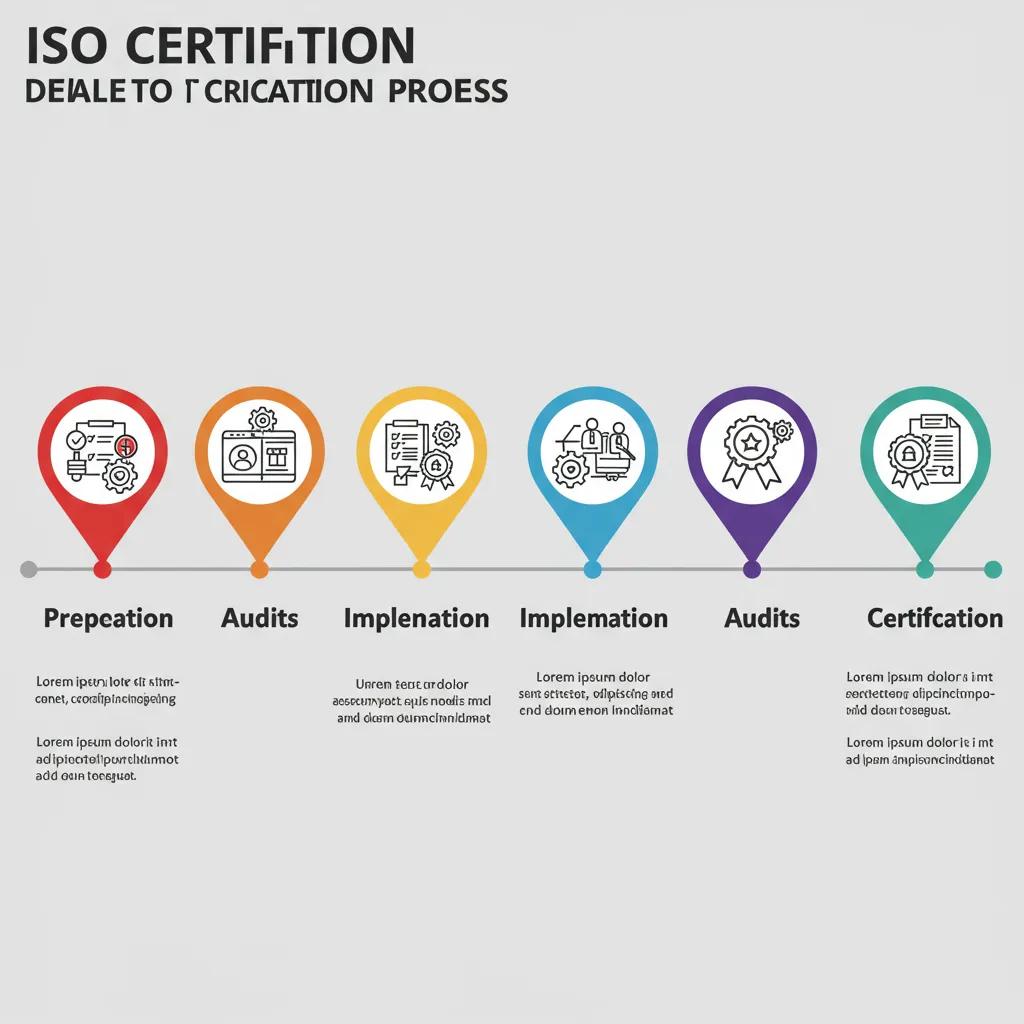
Stage durations can vary, but typical ranges include preparation (2–12 weeks for focused projects), implementation (4–24 weeks, depending on complexity), Stage 1 audit (1–3 days plus reporting time), and Stage 2 audit (1–10 audit days, depending on scope). Preparation time can be shortened by leveraging existing documentation or dedicating specific resources. Implementation may take longer with broader scopes or multi-site operations. Audit scheduling can introduce calendar delays of several weeks between Stage 1 and Stage 2. Certificate issuance usually follows within 1–3 weeks after a successful Stage 2 audit and the resolution of any identified non-conformities. Understanding how audit days translate into the overall schedule is key to prioritising documentation and evidence collection to meet your target dates.
How Does the Audit Process Fit into the Overall Timeline?
The audit process is divided into an initial Stage 1 document review and a Stage 2 on-site or remote system audit. Stage 1 assesses your readiness, while Stage 2 examines operational effectiveness and sampled records. Audit days are allocated based on your scope, the number of sites, and the staff to be interviewed. A compact, well-documented system can reduce the number of required audit days and the time auditors spend on-site. Reporting and the closure of any corrective actions are essential components that can add 1–4 weeks, depending on the number and severity of findings. Efficient audit planning and clear evidence filing accelerate auditor review cycles and shorten the path from Stage 2 to certificate issuance.
How Long Does ISO 9001 Certification Take in the UK?
For a Quality Management System (QMS), ISO 9001 certification typically takes between 2 and 6 months for small, well-prepared organisations, and 4 to 12 months for medium to large or multi-site operations. The primary drivers are scope, the maturity of your existing processes, and resource allocation. Implementing a QMS involves documenting processes, embedding controls, and conducting internal audits. Stage 1 and Stage 2 audits then assess documentation and operational effectiveness, with audit days scaling according to organisational size. Accreditation requirements and local scheduling can influence the calendar time in the UK, but targeted project plans and SME support programmes can reliably compress timelines without compromising rigour. The next section breaks down preparation and implementation activities, enabling organisations to estimate realistic schedules.
What Is the Preparation and QMS Implementation Timeline?
Preparation commences with scope definition and a gap analysis to highlight missing process documentation and key risks. This phase typically takes 1–3 weeks for focused projects and longer if extensive process mapping is required. Documentation, process adoption, staff training, and internal audits then occupy the majority of implementation time, usually ranging from 4–16 weeks, depending on organisational complexity and leadership engagement. Management review and corrective actions conclude the internal cycle, creating the evidence package for Stage 1. Prioritising critical processes and utilising template-based documentation can accelerate progress. Teams that allocate dedicated internal resources or engage focused consultancy support can often shorten implementation by running parallel workstreams and overlapping training with documentation tasks.
| Organisation Size | Typical Audit Days | Estimated Duration (Months) |
|---|---|---|
| Micro (1–10 Staff) | 1–2 Days | 2–4 Months |
| Small (11–50 Staff) | 2–4 Days | 3–6 Months |
| Medium (51–250 Staff) | 4–8 Days | 4–9 Months |
| Large / Multi-Site | 8+ Days (Site Sampling) | 6–12 Months |
This table illustrates how audit days and calendar duration scale with organisational size. Micro and small businesses frequently complete certification faster when the scope is tightly controlled and evidence is readily available.
How Many Audit Days Are Required for ISO 9001?
Audit day requirements for ISO 9001 are determined by your scope, employee count, process complexity, and whether audits are combined with other standards. Typical day ranges are 1–2 days for micro organisations and 4–8 days for medium-sized entities. Remote or hybrid audit models can reduce travel time and compress auditor scheduling but do not eliminate the need for sufficient sampling and evidence review. Combining audits with other standards, such as ISO 27001, can yield efficiencies but may increase individual audit day counts due to a broader scope. Preparing records and mapping key processes before the audit optimises auditor time on-site and often shortens the required audit days.
What Are Realistic Timelines for Small Businesses?
Small businesses in the UK commonly achieve ISO 9001 certification within 3–6 months when they operate with a focused project plan, assign a dedicated project lead, and utilise available SME programmes for streamlined support. Stratlne Certification Ltd. offers specialised programmes and fixed-fee quotes tailored for organisations with fewer than 15 employees in the UK, helping to clarify scope and reduce procurement friction during scheduling. Typical micro/small business timelines concentrate on rapid gap analysis, template-based documentation, internal audits, and a single-stage external assessment schedule that minimises calendar gaps. Avoiding common pitfalls—such as insufficient evidence, under-resourced internal ownership, and delayed corrective actions—keeps small business timelines within realistic windows.
What Is the ISO 27001 Certification Duration for Small Businesses?
ISO 27001 certification for an Information Security Management System (ISMS) centres on risk assessment, control implementation, and demonstrable information security practices. For small organisations, a realistic duration is commonly 3–6 months from project start to certificate issuance, provided the scope is limited and resources are dedicated. ISMS implementation involves scoping, risk assessment, control selection, evidence gathering, and validation through internal audits and management review before Stage 1 and Stage 2 audits. Audit days scale with scope and the number of assets/processes in scope; careful scoping and focused control implementation can reduce both audit days and calendar time. The following section outlines typical ISMS implementation phases and their durations to help set expectations.
How Long Does ISMS Implementation Usually Take?
ISMS implementation phases typically include scoping and risk assessment (1–3 weeks), control selection and implementation (4–12 weeks), documentation and evidence collation (2–6 weeks), and internal audit and management review (1–3 weeks). Small organisations that prioritise high-risk assets, use standard control templates, and run parallel documentation and control testing often complete core ISMS readiness within 3 months. Resource allocation, such as assigning an internal information security lead or engaging external support, materially shortens calendar time by enabling concurrent activities. Effective change control and evidence management further reduce delays during external audits.
How Many Audit Days Are Needed for ISO 27001?
Audit day guidance for ISO 27001 typically ranges from 3–10 days, depending on scope, complexity, and the number of information assets in scope. Small companies often fall at the lower end, requiring 3–5 audit days for Stage 2. Scope breadth—including multiple locations, cloud services, or outsourced processors—and the maturity of your evidence can significantly increase audit days, as auditors must sample more controls and records. Remote audits can be used for documentation review and some sampling, but accreditation rules limit the proportion of remote work, and on-site time may still be required for control verification. Clear scoping and documented evidence mapped to annex controls usually reduce the time auditors spend validating the ISMS.
Can ISO 27001 Certification Be Expedited?
ISO 27001 certification can be expedited when an organisation already operates mature information security practices, employs focused scoping, and runs parallel workstreams for documentation and testing. However, the required audit evidence and independent assessment cannot be bypassed. Fast-track methods include narrowing the scope, preparing evidence packs in advance, scheduling Stage 1 and Stage 2 audits closely together, and utilising experienced, account-managed certification journeys to coordinate logistics. The risks of rushing include incomplete evidence, a higher likelihood of non-conformities, and rework that ultimately delays certification. Legitimate acceleration requires readiness, prioritised resources, and disciplined corrective-action closure.
How Long Does ISO 42001 Certification Take for AI Management Systems?
ISO 42001 for AI Management Systems (AIMS) requires robust governance, risk assessment tailored to AI, controls for data quality and model monitoring, and documented evidence of validation and human oversight. Certification timelines for AIMS commonly range from 4–10 months, depending on product maturity and the regulatory context. AIMS implementation often parallels ISMS and QMS activities but adds AI-specific controls such as model risk management, bias detection, and post-deployment monitoring—all of which require evidence over time. Product maturity and the extent of model testing influence audit days, as auditors assess outputs and monitoring frameworks, not just policies. The next section outlines typical AIMS development phases and readiness activities to guide AI teams.
What Is the Typical AIMS Development and Readiness Timeline?
AIMS readiness encompasses governance and policy setup (2–6 weeks), risk assessment and mitigation design (4–8 weeks), controls implementation and tooling integration (6–12 weeks), and validation, testing, and monitoring readiness (4–8 weeks) before internal audits and management review. Early-stage AI projects may adopt a phased approach: establish minimal viable governance, implement critical controls, and then expand coverage as the model matures. Integrating AIMS activities with product development cycles reduces duplication and shortens calendar time by aligning release-based evidence collection with certification milestones. Prioritising high-impact controls such as explainability, testing, and monitoring significantly improves audit readiness.
How Long Are the Audit Days for AI Controllers and Processors?
Audit days for AIMS depend on whether an organisation acts as an AI controller or processor, the number of models in scope, and the maturity of validation evidence. Auditors typically allocate additional days for model testing review and stakeholder interviews. For small to medium AI providers, expect an incremental 1–3 audit days on top of a base audit for overlapping standards like ISO 27001, as AI-specific evidence requires sampling of model outputs and monitoring artefacts. Where ISO 27001 and ISO 42001 overlap, combined audits can create efficiencies by aligning control assessments and reducing overall travel days. Product maturity shortens auditor time as live monitoring and validation artefacts become available for review.
What Are Compliance Timelines for AI Startups?
AI startups often adopt a staged compliance plan: rapid governance and minimum viable controls to support early customers (2–4 months), followed by expanded controls and monitoring to achieve full AIMS readiness (6–12 months). Early certification decisions should align with funding, tender, or partner timelines, ensuring compliance milestones support commercial objectives without overcommitting resources. Prioritising scalable tooling for logging, testing, and monitoring reduces rework and compresses later certification phases. Planning certification after a stable model release and initial monitoring data is available increases the likelihood of a smooth audit and timely certificate issuance.
What Factors Influence the Length of ISO Certification?
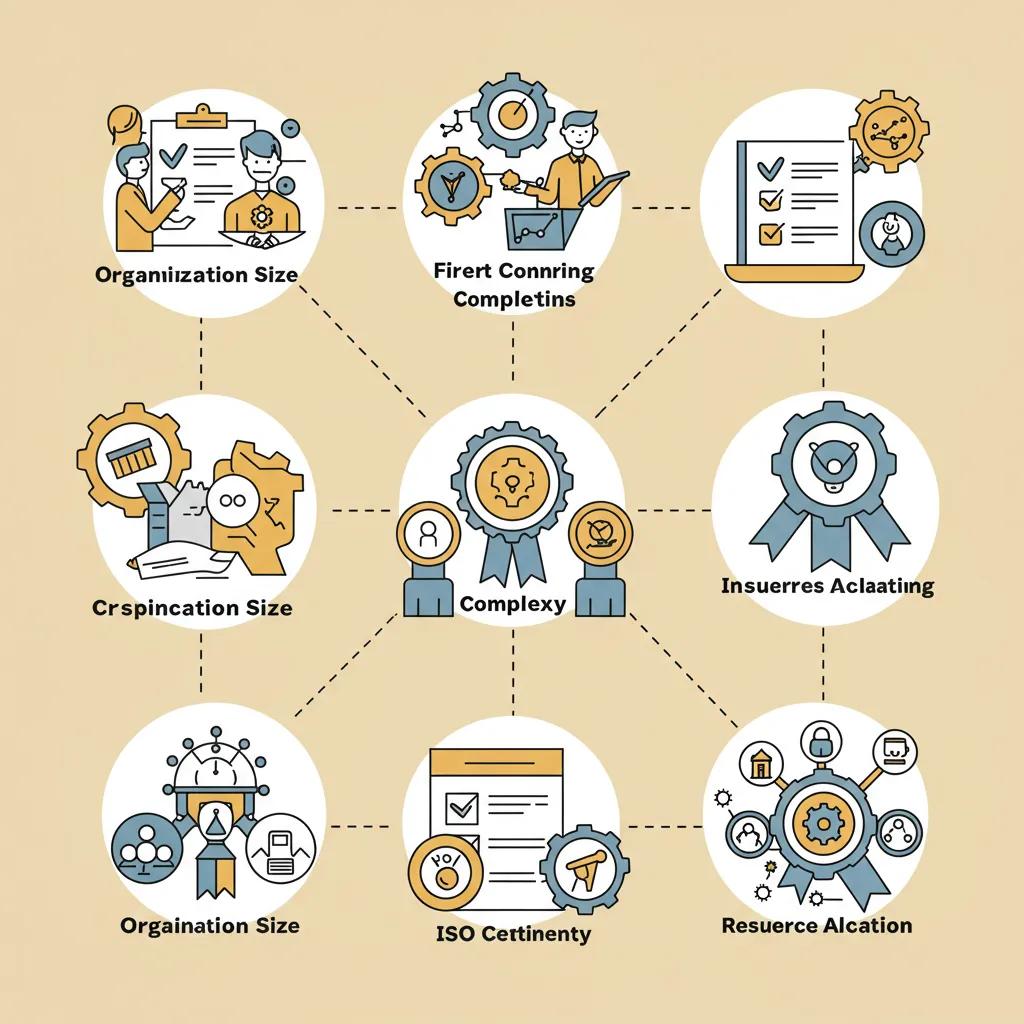
Several factors determine certification duration: organisation size and complexity, the readiness of your documentation and evidence, resource allocation, audit scope, and the choice between remote versus on-site audits. Each factor influences both audit days and calendar time. Size dictates more processes and records to sample, increasing auditor day counts. Readiness shortens preparation and reduces corrective action time. Resource allocation enables parallelisation and reduces calendar delays. Remote audits can shrink travel-related scheduling gaps but are subject to accreditation limits on remote time, and certain verification tasks still require on-site presence. The following sections break down these influences, quantify their impacts, and present a comparison table to clarify practical effects.
How Do Organisation Size and Complexity Affect Timelines?
Organisation size and process complexity multiply the scope for audit sampling and increase implementation work, as more departments and sites generate more records and control points to verify. Larger scopes increase audit day estimates and often introduce multi-site sampling, adding coordination time and potential travel that lengthens calendar duration. Complexity, such as regulated activities, outsourced processes, and diverse technology stacks, requires more evidence and specialist auditor time, extending both preparation and on-site assessment. Planning a realistic timeline therefore means carefully mapping your scope and using phased certification approaches where appropriate to manage complexity.
| Factor | Effect on Timeline | Practical Impact |
|---|---|---|
| Size / Employees | Increases Audit Days | Larger Staff → More Sampling, +1–4 Days |
| Multi-Site Operations | Extends Calendar | Site Visits Add Coordination and Travel |
| Scope Breadth | Raises Preparation Time | More Processes → Longer Documentation Effort |
| Product/Tech Complexity | Requires Specialist Review | Additional Auditor Expertise → More Days |
This table clarifies that size, scope, and complexity have concrete, multiplicative effects on both audit days and calendar duration, making scoping decisions central to timeline control.
How Does Readiness and Resource Allocation Change Duration?
Readiness—measured by existing documentation, prior controls, and trained staff—directly reduces implementation time and corrective-action cycles because auditors find fewer non-conformities. Dedicating an internal project lead, securing leadership support, and using targeted consultancy or templates can compress the calendar by enabling parallel tasks such as documentation and control testing. Conversely, ad-hoc resourcing and intermittent project attention extend calendar timelines as tasks pause between availability windows. Establishing a weekly governance cadence and clear milestones significantly increases the probability of meeting certification targets.
What Is the Effect of Remote vs. On-site Audits on Timing?
Remote and hybrid audits reduce travel time and can allow auditor teams to work more flexibly, but accreditation constraints limit how much of an audit can be conducted remotely, and certain verification tasks still require an on-site presence. Remote audits can speed up scheduling and reduce logistical delays when documentation is well-organised and evidence can be shared securely, shortening calendar gaps between stages. On-site audits allow for direct observation of physical processes and interviews, which can be more efficient for complex or multi-site scopes. Choosing the right mix of remote and on-site activities balances audit efficiency with accreditation and evidentiary needs.
How Does Stratlne’s AI-Driven Audit Technology Reduce Certification Time?
Stratlne’s AI-driven audit technology accelerates evidence review, automates routine checks, and focuses auditor attention on high-risk areas, thereby reducing overall audit days and improving timeline predictability during ISO certification. The AI analyses submitted documentation to flag missing evidence, cluster related records, and propose audit agendas that minimise time spent on low-value checks. Our account-managed certification journeys then coordinate scheduling to compress calendar delays. By blending automated pre-review with experienced auditors, Stratlne Certification Ltd. shortens the time from Stage 1 to Stage 2 and lowers uncertainty around reporting and corrective-action closure. The next section lists measurable benefits and explains how they translate into time savings for our clients.
What Are the Benefits of AI-Enhanced Audit Efficiency?
AI-enhanced audit efficiency reduces manual document review, identifies high-risk control gaps earlier, and enables auditors to prioritise on-site time for substantive verification rather than paperwork. The automated review accelerates report drafting and produces standardised findings that speed up corrective action cycles and closure. Clients experience fewer scheduling overruns because the pre-assessment reduces surprises at Stage 2 and concentrates auditor time on areas requiring professional judgement. These efficiencies translate into tangible calendar savings and more predictable project timelines.
How Does AI Impact Cost and Timeline Predictability?
AI reduces uncertainty by producing consistent pre-assessments and standardised evidence checks, which lowers the variation in auditor day estimates and results in more reliable fixed-fee quotations and planning. Predictable audit scopes reduce the risk of last-minute scope increases that inflate costs and delay certification. Our account-managed workflows further streamline logistics and stakeholder coordination. Organisations that utilise Stratlne’s AI-driven tools alongside dedicated account management typically observe improved scheduling stability and, in many cases, shorter overall certification periods without compromising audit quality.
What Are the Ongoing Timelines for Maintaining ISO Certification?
Maintaining ISO certification involves scheduled surveillance audits and a three-year re-certification cycle. Annual surveillance typically focuses on key processes and risk areas to confirm continued conformity. Surveillance audits usually occur once per year, examine selected clauses, and verify corrective-action status, commonly requiring fewer audit days than initial certification unless the scope or risk profiles change. Re-certification at the end of the three-year cycle often involves a full or partial reassessment, depending on changes in scope or previous findings, and requires planning several months in advance to align resources. The following sections clarify surveillance cadence and re-certification activities, enabling organisations to budget ongoing effort.
How Often Are Annual Surveillance Audits Conducted?
Annual surveillance audits are normally conducted once per year, focusing on selected processes, corrective-action follow-up, and key performance indicators to verify that the management system continues to operate effectively. Surveillance audits are shorter than initial certification audits because they use sampling and follow up on prior non-conformities. Their duration depends on any scope changes or significant findings from the previous cycle. Preparing concise evidence packages and maintaining logs of management review items reduces the time auditors need during surveillance and keeps ongoing costs predictable. Regular internal monitoring and periodic internal audits make surveillance smoother and faster.
What Is the Typical Re-certification Process and Duration?
Re-certification usually occurs at the end of the three-year certification cycle and comprises a comprehensive assessment similar to initial certification, though it may use sampling to focus on changed or high-risk areas. Organisations should plan re-certification activities 3–6 months before expiry. The process involves a review of system effectiveness, updated internal audits, management review, and a Stage 2 reassessment where necessary. The calendar time for re-certification often ranges from 1–3 months, including audit scheduling and corrective-action closure. Early planning avoids lapses in certification and provides time to address emerging compliance requirements without rushing.
Frequently Asked Questions
What Are the Common Challenges Faced During ISO Certification?
Common challenges during ISO certification include inadequate documentation, insufficient employee training, and a lack of dedicated resources. Many organisations struggle with identifying gaps in their existing processes, which can lead to delays in preparation and implementation. Furthermore, engaging staff and ensuring their understanding of the management system is crucial, as their involvement directly impacts the effectiveness of the certification process. Addressing these challenges early on can help streamline the journey and reduce the overall timeline for certification.
How Can Organisations Prepare for ISO Certification?
Organisations can prepare for ISO certification by conducting a thorough gap analysis to identify missing policies and processes. This initial step helps define the scope and objectives of the certification journey. Additionally, developing a project plan that includes timelines, resource allocation, and staff training is essential. Engaging a dedicated project lead and utilising templates for documentation can also facilitate a smoother implementation process. Regular internal audits and management reviews will further ensure readiness for the external audit stages.
What Is the Role of Internal Audits in the Certification Process?
Internal audits play a critical role in the ISO certification process by assessing the effectiveness of the management system and identifying areas for improvement before the external audit. They help ensure that processes are being followed and that documentation is complete and accurate. Conducting internal audits allows organisations to address non-conformities proactively, which can significantly reduce the time needed for corrective actions during the external audit. This preparation ultimately contributes to a smoother certification journey and enhances the likelihood of success.
How Do Changes in Scope Affect ISO Certification Timelines?
Changes in scope can significantly impact ISO certification timelines by increasing the complexity of the audit process. A broader scope typically requires more documentation, additional evidence collection, and potentially more audit days to assess compliance across various processes or locations. This can lead to longer preparation and implementation phases, as organisations must ensure that all aspects of the management system are adequately addressed. It is crucial to manage scope changes carefully to avoid unnecessary delays in the certification timeline.
What Are the Benefits of Using AI in the ISO Certification Process?
Utilising AI in the ISO certification process offers several benefits, including enhanced efficiency in document review and evidence management. AI tools can quickly identify gaps in documentation, streamline the audit process, and focus auditor attention on high-risk areas. This not only reduces the time spent on manual checks but also improves the accuracy of assessments. Additionally, AI-driven insights can help organisations better prepare for audits, leading to faster corrective action cycles and ultimately shortening the overall certification timeline.
How Can Organisations Ensure Continuous Compliance After Certification?
To ensure continuous compliance after certification, organisations should implement regular surveillance audits and maintain a robust internal audit schedule. This involves monitoring key processes, addressing any non-conformities promptly, and conducting management reviews to assess the effectiveness of the management system. Additionally, ongoing training for staff and updates to documentation as processes evolve are essential. By fostering a culture of continuous improvement and compliance, organisations can maintain their ISO certification and adapt to changing requirements over time.
How Long Does an ISO Audit Take on Average?
An ISO audit typically ranges from 1–10 audit days, depending on the standard and organisation size. Small businesses often require 1–4 days, and medium organisations 4–8 days. Scope breadth and the number of sites increase this range. Audit day counts reflect time on-site or in focused remote sessions and exclude scheduling lag between stages, which adds weeks to the calendar. Understanding audit days helps translate them into calendar time by factoring in scheduling availability and time for corrective actions.
Can ISO Certification Be Fast-Tracked Without Compromising Quality?
Yes—ISO certification can be legitimately expedited when an organisation is already operationally mature, concentrates its scope, prepares evidence in advance, and runs parallel implementation workstreams. However, required audits and evidence cannot be skipped. Fast-tracking relies on readiness, disciplined project governance, and prioritised corrective-action closure to avoid compromising audit quality. Using AI-assisted pre-assessment and account-managed scheduling further reduces calendar time while preserving audit rigour.
What Is the Shortest Time to Get ISO 9001 or ISO 27001 Certification?
The shortest realistic timeline for ISO 9001 or ISO 27001 for a small, scoped organisation with strong existing processes is around 2–3 months. ISO 27001 often needs 3–6 months to implement and evidence an ISMS. These minimums assume a focused scope and immediate resource availability. Caveats include the need for sufficient operational history to demonstrate effective controls and time for independent audit scheduling. Organisations should plan conservatively and allow time for corrective-action closure to avoid certification delays.
How Do Different ISO Standards Compare in Certification Length?
ISO 9001 is generally quicker to certify because it focuses on quality processes and management controls. ISO 27001 requires more time for risk assessment and controls implementation, and ISO 42001 adds AI-specific validation and monitoring, which can extend timelines. Overlap between standards (for example, ISO 27001 and ISO 42001) allows for combined audits that reduce total calendar time by aligning evidence and sampling. Deciding on combined or phased certification depends on organisational readiness and resource priorities.
How Can You Start Your ISO Certification Journey with Stratlne?
Starting your certification journey involves defining your scope, gathering key documents, and requesting a fixed-fee quote or audit booking. Stratlne Certification Ltd. offers account-managed certification journeys, fixed-fee quotes, and support that help organisations plan predictable timelines. An accurate quote requires scope details such as the number of sites, employee count, and standards required. Stratlne’s AI-driven audit tools and local audit teams further assist with scheduling and evidence pre-review. The following H3 posts provide a step-by-step checklist for requesting a quote and outline the support Stratlne provides throughout the certification process.
How to Request a Quote for ISO Certification?
To request an accurate fixed-fee quote, please provide the certification standard(s) required, the scope (sites and locations), an approximate employee count, and any existing management system documentation or previous audit reports. Including these details enables a faster and more precise response. Quotes from Stratlne Certification Ltd. are structured to reflect scope-driven audit days and any account-managed services requested, with typical turnaround times communicated by your account manager. Preparing a concise scope summary and evidence inventory speeds the quote process and helps align expectations on audit days and calendar timing.
What Support Does Stratlne Provide During the Certification Process?
Stratlne provides account manager coordination, AI-driven pre-assessment tools, local audit teams with multi-language support, and guidance on certificate usage and surveillance to simplify your certification journey. Account-managed support includes scheduling coordination, pre-audit evidence checks using AI tools, and assistance with corrective-action management to reduce delays between audit stages. Special programmes for SMEs and fixed-fee quotes for small organisations further help streamline procurement and timing, enabling predictable project planning and smoother pathways to certificate issuance.
Conclusion
Understanding the ISO certification timeline is crucial for organisations aiming to achieve compliance efficiently. By recognising the stages, typical durations, and influencing factors, businesses can better plan their certification journey and allocate resources effectively. Engaging with Stratlne Certification Ltd. can streamline your path to certification, ensuring a smoother experience with AI-driven tools and expert support. Begin your ISO certification journey today by requesting a fixed-fee quote tailored to your organisation’s specific needs.