
Secure Your Future with ISO 27001 Government Tenders

ISO 27001 Certification: Securing Government Contracts
ISO 27001 is the definitive international benchmark for Information Security Management Systems (ISMS). It directly addresses the security expectations that frequently determine eligibility and scoring for government tenders. This guide will walk you through how ISO 27001 operates, why public sector buyers favour certified suppliers, and how your organisation can plan and demonstrate compliance to secure those valuable contracts. Many potential suppliers miss out on procurement opportunities simply because they can’t prove consistent information security controls, supply chain assurance, or documented risk management. Achieving ISO 27001 certification resolves these issues by establishing clear policies, controls, and audit evidence that procurement teams recognise and trust. We’ll map tender requirements to ISMS deliverables, outline a practical certification timeline, compare ISO 27001 with other frameworks like Cyber Essentials and NIS 2, and provide bid-focused strategies and evidence pack templates for your supplier portals. For organisations seeking an expert certification partner, Stratlne Certification Ltd. stands out, leveraging AI-driven audit tools and SME-focused programmes to simplify quote and audit bookings for public sector bids. Read on for step-by-step processes, comparison tables, and actionable checklists that align ISO 27001 with government procurement criteria.
Why ISO 27001 is Crucial for Government Contracts
ISO 27001 establishes an ISMS framework that organises risk assessment, control selection, and documented evidence to safeguard the confidentiality, integrity, and availability of data used in public sector services. Its core mechanism is a structured, risk-based approach: organisations identify assets and threats, implement applicable controls from Annex A, and maintain records that prove continuous improvement and management oversight. The direct benefit for tenders is that ISO 27001 aligns perfectly with common procurement security requirements, smoothing the evaluation process and boosting bid scores where assurance is a key factor. Below, we map typical tender attributes to concrete bid benefits, showing procurement teams exactly how certification meets their criteria.
Mandatory Information Security Requirements for Government Tenders
Government tenders typically demand proven controls for data classification, encryption, access management, and incident response. ISO 27001 provides documented policy and process evidence for each of these critical areas. A standard tender checklist will often ask for data handling procedures, encryption for data at rest and in transit, role-based access controls, secure development or configuration baselines, and an incident response and reporting process integrated with government channels. These tender stipulations directly correspond to ISMS components like risk assessment, Statement of Applicability, internal audit, and management review, collectively forming a robust assurance package. Understanding this mapping empowers bidders to cite the precise ISMS deliverable that satisfies each tender clause, simplifying procurement verification and minimising requests for clarification.
ISO 27001 Framework for Security in Government Procurement
Certification for Government Procurement of Goods/Services has been in place since 2008, with a transition to certification-based computer systems in 2015. However, information technology advancements have introduced security challenges concerning necessary information, such as unauthorised access and manipulation through remote access to examination-based computer systems. To address these challenges, a comprehensive information security framework is required. In a study, the researcher compares System Certification for Quality Management with ISO 27001:2022 and observes the implementation of certification suites for procurement to develop a specialised framework applicable to system certification. Analysis results indicate that LKPP requires an information security framework for the certification of government goods/services procurement systems based on the ISO 27001:2022 standard. The proposed framework aims to facilitate the Certification Procurement application by LKPP, as the regulatory and implementation institution.
Recommendations for designing information security framework in government procurement of goods/services certification systems based on ISO 27001: 2022, M Salman, 2022
How ISO 27001 Delivers a Competitive Edge in Public Sector Bids
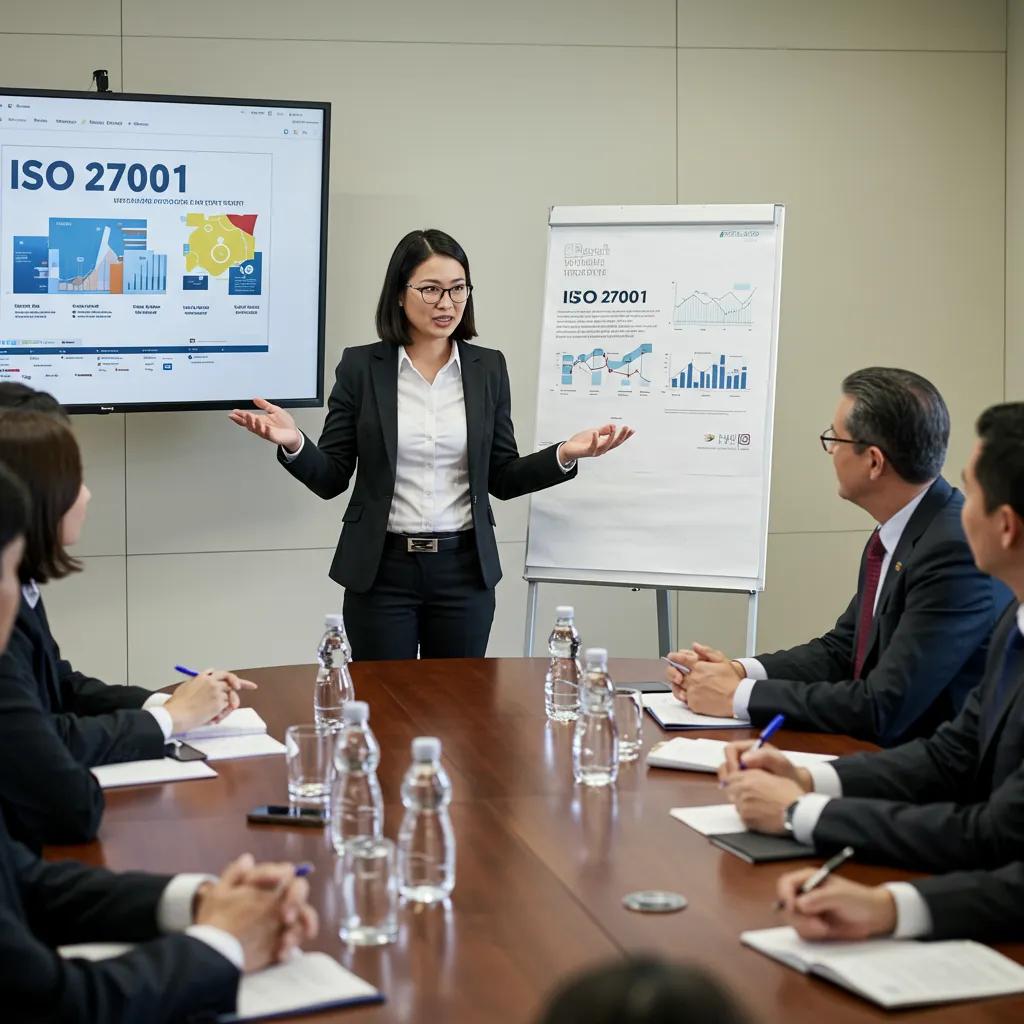
ISO 27001 provides a significant competitive advantage by transforming security claims into verifiable, accredited evidence that procurement evaluators can quickly assess. This leads to improved pre-qualification outcomes and reduced time spent on security due diligence. The certification signifies a third-party assessment against recognised clauses and controls, leading buyers to view certified suppliers as lower procurement risks. This often translates into higher scores during technical evaluations or shorter mini-competition phases. Benefits include faster onboarding into supplier frameworks, fewer supplementary questionnaires, and clearer audit trails for contract award panels. These advantages offer tangible bid benefits when suppliers align their evidence packs with tender evaluation criteria.
Building Trust and Credibility with Government Clients Through ISO 27001
Certification signals that an organisation maintains repeatable controls, undergoes independent surveillance, and has documented incident handling procedures—all factors that reduce buyer uncertainty during contract award and mobilisation. This is vital because government buyers must manage supply chain risk and regulatory obligations. An accredited certificate, especially with UKAS recognition, acts as a trust token that simplifies procurement checks. Practical evidence packs, including the certificate summary, Statement of Applicability extracts, recent internal audit reports, and management review minutes, are readily accepted by procurement teams as authoritative proof. Presenting this documented evidence in supplier portals accelerates shortlisting and establishes credibility early in the tender lifecycle.
This table illustrates how ISMS components translate into procurement-relevant evidence, enhancing a bidder’s ability to address specific tender questions. The mapping clarifies precisely which documents buyers expect to see during evaluation.
The ISO 27001 Certification Journey for Government Suppliers
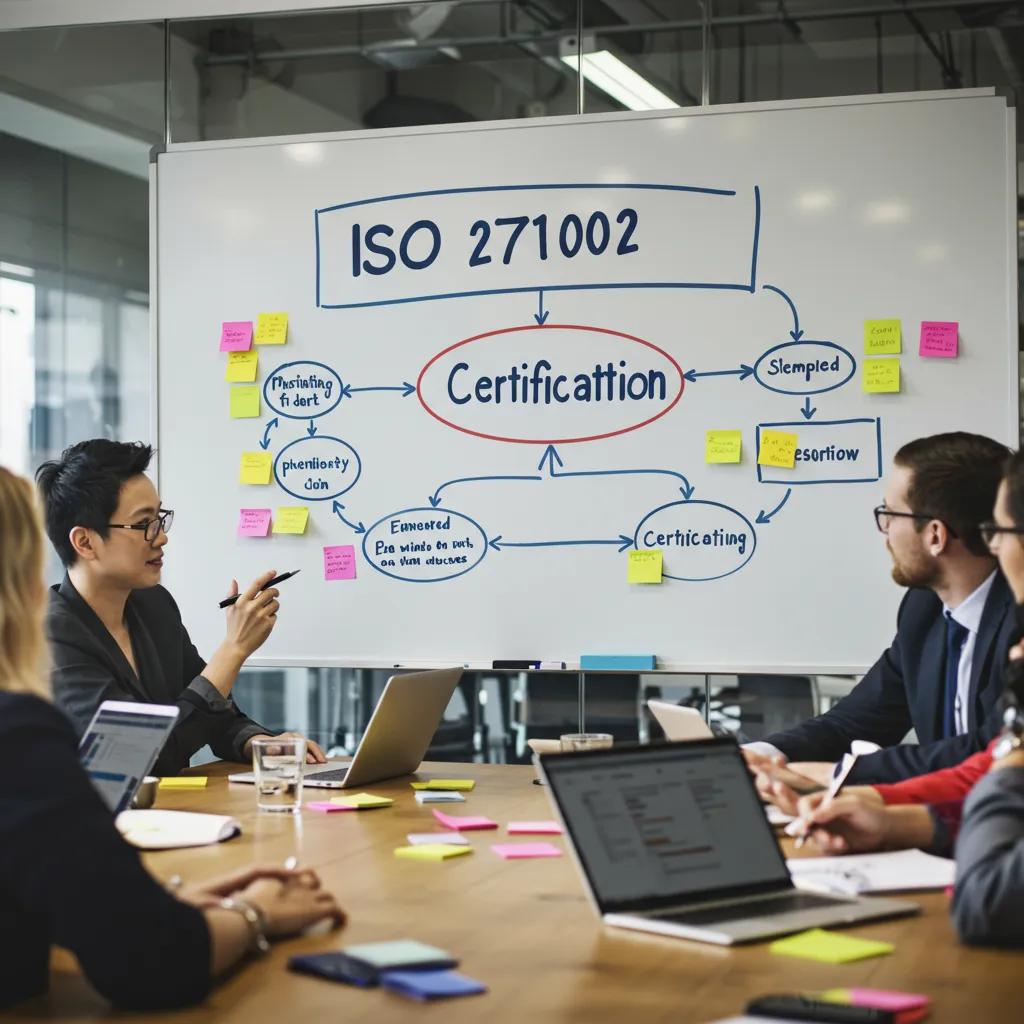
The ISO 27001 certification lifecycle involves a sequence of scoping, gap analysis, implementation, internal audit, and external certification audits, each yielding deliverables that procurement teams accept as proof of compliance. This process follows a project-management approach: define a scope aligned with tender deliverables, assess gaps against ISO controls, implement risk treatments and policies, conduct internal assurance, and then undergo a formal two-stage external audit culminating in certification. The key benefit for tendering suppliers is predictability—understanding the deliverables and timelines allows bid teams to plan evidence assembly effectively to meet procurement deadlines. The following EAV-style table summarises the steps, deliverables, and typical time/resource expectations for common supplier scenarios.
This project plan table helps procurement-focused teams set realistic expectations for when certification evidence will be available. With this timeline clarity, the next section delves into the initial scoping choices that align the ISMS with specific tender requirements.
Defining the Initial Assessment and Scope for Government Tenders
Scoping precisely defines which services, processing activities, and assets fall under the ISMS. This scope should mirror the tender’s Statement of Works to ensure the certificate covers the bid deliverables. A comprehensive scoping checklist includes identifying customer data flows, cloud and on-premise assets, third-party processors, personnel roles, and geographical boundaries—each element impacting tender evidence requirements. A clear scope minimises unnecessary controls and focuses implementation efforts where procurement expects assurance, thereby shortening certification timelines. Scoping decisions must be documented and justified in the scope statement to prevent ambiguity during external audits and buyer reviews.
Key Steps in Implementing an ISMS for Public Sector Bids
Implementation follows a structured set of tasks: establish policies, conduct a risk assessment, select controls (Statement of Applicability), implement treatments, and document operational procedures that procurement evaluators can readily review and test. Priority controls for tenders typically include access control, encryption, supplier management, incident management, and secure configuration—these are practical, high-impact areas that address common tender evaluation points. An effective approach is a phased rollout that targets high-impact controls first to generate immediate evidence for bids, while continuing broader implementation in parallel. Phased delivery enables bidders to present robust, targeted evidence for procurement while the full ISMS matures.
How Stratlne’s AI-Driven Audit Enhances Certification Efficiency
Stratlne’s AI-driven audit approach accelerates evidence collection and intelligent sampling by automating document analysis, highlighting control gaps, and reducing manual evidence requests during audit stages. Its mechanism relies on automated pattern recognition to surface relevant policies, logs, and change records for auditor review, allowing auditors to concentrate on high-risk areas rather than routine checks. The benefit for tender timelines is significant: reduced audit duration, clearer evidence packs, and faster completion of Stage 1 and Stage 2 activities, all crucial for meeting strict procurement deadlines. As a practical example, AI-assisted sampling can drastically shorten document review cycles, enabling team members to prepare focused responses for procurement due diligence.
Who Needs ISO 27001 Certification for Government Tenders?
Certain supplier categories frequently encounter explicit or implicit requirements for ISO 27001 when bidding for public sector work. This includes defence contractors, central and local government suppliers, and digital service providers handling government data. The reason is that these categories either process sensitive data or operate in regulated environments where procurement teams prioritise demonstrable assurance. The practical benefit of certification varies by organisation size and sector: larger suppliers leverage ISO 27001 to streamline multi-contract assurance, while SMEs use it to unlock new opportunities and meet minimum security thresholds. Below, audience segments outline specific considerations for each type of supplier.
Why Small and Medium-Sized Enterprises (SMEs) Should Pursue ISO 27001 for Public Sector Contracts
SMEs can gain access to larger contracts and demonstrate parity with bigger suppliers by adopting a proportionate ISMS. This approach focuses on tender-relevant controls and evidence rather than exhaustive coverage. Cost and complexity are common barriers, but tailored programmes and phased implementation reduce time-to-certification and administrative overhead, enabling SMEs to build a credible security proposition without significant upfront investment. For many SMEs, the return on investment comes from qualifying for higher-value opportunities and shortening procurement checks, leading to improved win rates. Practical next steps for SMEs include tightly scoping the ISMS, prioritising high-impact controls, and engaging a certification partner with SME-focused processes.
- SMEs should concentrate on evidence that buyers specifically request, not on implementing every possible control.
- SMEs can utilise phased implementation to deliver tender-ready evidence rapidly.
- SMEs benefit greatly from partners offering streamlined quote and booking processes.
These points highlight how targeted ISMS work delivers rapid, procurement-relevant value for smaller suppliers, leading into sector-specific requirements such as defence contracting.
Requirements for Defence and National Security Contractors
Defence and national security suppliers often face elevated vetting, stringent supply-chain security obligations, and tighter clearance or personnel assurance requirements. This extends ISO 27001 controls to encompass additional supplier screening and more rigorous access management. The rationale is that national security contracts demand high assurance levels for both technical and human factors. Procurement teams may require supplementary attestations or tailored controls mapped directly to contractual clauses. ISO 27001 provides a robust framework to document supply-chain controls, personnel vetting processes, and enhanced incident protocols, which bidders can use to evidence higher assurance. Suppliers must align their ISMS scope and Statement of Applicability to reflect these sector-specific expectations.
How IT and Digital Service Providers Benefit from ISO 27001 in Government Bids
IT and digital service providers gain significant advantages from ISO 27001 through demonstrable controls over cloud configurations, data residency, encryption, secure SDLC practices, and subcontractor management—all common procurement evaluation points. The ISMS mechanism documents technical and procedural controls that buyers can readily test or verify, such as configuration baselines, logging, and access control evidence. For cloud or SaaS providers, certification helps address concerns about multi-tenancy, encryption keys, and incident response coordination, which are frequent tender questions. Presenting targeted extracts from the Statement of Applicability, architecture diagrams, and runbooks in bids clarifies how technical controls meet procurement criteria.
Successfully Winning Government Contracts with ISO 27001
Winning tenders requires translating ISO 27001 certification into clear, procurement-oriented evidence, persuasive risk mitigation language, and bidder-specific value propositions that evaluators can score effectively. This involves combining technical evidence (certificate, SoA extracts, audit reports) with narrative that links controls directly to the tender’s business outcomes—service continuity, data protection, and supply-chain resilience. The benefit is that bidders who present a concise, evaluation-mapped evidence pack reduce clarification rounds and can often progress faster through procurement pipelines. The checklist below outlines tactical steps bid teams should follow to convert certification into wins.
- Prepare an executive security summary that maps ISMS controls directly to tender evaluation criteria.
- Include the certificate summary, Statement of Applicability excerpts, and recent internal audit findings as appendices.
- Provide concrete operational evidence such as incident runbooks, access control logs, and supplier assurance records.
- Offer a dedicated point of contact for security clarifications and a concise compliance Q&A session aligned with tender questions.
These tactical steps help procurement teams clearly see the direct connection between certification and the bid evaluation criteria. The next subsection summarises anonymised case outcomes that illustrate this effective approach.
Real-World Case Studies: ISO 27001 Certification Leading to Government Contract Wins
Anonymised case summaries typically demonstrate suppliers identifying tender gaps, prioritising controls that align with evaluation criteria, and using certification evidence to reduce due-diligence time, ultimately leading to faster award decisions. The common pattern observed is: targeted scoping, rapid implementation of priority controls, presentation of concise evidence packs, and shortened negotiation phases due to clear third-party assurance. Metrics frequently reported include reduced clarification cycles and faster onboarding, which directly impact the time-to-contract and the probability of winning. These examples underscore the practical link between certification efforts and successful procurement outcomes.
How ISO 27001 Compliance Aligns with UK Government Procurement Policies
ISO 27001 aligns seamlessly with UK procurement policy by delivering measurable controls and documented evidence that satisfy common policy references, such as secure-by-design expectations, risk-based supplier assurance, and incident reporting obligations. This alignment is crucial because procurement frameworks often cite industry standards and expect suppliers to demonstrate compliance with recognised information security approaches; ISO 27001 provides this essential common language. Bidders should paraphrase policy language in their responses to show direct control mappings, making it easier for procurement officers to verify claims. This alignment reduces friction during award panel reviews and supports policy-driven procurement decisions.
Post-Certification Maintenance Requirements for Government Suppliers
Post-certification maintenance involves ongoing surveillance audits, corrective action management, evidence retention, and continuous improvement cycles. These activities ensure that controls remain effective and demonstrable for future tenders. The mechanism includes scheduled surveillance and annual reviews that produce fresh audit evidence and internal checks buyers may request when assessing ongoing supplier performance. Maintaining documented evidence, such as logs, change records, and incident histories, keeps a supplier perpetually tender-ready and reduces the effort required for repeat evaluations. A practical maintenance checklist supports ongoing readiness for new contract opportunities.
This comparative table clarifies when ISO 27001 is the optimal choice and how combining standards can meet complex procurement requirements. The next section addresses common procurement questions to refine practical expectations.
Common Questions About ISO 27001 and Government Tenders
Procurement and bid teams frequently ask concise, operational questions regarding mandates, timelines, and SME access. Direct answers reduce ambiguity during bid preparation. The following H3 subsections provide short, actionable responses to the most common procurement-oriented questions, including timeline ranges and SME guidance to aid planning. These concise answers are optimised for quick reference by bid managers preparing tender responses.
Is ISO 27001 Mandatory for UK Government Contracts?
ISO 27001 is not universally mandatory for all UK government contracts. However, it is often required or strongly preferred in tenders that involve sensitive data, critical services, or regulated sectors. Some procurement notices explicitly list certification as a mandatory pre-qualification requirement. The driving mechanism behind this is procurement risk management: where data sensitivity or service criticality is high, buyers favour third-party assurance to mitigate supplier risk. Alternative or complementary requirements, such as Cyber Essentials for baseline hygiene, may be acceptable in lower-risk tenders, but bidders should always scrutinise tender documents for explicit standards references. A clear interpretation of tender requirements will determine whether certification is mandatory or recommended for each specific opportunity.
How Long Does ISO 27001 Certification Take for Public Sector Bids?
Typical timescales from gap analysis to certification vary based on scope and organisational preparedness. Small, well-scoped efforts can achieve certification in 3–6 months, while larger or more complex environments often require 6–12 months. Readiness is influenced by documentation completeness, resource availability, and the volume of remediation required. Accelerating factors include targeted scoping, prioritising tender-relevant controls, and utilising tools that automate evidence collection. Conversely, extensive remediation or broad scopes will extend timelines. Recent innovations in AI-driven auditing can significantly reduce document review time and compress audit phases, which is invaluable when tender windows are tight. Assessing readiness early enables realistic scheduling aligned with procurement deadlines.
What If My Business Is an SME? How Can We Access Certification Support?
SMEs should adopt proportionate approaches: tightly scope the ISMS to the specific tender deliverables, prioritise high-impact controls, and consider phased implementation to generate procurement-ready evidence rapidly. Special programmes designed for SMEs and streamlined quote and booking processes reduce administrative friction and can lower initial engagement costs, enabling smaller organisations to progress towards certification without overcommitting resources. Practical steps include engaging a partner that offers SME-tailored pathways, requesting a focused gap analysis, and preparing a concise evidence pack for the tender. These strategies make certification accessible and aligned with business capacity.
Comparing ISO 27001 to Other Security Standards for Government Contracts
ISO 27001 provides organisation-level assurance across people, processes, and technology. In contrast, standards like Cyber Essentials or regulatory frameworks such as NIS 2 address specific aspects of technical hygiene or sectoral digital resilience. The key differentiator lies in scope and assurance level: ISO 27001 offers systemic management and third-party certification, Cyber Essentials focuses on a minimum technical baseline, and NIS 2 imposes regulatory obligations on identified sectors. The pragmatic takeaway is that combining standards often yields the best procurement fit—use ISO 27001 for comprehensive assurance and supplement with Cyber Essentials or ISO 42001 where tenders specify particular technical or AI governance needs. The following table outlines scope and tender fit.
Differences Between ISO 27001 and Cyber Essentials for Government Tenders
ISO 27001 encompasses an enterprise ISMS, requiring management systems, documented risk treatment, and independent audit. Cyber Essentials, on the other hand, targets essential technical controls for internet-facing systems without a full ISMS requirement. For tenders seeking quick baseline assurance, Cyber Essentials is sufficient for technical hygiene; for tenders demanding broader organisational risk management or higher assurance levels, ISO 27001 is the appropriate credential. The recommended approach in many bids is to hold both certifications if the tender evaluates both organisational and technical readiness, providing buyers with the highest level of confidence.
How ISO 27001 Aligns with the NIS 2 Directive and Other Regulations
ISO 27001 aligns effectively with NIS 2 by providing management system controls that support the incident reporting, risk management, and supplier resilience obligations mandated by the directive. This allows suppliers to map ISMS clauses directly to regulatory requirements. The mechanism is control mapping: ISMS controls addressing incident response, business continuity, and supplier management directly correspond to NIS 2 expectations, helping organisations demonstrate compliance across various jurisdictions. This cross-mapping is particularly vital for suppliers operating in cross-border supply chains who must meet both EU and UK requirements simultaneously. Preparing mapped evidence significantly reduces compliance friction during multi-jurisdiction procurement processes.
Designing an ISO 27001 Security Framework for Government Procurement
Certification for Government Procurement of Goods/Services has been in effect since 2008, with a transition to certification-based computer systems in 2015. However, advancements in information technology have introduced challenges concerning the security of essential fixed information, such as unauthorised access and unauthorised manipulation through remote access to examination-based computer systems. To address these challenges, a comprehensive information security framework is required. In this study, the researcher compares Quality Management System Certification with ISO 27001:2022 Standard and observes the implementation of certification suites for procurement to develop a specialised framework applicable to certification systems. Analysis results indicate that LKPP requires an information security framework for the certification procurement of government goods/services based on the ISO 27001:2022 standard. The proposed framework is intended to facilitate the application of Procurement Certification by LKPP, as the regulatory and implementation institution.
Recommendations for designing information security framework in government procurement of goods/services certification systems based on ISO 27001: 2022, M Salman, 2022
Can ISO 42001 Complement ISO 27001 for AI-Related Government Contracts?
ISO 42001, which focuses on AI management systems, complements ISO 27001 effectively when tenders involve AI systems. It adds crucial governance, risk assessment, and ethical control layers specifically tailored to AI lifecycle management. This pairing is highly effective because ISO 27001 secures data and infrastructure, while ISO 42001 addresses model governance, bias mitigation, and explainability requirements that procurement evaluators may demand in AI-heavy contracts. Pursuing both certifications provides a robust, combined assurance package that addresses both information security and AI governance needs, which is increasingly relevant in contemporary public sector procurements.
Requesting a Quote and Booking an ISO 27001 Audit for Government Tenders with Stratlne
Organisations ready to pursue certification should follow a clear, streamlined process for quotes and audit booking that minimises administrative delays and aligns schedules with tender timelines. The approach involves a defined onboarding path: initial enquiry and scoping, a tailored quote based on scope, scheduling of audits with local or global auditors, and a clear timeline for deliverables. This ensures procurement-driven bidders can plan for evidence availability. Stratlne Certification Ltd. offers AI-driven audit tools, experienced auditors, and special programmes for SMEs, collectively representing a streamlined partner approach for suppliers preparing government bids. The subsections below detail the practical onboarding steps, multilingual audit support, and SME programme features.
Stratlne’s Streamlined Certification Process
The streamlined process typically begins with scoping and a targeted gap analysis to align the ISMS with the tender scope. This is followed by phased implementation of priority controls and scheduling of the external audit stages to fit procurement timelines. Stratlne integrates AI-driven audit tools with experienced industry auditors to accelerate evidence collection and intelligent sampling, reducing the time auditors spend on repetitive document review and focusing effort on high-risk controls. Typical lead times vary by scope, but the emphasis is on predictable scheduling and concise evidence preparation to meet tender windows. This structured onboarding helps bidders coordinate certification milestones with procurement deadlines.
Blockchain for Secure Government Bidding and Tender Management
Governments and businesses typically utilise contracts or tenders for the procurement of products or services. Mishandled tender management, when improper procedures are employed, can lead to substantial losses. Examples of such issues include contractor preference, inadequate record-keeping, a lack of transparency, hacking, and data manipulation. To address this problem, we have implemented a distinctly block-based design for transaction management, integrated with straightforward and secure blockchain technology. Here, we leverage blockchain technology to secure transaction-based documents and transactions, encompassing tender documents, applications, bid proposals, business profiles, historical records, authorising officer data, and rejection details, thereby ensuring a fully transparent bidding process.
Government bidding security management system using blockchain, VKK Rejeti, 2023
Stratlne’s Support for Multilingual and Global Audits for Government Suppliers
Multilingual and global audit support ensures suppliers operating across jurisdictions can present consistent certification evidence to various procurement authorities. Local auditors assist with jurisdictional specifics and language requirements. The mechanism involves local audit presence combined with centralised audit coordination to manage multi-site or multi-country scopes, producing a harmonised evidence package for international tenders. This coordination simplifies cross-border supply-chain certification and resolves language-related evidence queries that procurement teams might raise. Such capability is particularly valuable for suppliers bidding on international or EU/UK-crossing public sector opportunities.
Special Programs for SMEs Seeking Certification
Special SME programmes offer proportionate pathways, including phased implementation, reduced administrative templates, and pragmatic evidence packs tailored to tender needs. This enables smaller organisations to engage with certification without excessive upfront complexity. The mechanism of SME programmes is simplification: focused scoping, templated documentation, and streamlined quote and booking processes reduce friction and shorten time-to-certification for resource-constrained teams. SMEs can therefore produce procurement-ready evidence for tenders with less overhead while continuing to mature their ISMS post-certification. Engaging these programmes makes ISO 27001 an accessible route to public sector opportunity.
Different suppliers will select partners and programmes that best align with their tender timelines and resource constraints. Ensuring the certification process is tightly scoped to the tender deliverables is the single most effective way to meet procurement deadlines and provide clear evidence to evaluators.
Frequently Asked Questions
What are the costs associated with obtaining ISO 27001 certification?
The costs for ISO 27001 certification can vary significantly, depending on your organisation’s size, operational complexity, and the defined scope of your ISMS. Typical expenses include consultancy fees, training costs, internal resource allocation, and the fees charged by the certification body for the audit process. Smaller organisations can often manage costs effectively through tailored SME programmes, while larger entities may incur higher expenses due to more extensive documentation and compliance requirements. We recommend obtaining quotes from multiple certification bodies to ensure competitive pricing.
How often do organisations need to renew their ISO 27001 certification?
ISO 27001 certification is generally valid for three years. However, organisations must undergo annual surveillance audits to maintain their certification status. These audits confirm that the ISMS remains effective and compliant with the standard’s requirements. After the three-year period, a full re-certification audit is necessary to renew the certification. Continuous improvement and regular internal audits are essential to prepare for these assessments and demonstrate ongoing adherence to ISO 27001 standards.
What role does employee training play in achieving ISO 27001 certification?
Employee training is a cornerstone of achieving ISO 27001 certification, ensuring all staff understand their specific roles and responsibilities within the ISMS. Training fosters a strong culture of security awareness, empowering employees to identify and respond effectively to potential security threats. It also ensures everyone is familiar with the policies and procedures that underpin the ISMS. Regular training sessions and updates are vital to keep staff informed about evolving security practices and compliance requirements, ultimately strengthening the organisation’s overall security posture.
Can ISO 27001 certification help in other sectors beyond government contracts?
Absolutely. ISO 27001 certification offers significant benefits across a wide range of sectors beyond government contracts. It enhances an organisation’s credibility and demonstrates a firm commitment to information security, which is increasingly critical in industries such as finance, healthcare, and technology. Many clients and partners prefer engaging with certified organisations as it demonstrably reduces their risk exposure. Furthermore, ISO 27001 can assist organisations in meeting other regulatory requirements, making it a versatile asset for businesses aiming to enhance their security frameworks and gain a competitive advantage.
What are the common challenges faced during the ISO 27001 certification process?
Common challenges encountered during the ISO 27001 certification process include resistance to change within the organisation, a lack of clear understanding of the standard’s requirements, and insufficient resources allocated for implementation. Employees may be hesitant to adopt new policies or procedures, which can impede progress. Organisations also frequently struggle with accurately scoping their ISMS and identifying all relevant assets and risks. To overcome these hurdles, it’s essential to engage stakeholders early, provide comprehensive training, and allocate adequate resources to ensure a smooth certification journey.
How can organisations demonstrate ongoing compliance with ISO 27001 after certification?
Organisations can demonstrate ongoing compliance with ISO 27001 by conducting regular internal audits, performing management reviews, and implementing corrective actions for any identified non-conformities. Maintaining detailed records of security incidents, risk assessments, and training activities is also crucial. Continuous improvement should be a central focus, with organisations regularly updating their ISMS to adapt to emerging threats and changes in the business environment. Participating in annual surveillance audits and preparing diligently for re-certification audits further reinforces a commitment to maintaining compliance with ISO 27001 standards.
Conclusion
Achieving ISO 27001 certification is paramount for organisations aiming to secure government tenders, as it unequivocally demonstrates a commitment to robust information security management. This certification not only enhances credibility with procurement teams but also significantly streamlines the bidding process by aligning directly with common tender requirements. By prioritising ISO 27001, businesses can substantially improve their prospects of winning public sector contracts. To discover how Stratlne Certification Ltd. can expertly guide you through achieving this vital certification, please get in touch with us today.