
Streamline Your Workflow with Top Automation Tools

Automation tools for ISO certification: streamlining compliance across the UK
Automation for ISO certification describes how software, intelligent agents and integrated workflows gather evidence, enforce policy and monitor controls for management systems such as ISO 9001, ISO 27001 and ISO 42001. By mapping automation — document control platforms, continuous monitoring agents and model registries — directly to standard requirements, organisations reach audit readiness with less manual effort and greater consistency. This guide explains which categories of automation matter for each standard, how automation reduces cost and risk, and practical first steps SMEs can take to introduce ISO compliance automation. You’ll find benefits, real-world examples, a focused comparison of ISO 9001 and ISO 27001 automation, how AI affects AIMS (ISO 42001) governance, and SME quick-start advice. Practical lists and EAV-style tables show how specific tool capabilities translate into certification outcomes, while integration notes describe how Stratlne Certification Ltd. uses AI-driven audits and advisory services to complement client automation stacks.
What are the key benefits of automation for ISO certification?
Automation for ISO certification improves efficiency, accuracy and continuous compliance by turning manual tasks into repeatable, auditable digital workflows. Automating document control, evidence collection and monitoring reduces human error and keeps controls implemented consistently — shortening audit cycles and improving pass rates. Automated systems also deliver continuous assurance through live alerts and dashboards, limiting compliance drift and cutting the operating costs of manual reviews. Below is a concise list of core benefits and the practical outcomes compliance teams can expect.
Automation delivers five primary advantages for ISO certification:
- Efficiency: Workflows cut manual data entry and speed up evidence assembly for audits.
- Accuracy and consistency: Version control and access policies prevent conflicting documents and reduce human error.
- Continuous compliance: Real‑time monitoring and alerts keep controls effective between audits.
- Cost savings: Less preparation time and fewer corrective actions lower overall certification cost.
- Audit readiness: Pre-built mappings and central evidence repositories make internal and external audits faster.
These benefits translate into faster time-to-certification and fewer nonconformities in practice, so it helps to look at the specific mechanisms that deliver efficiency and accuracy.
How does automation improve efficiency and accuracy in ISO compliance?
Automation raises efficiency and accuracy by combining controlled document systems, workflow engines and integrations to remove repetitive, error-prone tasks. Document versioning, role-based approvals and automated routing make the correct revision available and ensure change control follows an auditable path — aligning with ISO clauses on controlled documented information. Integrations with HR, ERP and ticketing systems remove duplicate records and synchronise competence, asset and procedure data, often halving manual reconciliation time in real implementations.
Example: an automated document approval workflow routes a procedure to reviewers, locks older versions, updates training records and captures timestamps for audit evidence. That operational reliability is the foundation for quantifying cost savings and the continuous compliance benefits that follow.
What cost savings and continuous compliance advantages does automation offer?
Automated compliance tooling cuts both direct and indirect costs by reducing manual preparation hours, lowering the need for repeat audits and decreasing nonconformities that trigger remediation. Direct savings come from fewer labour hours spent on evidence gathering and corrective action management; indirect savings include avoided downtime and steadier operations. Continuous monitoring surfaces issues early with alerts and playbooks, shrinking risk exposure and keeping residual risk within acceptable thresholds. For many organisations — especially SMEs — these efficiencies shorten certification timelines and let small teams focus on strategic quality and security improvements instead of administrative overhead.
Which automation tools support ISO 9001 Quality Management System compliance?
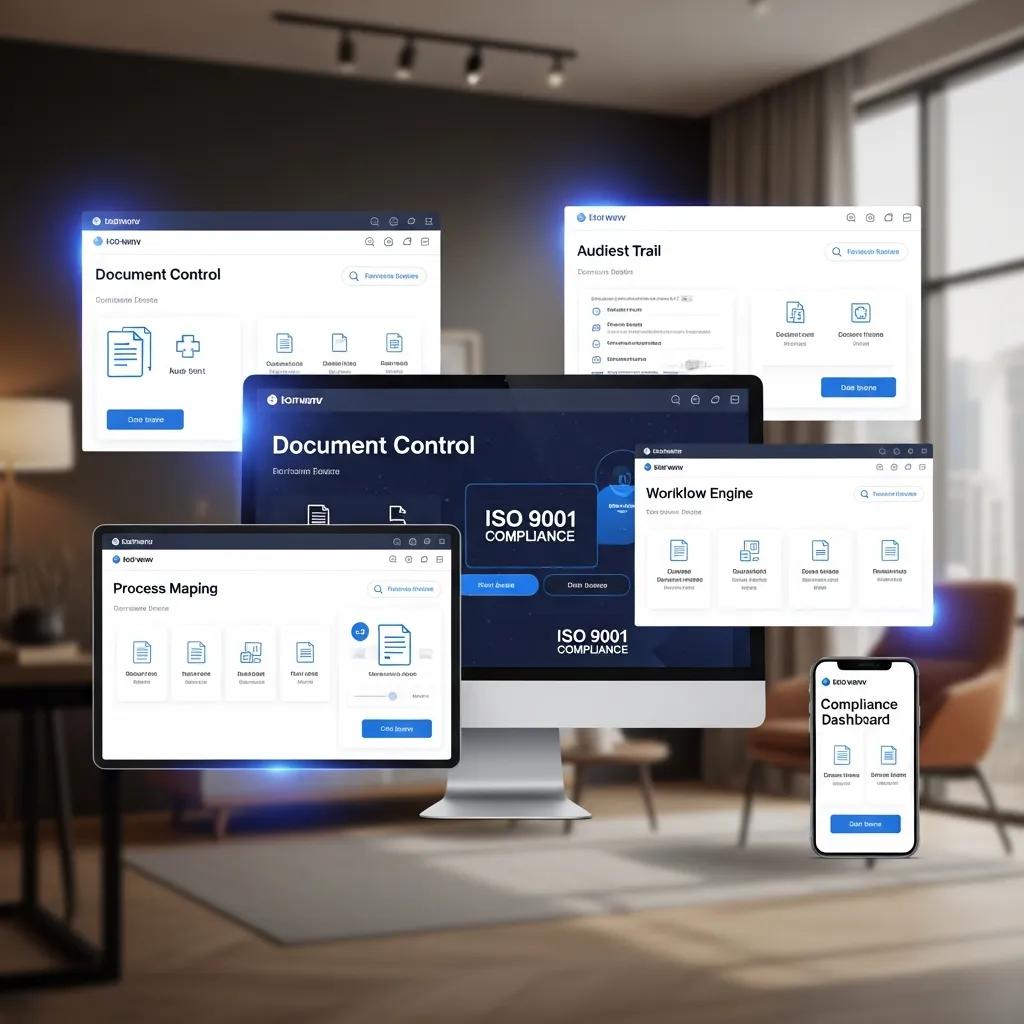
Tools that support ISO 9001 focus on controlled documentation, workflow automation, CAPA management and performance dashboards to meet QMS requirements and show continual improvement. In practice, categories such as document management systems, workflow engines and analytics platforms map directly to ISO 9001 clauses on documented information, operational planning and performance evaluation. The table below compares common QMS automation capabilities and how each one affects certification readiness — a practical EAV mapping for QMS implementers.
The following table summarises how QMS automation capabilities support ISO 9001 certification:
How does Quality Management System automation enhance document control?
QMS automation enforces version histories, approval chains and access controls to produce the immutable audit trails ISO 9001 expects. Automated retention and archival rules stop obsolete documents circulating, while role-based access ensures only authorised people change critical procedures. When approvals and revisions are timestamped and tied to training records, organisations can demonstrate both control and competence in an audit. A practical example is a change-control workflow that blocks distribution of a new procedure until reviewers sign off and the related training is updated, creating consolidated evidence for certification.
Further research emphasises integrating enterprise systems to produce compliance-ready data flows and automated audit records for ISO 9001 certification.
Automating ISO 9001 compliance and audit records
The paper outlines a model for automating compliance-ready data flows by integrating ERP, MES and PLM systems with compliance engines that use rules, metadata-driven traceability and automated audit records. It presents an ITAR and ISO 9001-based approach to secure data management and real-time authentication.
AUTOMATING COMPLIANCE-READY DATA FLOWS IN ITAR AND ISO 9001 CERTIFIED MANUFACTURING SYSTEMS, 2025
What tools facilitate process efficiency in ISO 9001 certification?
Process-mapping tools, workflow engines and CAPA trackers help organisations visualise processes, automate handoffs and track corrective actions from detection through verification. Process mapping clarifies responsibility and highlights bottlenecks automation can remove; workflow engines enforce task ownership and deadlines; CAPA modules centralise nonconformity records and tie them to preventive actions and performance metrics. For SMEs, modular SaaS platforms often include templates that reduce implementation complexity and shorten time-to-certification. Choosing tools with open integrations ensures training, production and customer feedback feed a single performance dashboard for management review.
How does automation facilitate ISO 27001 Information Security Management System compliance?
Automation supports ISO 27001 compliance by operationalising risk assessment, continuous monitoring and evidence collection so organisations can demonstrate control implementation with minimal manual effort. Automated risk registers, vulnerability scanning and log collection map to control objectives and produce audit-ready evidence. Continuous monitoring through SIEM integrations and alerting provides ongoing assurance that controls work, while automated evidence archives configuration snapshots and assessment results for certification.
Below is an EAV-style comparison showing how automation features map to security functions and expected outcomes.
What are the benefits of automated risk assessment and continuous monitoring?
Automated risk assessment standardises scoring with defined criteria and refreshes risk profiles as new data arrives, improving the timeliness and objectivity of risk decisions. Continuous monitoring captures telemetry and security events, triggering alerts and automated playbooks that lead to faster containment and documented incident response — critical evidence for ISO 27001 auditors. Automating repetitive security reviews reduces the manual workload of maintaining a compliant ISMS and creates a defensible, time‑stamped trail of risk decisions and mitigations. Integrating vulnerability scanners and asset inventories keeps risk data current and supports prioritised remediation planning.
Academic discussions further underline the role of automated risk assessments and GRC technologies in strengthening ISO 27001 processes.
ISO 27001 risk assessment & GRC technologies
This paper reviews the role of IT risk assessments in mitigating threats and compares how standards such as ISO 27001, NIST and COBIT guide risk processes. It also highlights how platforms like OneTrust and SAP GRC can support and enhance these activities.
The Importance of IT Risk Assessments in Mitigating Risks: A Comparative Analysis of Standards and Supporting Technologies
Which software solutions support cybersecurity compliance automation?

Cybersecurity compliance automation typically combines vulnerability scanners, SIEM/log management, compliance platforms and orchestration tools to provide continuous assurance and evidence collection. Vulnerability and asset discovery tools keep inventories accurate and reveal exploitable weaknesses; SIEMs collect logs and correlate events for detection; compliance platforms map controls to evidence repositories and automate auditor reporting. For SMEs, bundled SaaS packages that mix asset discovery with basic monitoring and compliance mapping can deliver quick wins without heavy engineering effort.
What role does automation play in ISO 42001 Artificial Intelligence Management System compliance?
Automation is central to ISO 42001 compliance. Model inventories, automated risk assessments for AI systems and policy enforcement mechanisms record decisions across the AI lifecycle. AIMS automation captures lineage, bias tests and performance drift metrics as audit evidence. Automation can block deployments that fail safety checks and integrate with ISMS tooling so model assets receive appropriate information security controls. Understanding these patterns helps organisations govern AI responsibly and meet ISO 42001’s documentation expectations.
How does AI-powered automation support ethical AI governance and risk management?
AI-powered automation runs bias and fairness tests, tracks model performance over time and generates explainability artefacts to clarify decision rationale. Model registries capture lineage and metadata, linking datasets, training parameters and evaluation results to each version for auditability. Monitoring pipelines detect drift and trigger retraining or rollback when performance diverges from acceptable thresholds, providing evidence that governance controls are active. These capabilities let organisations respond to audits with a comprehensive, machine-generated history of model decisions and governance actions.
Which automation software streamlines AI policy enforcement and compliance?
Automation software for AIMS includes model registries, governance platforms and testing toolchains that enforce policy gates and produce compliance evidence automatically. Registries catalogue assets and metadata; governance platforms orchestrate approval gates and policy checks; automated testing frameworks run bias, performance and explainability tests on a schedule. Integrating these tools with ISMS and QMS platforms ensures AI artefacts are treated as information assets with appropriate controls. Choosing tools with robust APIs and rich metadata models makes it simpler to map AI artefacts to ISO 42001 clauses and reduces manual evidence collection during audits.
How can small and medium-sized enterprises benefit from ISO compliance automation tools?
SMEs gain from ISO compliance automation through lower cost of entry, simplified processes and faster time-to-certification when adopting modular SaaS and managed services that scale with need. Automation reduces the administrative burden that often keeps smaller organisations from certifying by offering templates, pre-built mappings and automated evidence packs. Tiered pricing and managed options let SMEs access enterprise-grade controls without heavy capital expenditure, while local support and data residency choices address regulatory concerns. The table and list below help SMEs compare solution types and follow a phased implementation approach.
Introductory comparison of SME-suitable solutions:
What affordable automation solutions are tailored for SMEs in the UK?
Affordable UK options include tiered SaaS with preconfigured QMS or ISMS templates, managed service providers who run automation on behalf of clients, and lightweight monitoring bundles that fit existing IT. Modular SaaS delivers rapid deployment and low upfront cost; managed services bring expertise without hiring specialists. UK considerations such as data residency and local support should influence vendor choice, as can SME programmes and discounts that shorten time-to-certification. Adopting a phased approach — starting with document control and CAPA modules — provides immediate compliance gains.
How do automation tools simplify ISO certification processes for smaller businesses?
Automation helps small businesses by offering templates, guided workflows and automated evidence packs that map activities directly to standard clauses. Templates reduce drafting effort; guided workflows lead staff through required steps and capture time‑stamped approvals; evidence bundles compile logs, training records and control checks into audit-ready packages. A simple three-step quick-start checklist for SMEs works well: assess gaps, implement document control and an evidence repository, then run an internal automated audit to validate readiness. These steps reduce reliance on large compliance teams and let smaller organisations achieve certification with limited resources.
Quick-start checklist for SME ISO automation:
- Assess gaps: Identify the core processes and controls for your target ISO.
- Select low-cost tools: Choose modular SaaS or managed services for document control and monitoring.
- Automate evidence: Configure automated evidence collection and run an internal audit simulation.
Following these steps builds compliance momentum and prepares SMEs for formal certification audits without heavy upfront investment, which leads into how a certification partner can support the journey.
How does Stratlne Certification Ltd. leverage AI and automation in ISO auditing?
At Stratlne Certification Ltd. we combine AI-driven audit techniques with experienced industry auditors to speed certification. Our process uses automated evidence triage and targeted on-site validation so auditors focus on high-value verification rather than routine collection. We pre-process client artefacts, map controls to standards and highlight priority findings, which reduces duplication and accelerates outcomes. Stratlne offers accredited certification for ISO 9001, ISO 27001 and ISO 42001, operating globally while delivering local expertise and SME programmes that simplify the certification journey. Organisations using automation tools will find our AI-enhanced audits complementary — we align audit workflows with clients’ automation to cut effort and shorten timelines.
What are the advantages of AI-driven audit services for faster certification?
AI-driven audit services speed certification by automating evidence triage, prioritising audit tasks and reducing on-site time through pre-audit analysis and scheduling. Automated triage groups related artefacts and surfaces discrepancies so auditors can validate controls efficiently instead of collecting basic evidence. This focused approach reduces follow-up cycles and supports faster accreditation decisions, shortening overall certification timelines. For clients, the result is a smoother audit experience, clearer remediation plans and fewer administrative delays — especially valuable for resource-constrained teams.
How does Stratlne’s automation approach complement client compliance efforts?
Stratlne’s automation approach works with client compliance stacks by aligning audit procedures to existing workflows and advising on how to map automated evidence to standard clauses. Typical engagements include an initial assessment, control mapping to client toolsets and a streamlined audit that uses evidence repositories and monitoring outputs. This advisory alignment reduces rework, helps clients prioritise automation investments and supports SME-focused programmes designed to lower complexity and cost. Organisations ready for a quote or audit can engage Stratlne for a tailored assessment that integrates with their automation roadmap and accelerates certification readiness.
How Stratlne supports clients:
- Assessment & mapping: We align client automation outputs to ISO clauses for efficient audits.
- AI-aided triage: Automated analysis reduces on-site verification time.
- SME programmes: Tailored pathways that simplify certification for smaller organisations.
These capabilities position Stratlne Certification Ltd. as an audit partner that enhances — not replaces — client automation efforts and helps translate automation investments into measurable certification progress.
Frequently asked questions
What types of automation tools are best for ISO 27001 compliance?
The most effective tools for ISO 27001 are risk management platforms, continuous monitoring systems and evidence collection repositories. Risk platforms help identify and score vulnerabilities; continuous monitoring provides real‑time alerts and log management so security controls can be demonstrated as effective; evidence platforms automate the capture and organisation of documentation auditors expect. Together these tools streamline ISMS maintenance and reduce manual overhead.
How can SMEs ensure they choose the right automation tools for ISO compliance?
SMEs should begin by mapping their compliance needs and target standards. Evaluate tools for scalability, usability and integration with existing systems, and favour vendors with tiered pricing and pre-built templates. Guided workflows and case studies help validate a vendor’s fit. Start small with document control and CAPA, then expand as value is proven.
What challenges do organisations face when implementing automation for ISO certification?
Common challenges include resistance to change, integrating new tools with legacy systems and upfront tool costs. Ensuring automated processes match ISO requirements needs careful planning, and staff training is essential to avoid gaps. Overcome these by applying change management, staging rollouts and investing in practical training and support.
How does automation impact the audit process for ISO certifications?
Automation reduces the time and effort to gather evidence and prepare documentation. Systems generate reports, track compliance metrics and show real‑time control effectiveness, making auditors’ assessments faster and more accurate. Automation also flags potential nonconformities before audits so organisations can remediate proactively, improving certification outcomes.
What role does employee training play in successful ISO compliance automation?
Training is vital. Staff must understand both the tools and the ISO requirements they support. Training should cover technical use, process responsibilities and the reason behind controls. Well-trained teams reduce errors, make automated processes effective and foster a culture of continuous improvement.
Can automation tools help with ongoing compliance after certification?
Absolutely. Automation enables continuous monitoring, ongoing evidence collection and real‑time alerts for deviations, helping organisations stay audit-ready. Automated reporting simplifies future audits and supports continuous improvement, making it easier to sustain certification over time.
Conclusion
Using automation tools for ISO certification streamlines processes, improves accuracy and reduces cost, making compliance achievable for organisations of every size. By adopting the right combination of tools and a phased approach, businesses can maintain continuous compliance and stay audit-ready with less manual effort. For SMEs, modular solutions and managed services lower the barrier to certification and free teams to focus on strategic improvements. Find out how our tailored automation and audit services can support your ISO compliance journey today.