
The Power of Continuous Improvement

The Power of Continuous Improvement: Strategies and Benefits for ISO Certification in UK SMEs
Continuous improvement is the deliberate practice of making small, regular changes to processes, products and management systems so performance and resilience steadily improve. It matters for ISO certification because a culture of continual improvement produces the records, metrics and corrective cycles auditors expect — tying operational change to measurable outcomes that show certification readiness. This guide clarifies the difference between continuous and continual improvement, outlines core methods such as PDCA, Kaizen, Lean and Six Sigma, and explains how they map to ISO 9001, ISO 27001 and ISO 42001 for UK SMEs. You’ll find low-cost, practical steps to get started, audit-ready evidence templates and examples that show how improvements lead to stronger tenders, less waste and tighter information security. Where relevant, the guide also explains how Stratlne Certification Ltd. supports SMEs with AI-driven audit services and ISO certification audits, offering a clear route to evidence continual improvement and request a quote.
What is Continuous Improvement and Why Does It Matter for UK SMEs?
Continuous improvement is the steady effort to refine processes and systems so they become more efficient, higher quality and more compliant. It works in cycles: measurement finds gaps, corrective actions close them, and management review verifies results — leaving a clear audit trail. For UK SMEs, the benefits include lower waste, faster delivery, happier customers and improved chances of winning contracts that demand ISO certification. Organisations that build continual improvement into daily practice demonstrate operational maturity, which helps meet tender requirements and build trust with clients and partners. The next section defines key terms and offers synonyms to help teams choose consistent language for policies, procedures and audit evidence.
Defining Continuous Improvement and Its Synonyms like Kaizen and Process Optimisation
Continuous improvement describes an ongoing commitment to make processes better through small, regular adjustments and evidence-led cycles. Continual improvement is often used interchangeably but can suggest a series of discrete improvement activities rather than an uninterrupted flow; both deliver audit evidence when documented properly. Kaizen refers to staff-led events that produce quick, incremental gains, while process optimisation and waste elimination (Lean) focus on flow and resource efficiency. For example, an SME might run a kaizen week to simplify invoicing, while process mapping identifies bottlenecks to cut cycle time. Using these terms consistently helps teams align their language with ISO audit expectations and operational practice.
Key Benefits of Continuous Improvement for Small and Medium-sized Businesses
Continuous improvement creates measurable business results by linking specific interventions to KPIs and building trend data auditors and managers can review. For SMEs, the main benefits are cost reduction, more consistent quality, greater readiness for regulation and tenders, and higher employee engagement through participatory improvement methods. The table below compares benefit areas with typical KPIs and example impacts to make outcomes easier to plan and present during audits.
Different benefit areas map to distinct KPIs and expected improvement ranges for SME planning.
This table helps SMEs choose measurable goals and track progress in formats auditors recognise. Start with one or two KPIs as a pilot to show quick, verifiable wins you can scale.
How Do Continuous Improvement Methodologies Enhance ISO Certification Success?

Established improvement methods give you repeatable ways to create the records and measurable outcomes ISO auditors look for. PDCA, Kaizen, Lean and Six Sigma all follow cycles of planning, action, measurement and corrective activity, producing trend data, CAPA logs and management review inputs that map directly to ISO clauses. Applying these approaches generates concrete evidence — process maps, control charts, CAPA records and improvement registers — which auditors use to confirm your system is working. The sections that follow unpack PDCA and complementary methods and explain how auditors will verify them.
What is the PDCA Cycle and How Does It Drive Ongoing Improvement?
The PDCA cycle (Plan–Do–Check–Act) turns observations into controlled experiments, measurable results and standardised improvements. In Plan you set objectives and KPIs; Do runs a small-scale change; Check measures outcomes against success criteria; Act updates procedures or scales the change if results are positive. An SME example is testing an invoice-change for a single client group, tracking error rates, then embedding the new process if metrics improve. PDCA produces clear records at each stage — action plans, test logs, KPI charts and revised work instructions — that together form an audit trail of continual improvement.
Applying Kaizen, Lean, and Six Sigma Principles for Process Optimisation
Kaizen, Lean and Six Sigma are complementary approaches that suit different problem sizes and styles. Kaizen encourages frequent, small improvements and team involvement; Lean targets waste and flow with value-stream mapping; Six Sigma applies DMAIC (Define–Measure–Analyse–Improve–Control) to reduce variation using data. Useful SME tools include 5S checklists for workspace, simple value-stream maps to spot delays, and basic DMAIC templates to structure problem solving. Each method feeds into the management system: internal audits, CAPA processes and KPIs that auditors check to confirm alignment with ISO requirements.
How Does Continuous Improvement Integrate with ISO 9001 for Quality Management?
Continuous improvement is central to ISO 9001, and Clause 10.3 specifically expects organisations to identify and implement actions that enhance QMS performance. The key is showing that improvement activities are systematic, measured and tied to organisational objectives. Auditors look for evidence of results, evaluation and follow-up. For SMEs, this typically means keeping an improvement register, CAPA logs, KPI trend charts and management review minutes that show measurable outcomes. The table below maps Clause 10.3 to the practical evidence you can present at audit.
Understanding ISO 9001 Clause 10.3: Continual Improvement Requirements
Mapping evidence to clause requirements helps SMEs assemble audit packs that are easy for auditors to follow and strengthens certification readiness.
Demonstrating Quality Excellence Through Continuous Improvement Practices
To show improvement beyond basic compliance, link initiatives to customer outcomes and business KPIs, and present before/after metrics that demonstrate impact. For example, an SME might reduce delivery defects by introducing a poka-yoke checklist, tracking defect rates before and after, and recording customer satisfaction changes in follow-up surveys. Audit-ready materials include the improvement plan, test results, updated procedures and management review notes that assign ownership and measure ROI. Presenting the chain — problem → action → metric → review — convinces auditors the QMS is mature and improving, not just reacting.
What Role Does Continuous Improvement Play in ISO 27001 Information Security?
In an ISMS, continual improvement keeps controls effective by iterating risk treatment, monitoring and corrective activity as threats and incidents evolve. The process relies on repeated cycles of risk assessment, control implementation, monitoring and corrective action that reduce residual risk and generate logs and review records auditors expect. For SMEs, incremental changes — tightening patching schedules or refining access controls after an incident review — increase resilience with little upfront cost. The next section lists practical monitoring activities and the records auditors look for.
Maintaining Robust Information Security with Ongoing Improvement and Audits
Operational monitoring and scheduled review are central to an effective ISMS: log collection, monthly security reviews and annual risk assessments create a continuous feedback loop. Auditors expect to see incident logs, patch records, access-control reviews, staff training evidence and management review minutes showing follow-up. Suggested cadences are daily monitoring for critical logs, monthly checks on control effectiveness and an annual risk reassessment to capture new threats. Keeping this cadence and straightforward records helps SMEs improve security and demonstrate that improvement during an ISO 27001 audit.
Enhancing Risk Management Through Continuous Security Refinement
Iterative risk assessment follows identify → assess → treat → review and produces measurable reductions in residual risk when applied consistently. Examples include tightening controls around high-risk assets, testing control effectiveness regularly, and documenting outcomes so you can show a lowered residual risk score after verification. Recording initial scores, mitigation steps and verified reductions creates a clear audit trail. Presenting these risk metrics alongside treatment records and review minutes helps auditors confirm that the ISMS drives continual security improvement.
How Can ISO 42001 Support Ethical AI Governance Through Continuous Improvement?
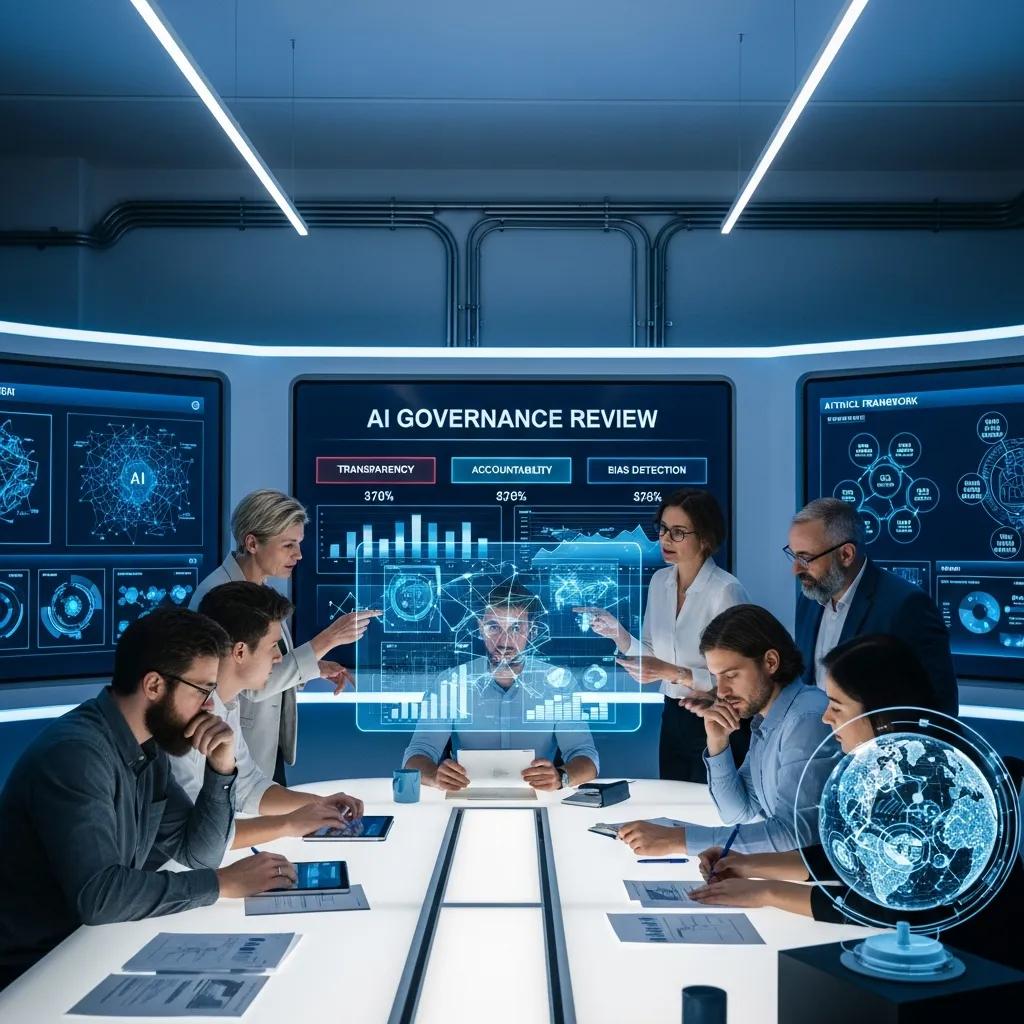
ISO 42001 frames AI governance around lifecycle controls, risk-based management and adaptive oversight. Continual improvement ensures AI systems remain safe, fair and reliable as data and use-cases change. Regular model reviews, bias audits and performance monitoring feed back into model updates and governance actions, producing the records auditors require for ethical compliance. For SMEs using or developing AI, scheduling these reviews and documenting findings is essential to demonstrate alignment with emerging regulatory expectations such as the EU AI Act. The following section outlines governance activities and example records.
Implementing Adaptive AI Governance with ISO 42001 and Continuous Improvement
Adaptive AI governance pairs a model inventory with risk scoring and governance oversight to drive ongoing refinement. Core activities include keeping a register of models and risk levels, scheduling bias and performance audits, and logging governance board decisions that mandate retraining or decommissioning. Auditors will look for an evidence trail: model inventory entries, audit results, decision logs and follow-up actions showing improvement steps. Linking these items to specific corrective actions and metrics creates the continual improvement narrative ISO 42001 requires.
Conducting Regular AI System Performance Reviews for Ethical Compliance
A four-step review template — plan the review, run fairness and safety tests, record findings with metrics, and apply corrections — creates a repeatable cycle of improvement. Typical remediation might include retraining with more balanced data, removing biased features, or tightening drift-detection thresholds. Concise review reports, decision records and retraining logs form audit-ready evidence that shows AI governance is actively improving and that SMEs are responsibly stewarding their models.
What Practical Steps Can UK SMEs Take to Implement Continuous Improvement Effectively?
SMEs can adopt a pragmatic five-step plan that balances low cost with audit-readiness: map critical processes, pick a small set of KPIs, run fast PDCA cycles, document improvements, and hold regular management reviews. The mechanism is a measurable loop where changes create data, data guides decisions, and decisions update procedures and evidence. Small pilots minimise disruption and deliver demonstrable wins that justify scaling. The action plan below is ready for immediate use and for presenting in ISO audits.
- Map critical processes and identify bottlenecks that most affect customers and risk.
- Select 2–3 measurable KPIs linked to those processes and establish baseline data.
- Run short PDCA cycles or kaizen events to test changes and capture results.
- Log outcomes in an improvement register and update procedures where changes succeed.
- Hold management reviews to allocate resources and embed successful changes.
Following this plan produces traceable evidence for auditors and builds momentum for further improvements. SMEs that use it can quickly show trend data and management engagement — key signals of continual improvement.
Overcoming Common Challenges in SME Process Improvement
SMEs often struggle with limited resources, competing priorities and a lack of process-improvement expertise, but practical mitigations make progress achievable. Low-cost options include one-day micro-kaizen events, simple dashboards from existing data and assigning a single improvement owner to prevent responsibility from drifting. Boost staff engagement with visible, short-term wins and allocate small blocks of protected time for improvement tasks. Framing improvements as risk reduction and revenue protection helps secure leadership support and time for sustained cycles. Measuring and demonstrating success for ISO audits should focus on a small set of KPIs that tie directly to business outcomes; recommended metrics include lead time, defect rate and incident resolution time, reviewed monthly. Presenting trend charts that show direction and magnitude of change alongside CAPA logs and management review minutes creates a concise, persuasive story for auditors. The checklist below summarises audit-ready records SMEs should keep to demonstrate continual improvement.
- Improvement register with dates, owners and outcomes.
- KPI trend charts showing baseline and subsequent performance.
- CAPA documentation with root cause analysis and verification.
- Management review minutes assigning follow-up and resources.
Keeping these records concise and cross-referenced gives operational clarity and audit transparency, ensuring continuous improvement is visible and verifiable.
How we help
Stratlne Certification Ltd. is a lead-generation and information hub offering ISO certification audits — including ISO 9001, ISO 27001 and ISO 42001 — supported by a dependable, AI-augmented audit approach. Stratlne helps SMEs by testing system effectiveness, advising on methodology alignment and identifying the records and KPI evidence auditors expect. If you need external support to prepare for certification or validate your continuous improvement approach, Stratlne provides focused audits and practical guidance to map improvement cycles to ISO requirements and to request a quote for audit services.
This checklist ties each activity to the evidence auditors review and suggests realistic cadences for SMEs to maintain. Use it as a simple workplan to prioritise effort and produce the documentation expected in ISO audits.
Frequently Asked Questions
1. What are the key differences between continuous improvement and continual improvement?
Continuous improvement describes a sustained, ongoing effort to improve processes through regular, incremental changes. Continual improvement can denote a series of separate improvement activities that are not necessarily continuous. Both approaches can satisfy ISO expectations when actions are recorded and evaluated, but emphasising a continuous approach shows a stronger culture of ongoing enhancement.
2. How can SMEs measure the success of their continuous improvement initiatives?
Choose a small set of measurable KPIs aligned to your objectives — for example lead time, defect rates or customer satisfaction. Track these consistently and show trend charts in management reviews. Maintain an improvement register that records actions and outcomes; together, trend data and documented improvements provide clear, audit-ready evidence of progress.
3. What role does employee engagement play in continuous improvement?
Employee engagement is essential. When people at all levels identify problems and suggest solutions, improvements are more practical and sustainable. Use kaizen events, suggestion schemes and short improvement workshops to build ownership. Visible wins help sustain momentum and improve overall readiness for ISO assessment.
4. How often should SMEs conduct management reviews for continuous improvement?
Quarterly management reviews are a sensible minimum. They provide a regular forum to assess improvement effectiveness, review KPIs and decide next steps. Documenting outcomes and assigned actions creates the audit trail auditors expect and keeps improvement activity visible at leadership level.
5. What are some common challenges SMEs face in implementing continuous improvement?
Typical challenges include limited time, scarce resources and a shortage of improvement skills. Address these with focused, low-cost tactics: one-day micro-kaizen events, dashboards built from existing data and a named owner for each improvement. Short, visible wins secure buy-in and free up time for larger initiatives.
6. How can SMEs ensure their continuous improvement efforts align with ISO standards?
Map improvement activities to relevant ISO clauses and document evidence in a structured way. Regular internal audits and management reviews help verify compliance and effectiveness. External guidance from certification experts can also clarify expectations and speed certification readiness.
7. What documentation is essential for demonstrating continuous improvement during ISO audits?
Essential records include an improvement register, KPI trend charts, CAPA records and management review minutes. The register should show actions, dates, owners and outcomes; trend charts provide visual proof of progress; CAPA documents show root cause analysis and verification; and management review minutes record decisions and resources. Together these form a clear audit trail.
Conclusion
For UK SMEs aiming for ISO certification, embedding continuous improvement is a practical way to raise efficiency, quality and compliance. Using methods such as PDCA, Kaizen and Lean creates a structured approach that produces measurable results and strengthens operational maturity. That commitment not only prepares you for audits but also fosters engagement and innovation across the business. Start by mapping a simple pilot, capture measurable results, and scale from there — and explore our tailored audit services and resources to help you on the path to certification.