
Unlock the Benefits of Virtual ISO Audits Today
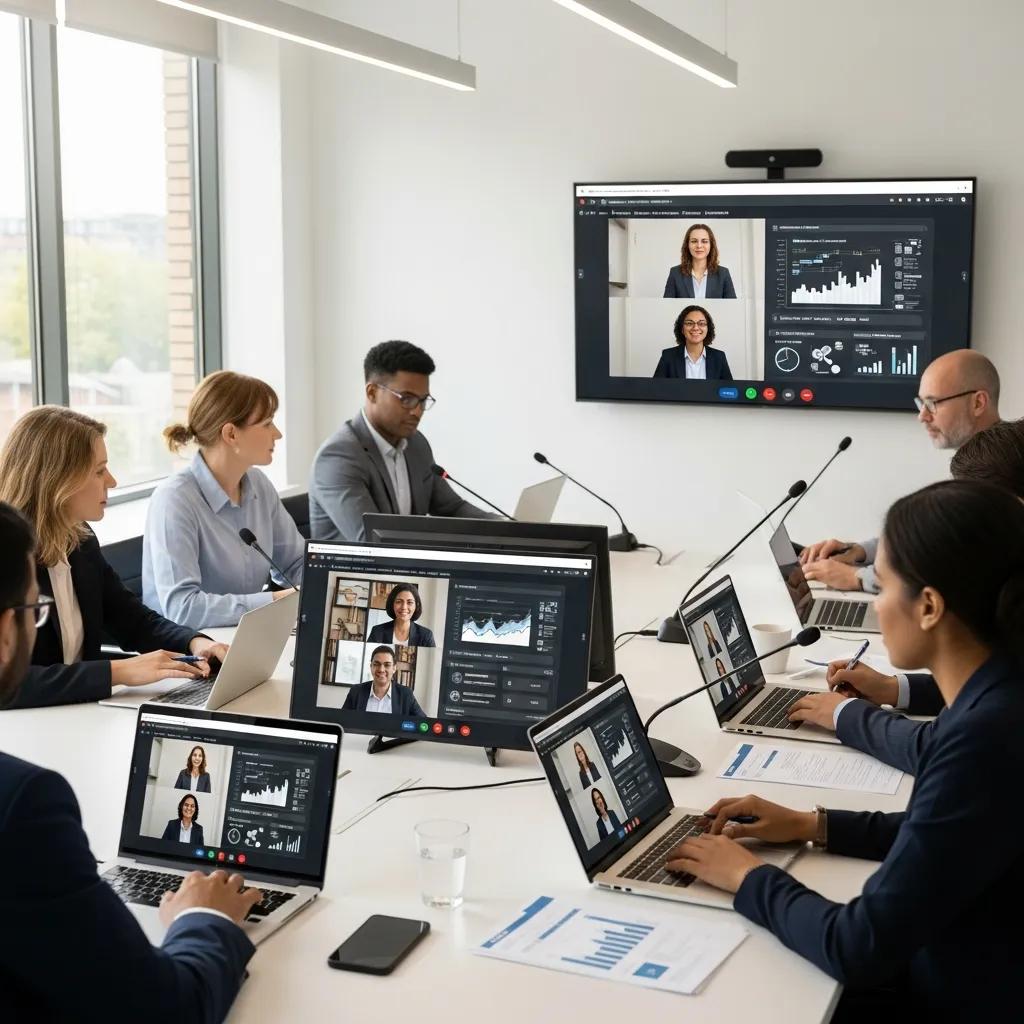
Remote ISO Auditing Techniques — a practical guide to virtual certification with Stratlane
Remote ISO auditing uses digital tools and modern communication platforms to assess a management system without requiring an auditor to be on-site. This guide explains how remote, virtual and e‑audit approaches work, why organisations are choosing them, and how they provide practical routes to ISO certification while keeping audit rigour intact. Many organisations face rising travel bills, difficulty scheduling specialist auditors and challenges maintaining evidence chains across multiple locations; remote audits address these issues by using secure video, screen sharing and structured digital evidence management to mirror the key verification activities of a traditional visit. Below we define the different audit modes, compare them with on‑site assessments, outline concrete benefits and efficiency gains, offer a technical readiness checklist and evidence‑organisation best practices, review common challenges and mitigations, and map how remote techniques apply to ISO 9001 , ISO 27001 and ISO 41001 — including hybrid blends. Throughout you’ll find actionable steps for planning and running remote ISO audits and examples of how an accredited provider such as Stratlane Certification Ltd. combines experienced auditors with AI‑assisted tools to support reliable remote certification. The next section defines remote auditing and contrasts it with traditional audits.
What is remote ISO auditing and how does it differ from traditional audits?
Remote ISO auditing describes certification or surveillance assessments carried out using information and communication technologies so auditors can observe, review and verify evidence without being physically present. It typically relies on secure video conferencing, screen sharing, cloud evidence repositories and live or recorded virtual tours to assess processes, records and controls. The main advantage is reduced logistical overhead while preserving objective evidence trails. Remote audits are most appropriate where processes and records are digitally accessible and where any required physical checks can be limited or supplemented by targeted site visits. Understanding these differences helps you decide when a hybrid model is the right choice and which audit tasks must remain on‑site for safety or confidentiality reasons. Next, we clarify the common terms used in guidance and standards.
Defining remote, virtual and e‑audits in ISO certification
The labels remote, virtual and e‑audit are related but have distinct implications for planning and evidence handling. A remote audit usually means the auditor is not physically present and gathers evidence synchronously (live calls, screen sharing). A virtual audit can include asynchronous elements such as pre‑recorded tours or uploaded documents. An e‑audit emphasises end‑to‑end electronic management of audit workflows and artefacts. These modes align with international guidance on evidence authenticity, traceability and confidentiality and commonly use video platforms, secure file sharing and purpose‑built evidence management. Knowing the distinction helps you pick the right tools and define controls for access, versioning and chain‑of‑custody before the audit starts. The next subsection outlines the practical differences you can expect between remote and on‑site approaches.
Recent events have accelerated the shift to remote audits, highlighting both their value and the need for clear definitions and adapted practice.
Remote quality audits: necessity, challenges and definitions
Research during widespread disruption showed that remote internal audits quickly moved from optional to necessary for many organisations. Studies have gathered auditors’ and auditees’ views on practical difficulties and have worked to clarify definitions so practitioners share a common understanding of remote audit methods and their limits. Remote Quality Management System Audit. Auditors’ and Auditees’ Perspective and Lessons Learned, MZ Wiśniewska, 2015
Key differences between remote and on‑site ISO audits
Remote and on‑site audits differ in logistics, evidence types, interpersonal dynamics and time allocation — all of which change how auditors verify conformity. Logistically, remote audits remove travel time and support shorter, more focused sessions; on‑site visits let auditors observe work practices, equipment and physical security directly. Evidence shifts from physical walkthroughs to video, photos and digital records, with verification relying more on metadata and timestamps. Remote interviews often require tighter questioning and clearer artefact requests, and scheduling tends to be more granular to accommodate multiple time zones. Where on‑site verification is essential — for safety‑critical checks or highly confidential areas — a hybrid approach that pairs remote review with targeted site visits is usually best.
What are the benefits of remote ISO audits for your business?
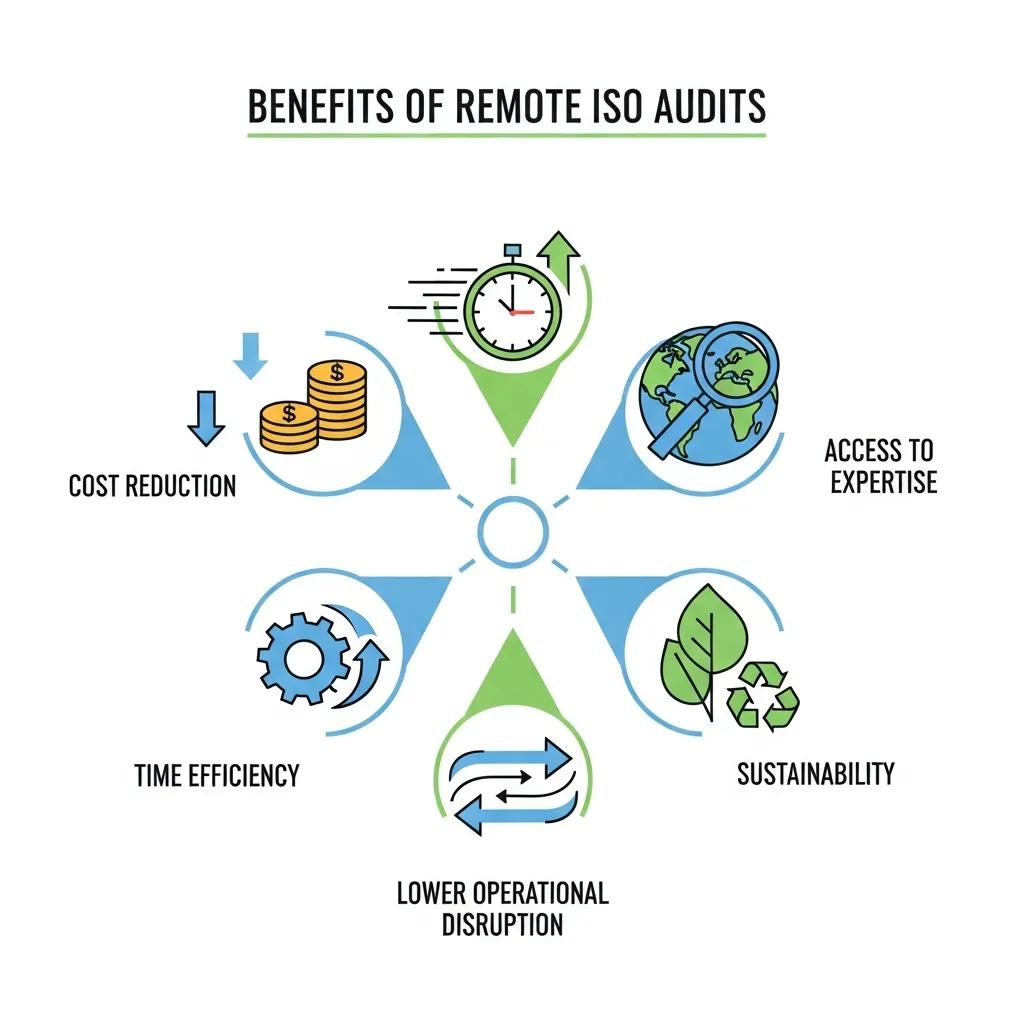
Remote ISO audits offer clear, measurable business benefits: lower travel and accommodation costs, faster scheduling, easier access to specialist auditors and less disruption to daily operations. The practical mechanism is simple — digital evidence review plus synchronous or asynchronous interactions replace many on‑site activities — and when security and evidence‑authenticity controls are in place, this approach preserves the audit trail. Organisations with dispersed sites or international operations can scale certification activity more quickly, and the reduced travel footprint supports sustainability objectives. These benefits let decision‑makers quantify potential savings and build a business case for remote or hybrid audit delivery that fits their risk appetite.
Further research indicates audited organisations often view remote and on‑site audits as similarly beneficial.
Remote vs on‑site audits: perceived benefits for management systems
A survey comparing on‑site and remote methods found audited organisations — in the food sector sample studied — rated credibility, usefulness for improvement and financial usefulness of both approaches at similar levels, suggesting remote audits can deliver comparable value when well executed.
Auditing management systems in digital transformation era, P Kafel, 2022
Remote ISO audits deliver several core business advantages:
- Cost reduction: Cuts travel, lodging and related expenses that typically drive audit budgets.
- Time efficiency: Shorter lead times and focused sessions reduce total audit hours and speed up certification.
- Access to expertise: Lets you engage specialist auditors regardless of location, improving technical coverage.
- Lower operational disruption: Reviewing evidence remotely minimises interruptions compared with full‑day on‑site visits.
- Sustainability: Less travel lowers carbon emissions and supports environmental objectives.
These benefits make remote auditing an attractive option for many organisations; the next practical step is to quantify travel and downtime savings when choosing an audit delivery model. The table below summarises benefit types with indicative impacts to guide decision‑making.
Remote audit benefits compared by type and typical impact.
This table shows how remote audits translate into tangible outcomes and supports building an internal case for remote or hybrid approaches. Next, we explain the mechanisms that drive efficiency and cost control.
How do remote audits enhance efficiency and cost savings?
Remote audits save time and money by cutting travel, concentrating evidence review and using automation or AI tools to streamline document analysis and flag likely nonconformities. Organisations can ask for pre‑submitted evidence in a structured repository so auditors review records asynchronously and spend live time on interviews or clarifications. AI‑assisted tools can quickly surface trends, inconsistencies or missing artefacts, shortening the cycle for findings and corrective action verification. Together, these mechanisms typically reduce the total cost of certification while maintaining audit rigour — especially valuable for multi‑site or international clients seeking consistent assessments. The next subsection explains how remote techniques increase reach and flexibility.
In what ways do remote audits expand global reach and flexibility?
Remote auditing removes geographic limits on auditor selection and scheduling, enabling access to specialist skills across borders without travel delays. For multi‑site organisations, remote audits promote consistency by using the same audit team or methodology across locations and make it easier to include multilingual or subject‑matter experts. Scheduling is more flexible, with short, focused sessions tailored to process owners’ availability, and remote formats simplify coordination of follow‑ups and surveillance with minimal downtime. These features suit dispersed operations that need frequent oversight without the logistical burden of in‑person visits. The next section covers how to prepare technically and organisationally for a smooth remote audit.
How to prepare effectively for your remote ISO audit?
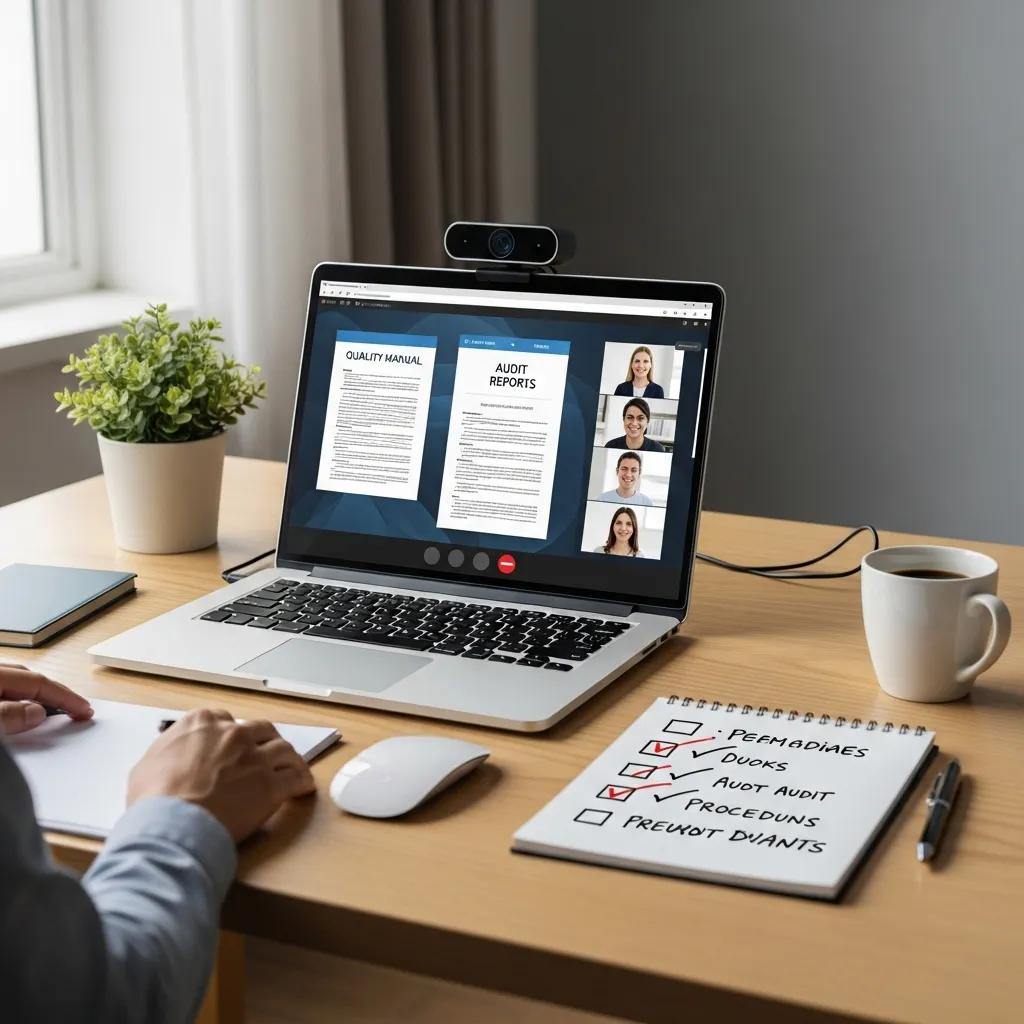
Good preparation for a remote ISO audit combines technical readiness, tidy evidence organisation and rehearsed virtual interactions so the audit delivers the same assurance as an on‑site assessment. The approach centres on pre‑audit planning: confirm technology and access permissions, map evidence and run dry‑runs to validate connections and workflows. The payoff is a smoother audit with fewer interruptions and faster closure of findings. The checklist and evidence‑organisation table below give practical steps to complete before audit day.
Prior to the audit, complete this technical readiness checklist to make sure platforms, devices and networks are suitable for live assessment:
- Test connectivity: confirm upstream/downstream bandwidth and prepare a secondary connection.
- Device preparation: use a stable laptop or tablet with a good camera and microphone; ensure chargers and backups are available.
- Platform access: verify user accounts, permissions and authentication for conferencing and evidence systems.
- Dry run: run a full mock session with auditors and process owners to rehearse screen sharing and virtual tours.
- Security settings: check encryption, meeting passwords and access logs to protect evidence confidentiality.
Completing this checklist reduces interruptions and ensures audit time is used for substantive verification rather than troubleshooting. The table below maps common preparation tasks to suggested implementations for document control, platform setup and team roles.
This table turns readiness tasks into concrete steps your team can implement before the auditor joins virtually. Next, we look at technical readiness items in more detail to ensure a smooth virtual audit experience.
What technical readiness steps ensure a smooth virtual audit?
Technical readiness starts with validating bandwidth, device capability and platform security so interactions are uninterrupted and evidence exchanges are trustworthy. Organisations should define minimum connectivity targets, confirm devices have acceptable audio/video quality and arrange redundant connections such as a secondary ISP or mobile hotspot. Use secure conferencing platforms with encryption, meeting controls and access logs, and preconfigure participant roles and screen‑sharing permissions to streamline sessions. Regular dry runs with auditors and process owners will reveal procedural gaps and familiarise teams with camera framing, document upload workflows and live demonstration techniques, reducing the risk of technical delays on the day.
How to organise digital evidence and run virtual tours successfully?
Organising digital evidence needs a disciplined folder structure, consistent file naming and strict version control so auditors can locate and verify records quickly. Create a top‑level folder per audit area with subfolders for policies, procedures, records and corrective actions, and include an index that maps audit criteria to file names and timestamps to speed sampling. For virtual tours, prepare a route plan, appoint a camera operator and rehearse framing and lighting so critical items and safety features are clearly visible; record tours when appropriate and attach metadata (date, time, presenter). These practices protect evidence integrity and make verification straightforward during virtual sessions.
After preparing people and systems, the next section looks at common remote audit challenges and practical mitigations providers use to preserve audit quality.
What challenges arise in remote ISO audits and how does Stratlane overcome them?
Remote ISO audits introduce challenges such as connectivity interruptions, data security concerns and the need to verify physical evidence reliably. Each challenge requires technical, procedural and people‑centred mitigations to preserve audit integrity. Connectivity issues are managed with redundancy, scheduled buffer time and pre‑test protocols; data security is handled through encrypted platforms, strict access controls and clear evidence‑handling agreements; and physical artefacts can be verified using high‑resolution video, time‑stamped recordings or short on‑site checks when necessary. Ensuring auditors are competent in virtual techniques is also vital and is achieved through formal training, standardised protocols and quality assurance oversight. Below are typical mitigations that illustrate practical responses to these barriers.
Common mitigations providers deploy for remote audit challenges include:
- Use of secure, logged conferencing and file‑sharing platforms with encryption and role‑based access.
- Pre‑audit dry runs and connection redundancy to limit session interruptions.
- Standard evidence indexing and metadata requirements to assure authenticity and traceability.
- Hybrid verification plans that schedule limited on‑site visits where physical inspection is essential.
- Formal auditor training and peer review to ensure consistent virtual audit techniques.
These mitigations create a coherent quality framework for remote audits and help maintain confidence in assessment outcomes. The next subsections provide more detail on technical and competency controls and examples of provider implementations.
How are connectivity and data security risks mitigated?
Connectivity and data security are managed through a mix of technical controls, contractual agreements and operational procedures that keep evidence confidential and auditable. Secure conferencing platforms with encryption, access logging and meeting controls protect live sessions, while secure file repositories with role‑based permissions protect stored evidence. Organisations should require strong authentication and keep an audit trail of access. Contingency plans include backup connections, time buffers for reconnection and the option to switch to asynchronous evidence exchange if live sessions fail. Data‑handling agreements that set retention, access and deletion rules support compliance with information security standards and regional data‑protection rules.
What training and protocols ensure auditor competence in virtual settings?
Auditor competence combines structured training on virtual interviewing, digital evidence evaluation and any AI‑assisted tooling used to filter or analyse records. Training covers technical skills — operating conferencing software, checking metadata and interpreting video evidence — alongside soft skills such as conducting focused remote interviews and managing participant dynamics in virtual rooms. Providers use standardised virtual audit protocols that record steps for evidence collection, sampling and escalation of ambiguous findings, and they apply peer review and quality assurance checks to keep practice consistent. Ongoing professional development, practice audits and feedback loops keep auditors current as remote tools and techniques evolve.
How does Stratlane implement remote auditing across key ISO standards?
Stratlane Certification Ltd. adapts remote auditing techniques to each standard, combining AI‑assisted tools, experienced industry auditors and accreditation‑aligned protocols to deliver reliable remote certification. For ISO 9001 we focus on performance data, process records and management‑review evidence that suit digital review; ISO 27001 assessments demand stricter secure evidence exchange and consideration of physical security that may require hybrid verification. Stratlane is an accredited certification body operating in over 27 countries and offers remote ISO certification audits as a core service, using cloud information management, AI‑assisted document analysis and auditor expertise to maintain conformity and consistency.
For organisations managing the ethical and responsible development of artificial intelligence, Stratlane also offers certification for ISO 42001 , the standard for AI management systems.
The table below summarises standard‑specific considerations and suggested remote/on‑site splits to help with planning and expectation‑setting.
This table shows how remote techniques align differently with each standard and suggests hybrid ratios to manage risk where physical checks remain important. The next subsections expand on specifics for ISO 9001 and ISO 27001 remote audits.
What are the specifics of ISO 9001 remote audits for quality management?
ISO 9001 remote audits focus on documented information, performance data and objective evidence that demonstrate process effectiveness and continual improvement. Auditors can review production records, corrective‑action histories, supplier performance data and customer feedback remotely, and use video or recorded demonstrations to validate process steps when live observation is limited. If a process is safety‑critical or needs sensory verification (for example, smell or tactile checks), a brief targeted on‑site visit may be arranged as part of a hybrid approach; otherwise, robust digital records usually suffice. Organisations should make sure their QMS records are consistently formatted, timestamped and indexed to speed remote sampling and analysis.
How are ISO 27001 remote audits conducted to secure information?
ISO 27001 remote audits require strict controls for evidence transfer and evaluation because information‑security artefacts are sensitive and may have regulatory consequences. Remote ISMS assessments concentrate on policy compliance, configuration records, patch‑management evidence and logs that can be reviewed securely via controlled repositories; remote testing can include configuration reviews and simulated incident‑response exercises. Physical security checks protecting critical assets often need hybrid verification or authenticated recorded tours to corroborate controls. Maintaining GDPR and other data‑protection considerations during evidence exchange is essential, and auditors must confirm secure channels and handling agreements before sensitive material is transferred.
After the standard‑specific guidance, we cover the hybrid audit model, decision criteria and examples where hybrid approaches are most appropriate.
What is the hybrid ISO audit model and when should it be used?
The hybrid ISO audit model combines remote and on‑site activities using a risk‑based analysis that balances efficiency with the need for physical verification. The process evaluates factors such as confidentiality, safety, the importance of physical controls and historical performance to decide which components can be done remotely and which require on‑site presence. The benefit is optimised resource use while preserving assurance. Hybrid approaches are especially useful for multi‑site organisations, safety‑critical operations, or when new facilities need initial physical verification followed by remote surveillance. The next list sets out key risk‑based criteria to guide the hybrid vs on‑site decision.
Key risk‑based criteria to determine hybrid vs on‑site needs include:
- Safety and health risk: High‑risk operations usually require direct observation or on‑site verification.
- Confidentiality or legal constraints: Sensitive environments may restrict remote evidence sharing and require on‑site checks.
- Physical control significance: Controls that are inherently physical (locks, barriers, environmental systems) often need in‑person verification.
- Historical performance and complexity: New or poorly performing systems benefit from greater on‑site scrutiny before moving to remote surveillance.
- Logistical constraints: Travel restrictions or wide geographic spread may favour more remote coverage alongside targeted visits.
How does combining on‑site and remote audits optimise results?
Blending on‑site and remote audits lets auditors spend on‑site time where it adds most value — complex process observation, sampling of physical controls and interviews that depend on in‑person cues — while handling document review, data analysis and many interviews remotely. This mix reduces travel and cost, shortens the certification timetable and improves access to specialist auditors for critical remote sessions. Typical scenarios include an initial certification with concentrated on‑site verification followed by remote surveillance, or remote assessment of administrative controls with short verification visits for plant inspections. A planned hybrid approach keeps audit depth where it’s needed and gains efficiency where digital evidence suffices.
Which risk‑based approaches determine hybrid audit strategies?
Hybrid strategies are driven by structured risk assessments that weigh safety, confidentiality, physical controls and evidence availability to set the remote/on‑site balance. A simple decision workflow asks whether a control can be verified via secure digital evidence; if not, the workflow escalates to targeted on‑site verification; if it can, remote verification is used with enhanced sampling and metadata checks. Applied to ISO 27001, ISO 9001 and ISO 41001, controls tied to physical infrastructure or legal compliance typically move to on‑site checks, while management reviews and documented processes are generally handled remotely. This risk‑based approach ensures hybrid models are tailored, transparent and aligned with certification‑body expectations.
Remote auditing provides robust, flexible ways to maintain certification without unnecessary travel. For organisations seeking structured support, Stratlane Certification Ltd. offers accredited remote ISO certification audits backed by AI‑assisted tools and experienced auditors. If you’d like help mapping a remote or hybrid audit plan for your standard and risk profile, Stratlane can provide a readiness review and remote audit delivery options that meet accreditation and global recognition requirements.
Frequently asked questions
What types of organisations can benefit from remote ISO audits?
Remote ISO audits suit organisations with multiple locations, businesses operating across jurisdictions and companies that need frequent oversight without the logistical cost of in‑person visits. Sectors such as manufacturing, technology and professional services can use remote audits to maintain compliance while reducing travel costs and operational disruption. Organisations aiming to improve sustainability will also see benefits from a reduced travel footprint. In short, any organisation seeking greater efficiency and flexibility in its audit programme can benefit.
How can organisations ensure the security of data during remote audits?
To protect data during remote audits, use secure conferencing platforms with strong encryption and access controls, and establish clear data‑handling agreements that set retention, access and deletion rules. Apply role‑based permissions for file sharing, keep an auditable access log and train auditors and staff in data‑security best practice. These steps help reduce risk and ensure compliance with relevant data‑protection requirements.
What are the common challenges faced during remote ISO audits?
Typical challenges include connectivity interruptions, difficulties verifying physical evidence and managing sensitive data securely. Connectivity breaks can disrupt sessions; verifying physical artefacts remotely may require high‑resolution video or recorded tours; and ensuring confidentiality during evidence exchange needs strong controls. To address these issues, organisations should have contingency plans, run pre‑audit dry runs and use secure platforms with robust access controls to preserve audit quality.
How do remote audits impact the auditor‑auditee relationship?
Remote audits change interaction dynamics by requiring more structured communication and clearer artefact requests. That structure can sharpen focus on key issues but may reduce informal rapport that develops during in‑person visits. To maintain a productive relationship, both parties should set clear expectations, keep open communication and use video tools effectively to support collaboration and trust throughout the audit.
What role does technology play in facilitating remote ISO audits?
Technology is central: secure video platforms, cloud evidence repositories and AI‑assisted audit tools enable efficient communication, evidence management and data analysis. These tools let auditors review records and conduct interviews remotely while keeping evidence accessible and verifiable. When used responsibly, technology enhances audit effectiveness without compromising compliance or the audit trail.
Can remote audits be as effective as traditional on‑site audits?
Yes — when they are planned properly and supported by the right technology and controls. Research shows organisations often rate remote and on‑site audits similarly in value. Remote audits can reduce cost and time while maintaining necessary rigour, but their effectiveness depends on organisational readiness, the quality of digital evidence and auditor competence in virtual assessment techniques.
Conclusion
Remote ISO auditing brings meaningful advantages — reduced cost, faster delivery and access to specialist expertise — while limiting disruption to operations. By combining digital tools with careful evidence management and risk‑based planning, organisations can meet certification requirements with greater flexibility. If you’d like tailored support planning a remote or hybrid audit strategy, contact our team to arrange a readiness review and discuss options that align with your needs.